Tokyo Station seriesPart of my Tokyo Station Yaesu Guide — choose the right exit, check whether a place is inside or outside the JR gates, and plan time before trains or buses.
The biggest point of confusion I found at Bus Terminal Tokyo Yaesu is that it is not one single boarding hall. It has two separate areas: A beneath TOFROM YAESU and B beneath Tokyo Midtown Yaesu. I walked and photographed both routes from Tokyo Station. Although both buildings connect to the wider Yaechika underground network, their departure boards and gates are separate. In this guide, I show how I identify the correct area, reach it from Tokyo Station, check the ticket options, and avoid a last-minute sprint.
Area A and Area B are different boarding locations. The Tokyo Station Yaesu South Exit JR highway-bus stop and the Tokyo Station Yaesu-dori stop are also different places. Match the terminal name, A/B area, operator, service number, departure time, and destination before you start walking.
1. The quick answer
Anyone whose reservation explicitly says “Bus Terminal Tokyo Yaesu A” or “B”
Leave Tokyo Station through a Yaesu exit, not Marunouchi. A confident walker may reach the terminal in roughly 5–10 minutes, but a first-time visitor should allow 10–15 minutes to navigate Tokyo Station and Yaechika. On departure day, aim to be inside the correct A or B area 20–30 minutes early.
| Area | Building landmark | What to remember |
|---|---|---|
| Terminal A | TOFROM YAESU 1-6-1 Yaesu | Use Area A’s own departure board and gates A01–A07. |
| Terminal B | Tokyo Midtown Yaesu 2-2-1 Yaesu | Ticket counter is on B1; boarding gates B11–B16 are on B2. |
The terminal’s official operating hours are 5:00 a.m. until the last departure at 12:35 a.m. Underground passages do not remain equally accessible all night: the official access map shows the normal underground route as roughly 6:00 a.m.–11:00 p.m., while the street-level approach is available for a wider period. After 11:00 p.m., shutters restrict movement between A and B underground, so use the outside route and arrive especially early.
2. Which buses leave from here?
Bus Terminal Tokyo Yaesu serves daytime and overnight highway buses across Japan. The exact route, operator, timetable, and even boarding gate can change. I took these representative destinations from the official route directory when I checked it on October 14, 2026—they are not a promise that every route operates every day.
| Direction | Representative destinations | Typical use |
|---|---|---|
| Chiba and nearby Kanto | Kisarazu, Mitsui Outlet Park Kisarazu, Kamogawa, Choshi, Togane and Naruto | Day trips, regional travel and shopping |
| Mt. Fuji and Koshinetsu | Kawaguchiko, Kusatsu Onsen, Nagano, Matsumoto, Niigata, Toyama and Kanazawa | Sightseeing and ski/onsen trips |
| Tokai and Kansai | Nagoya, Gifu, Ise, Kyoto, Osaka and Kobe-area services | Long-distance and overnight travel |
| Chugoku, Shikoku and Kyushu | Examples include Tokushima, Kokura and Hakata | Primarily overnight long-distance buses |
Search the route first, then check today’s gate
Use the terminal’s official route search to find the operator and reservation page. On travel day, use the official live departure and gate search. Each screen covers its own A or B area, so confirm the area printed on your ticket first.
Some through services may list an airport, but many Tokyo Station airport buses use other stops. Search your exact airport, operator, terminal name, and boarding point instead of walking to Bus Terminal Tokyo Yaesu based only on the words “Tokyo Station.”
3. How to get there from Tokyo Station
For a first visit, I recommend Yaesu Central Exit as the clearest common starting point. After leaving the JR ticket gates, continue toward the Yaesu frontage. From there, follow the route for the area printed on your reservation: Area A beneath TOFROM YAESU or Area B beneath Tokyo Midtown Yaesu.
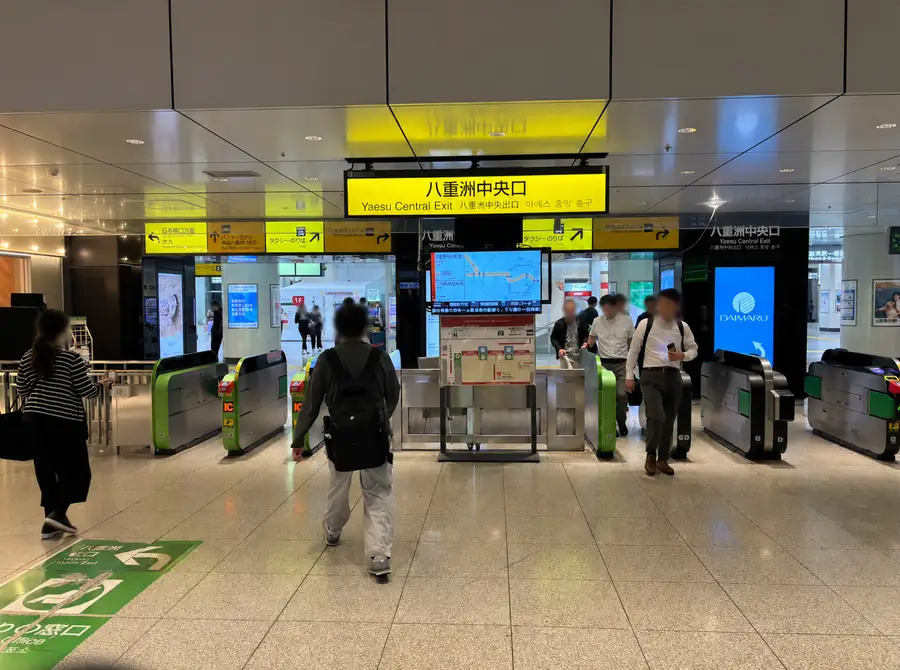
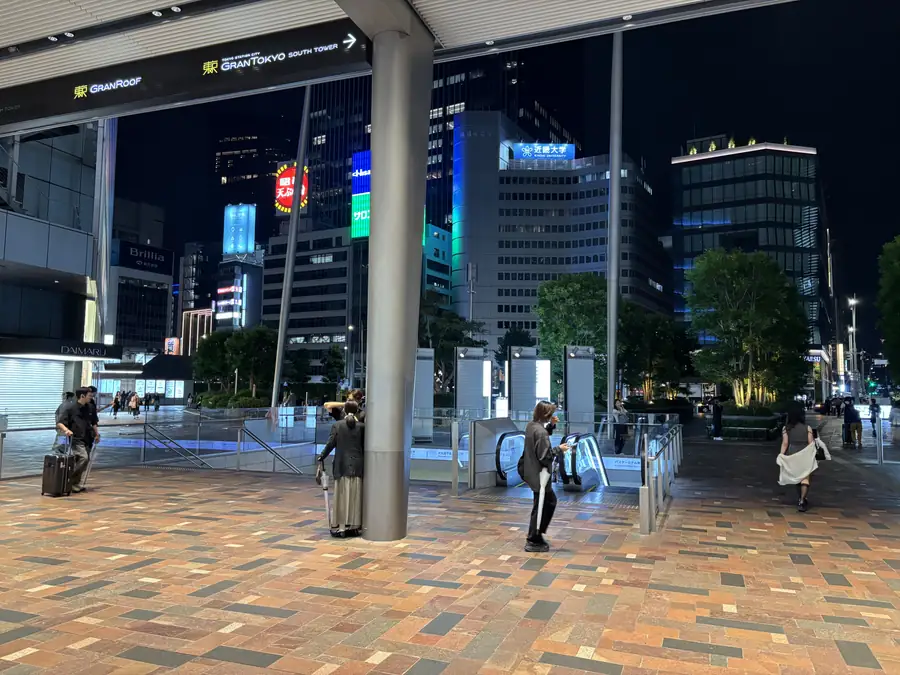
Route to Area A: TOFROM YAESU
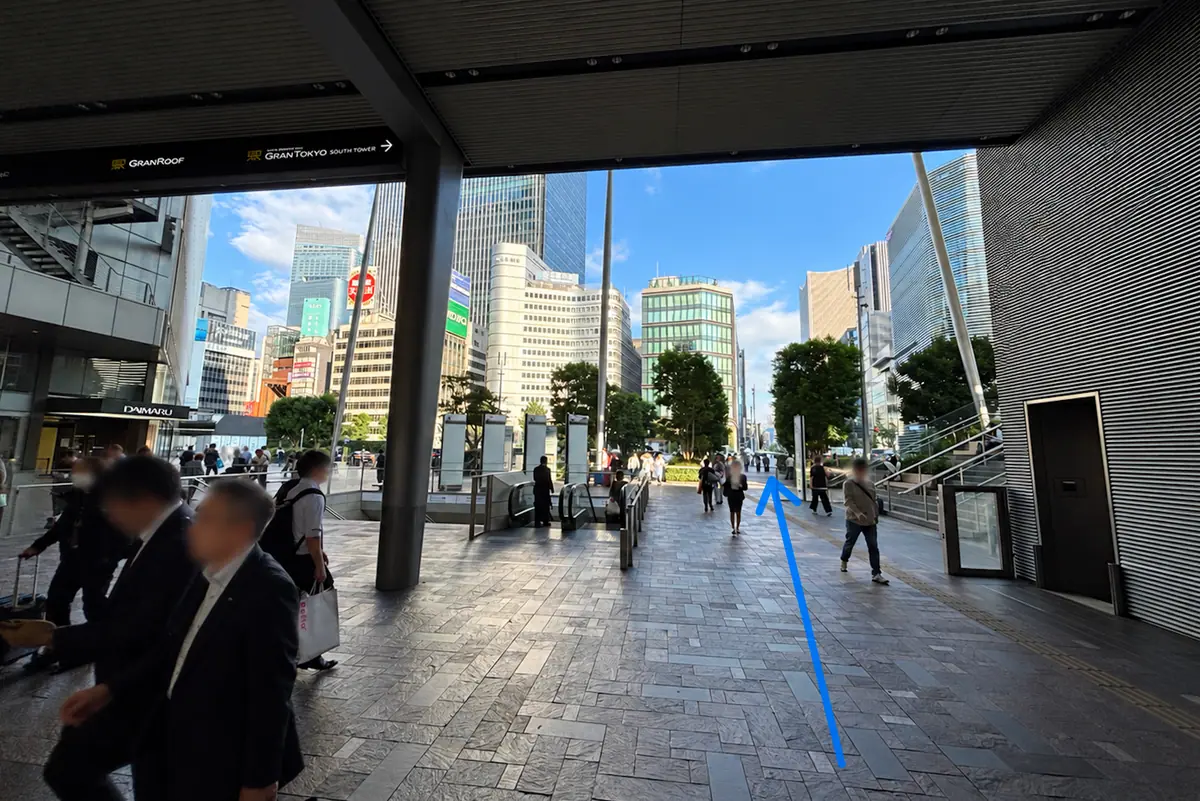
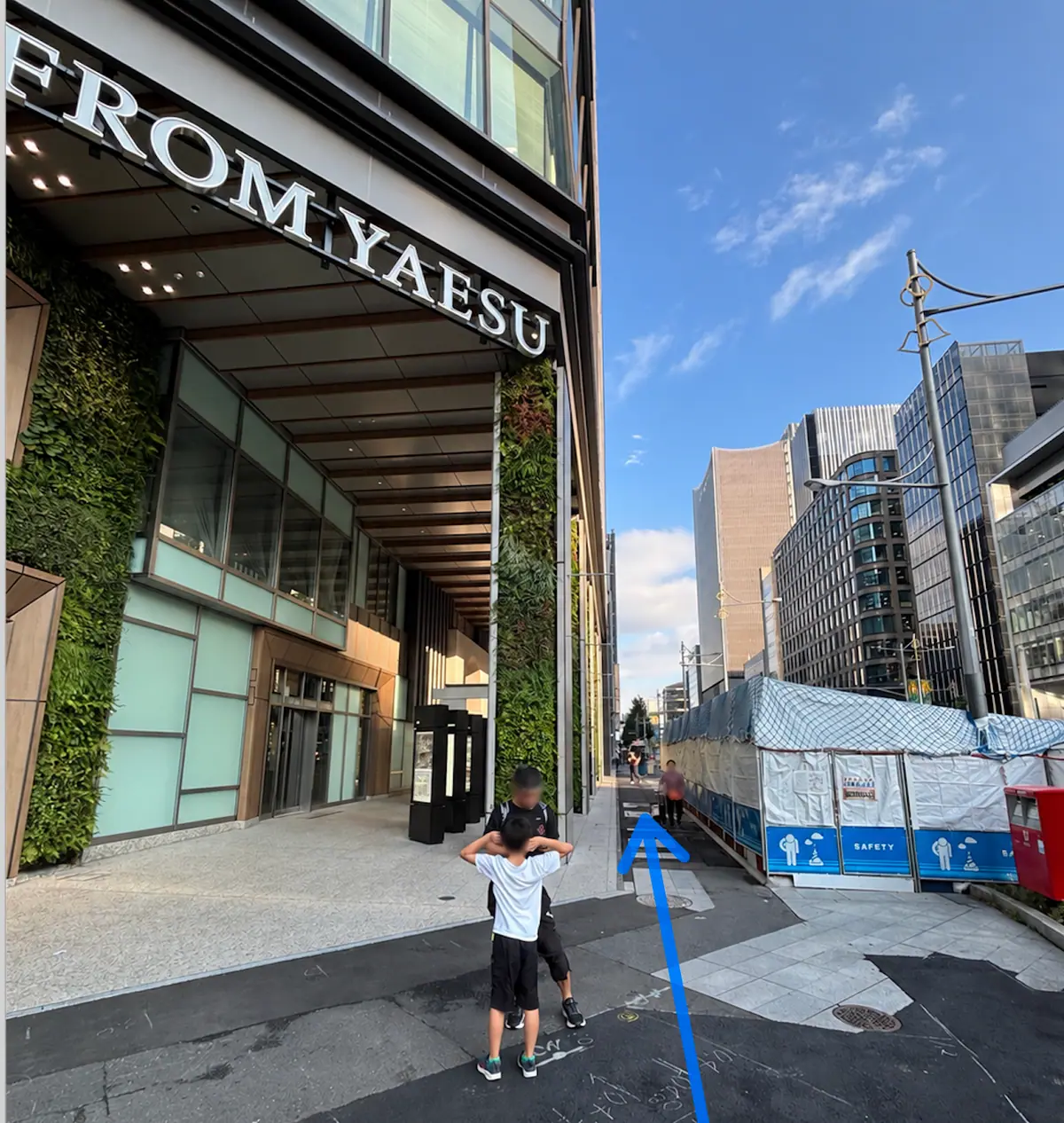
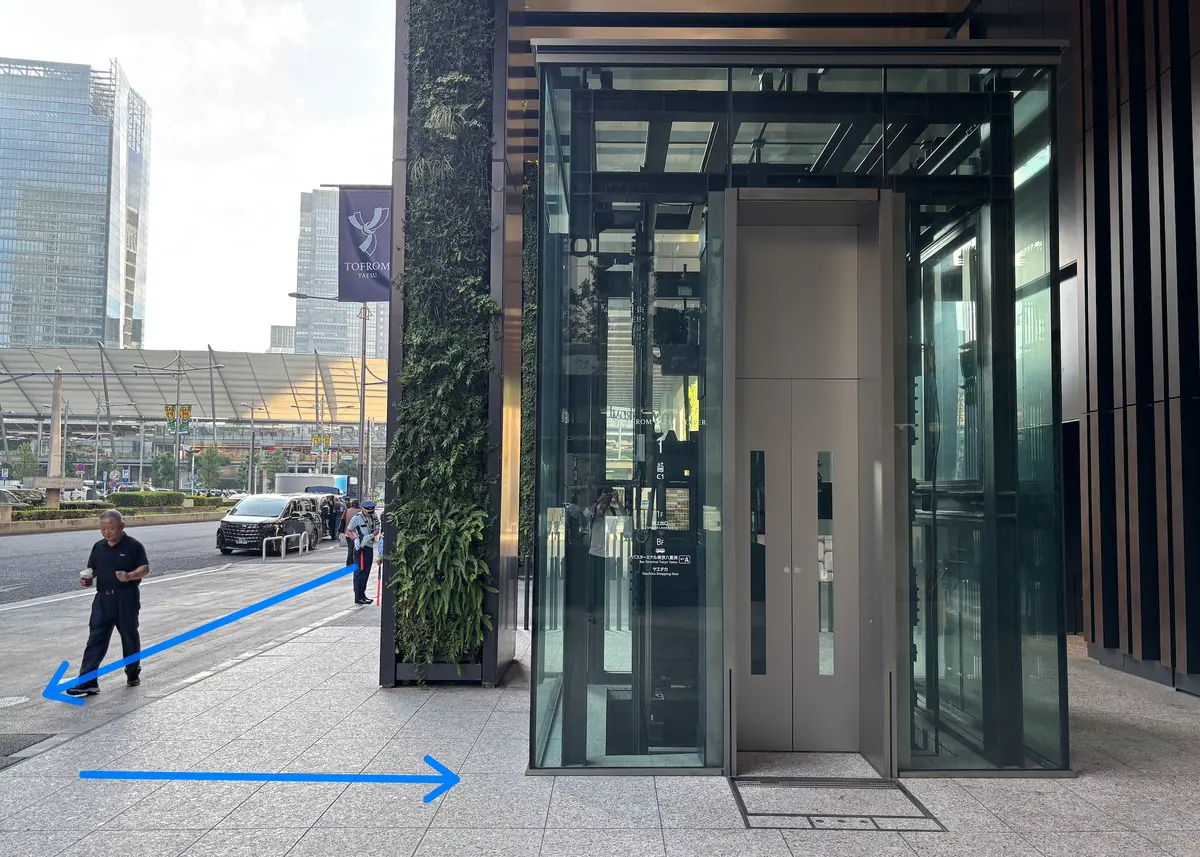
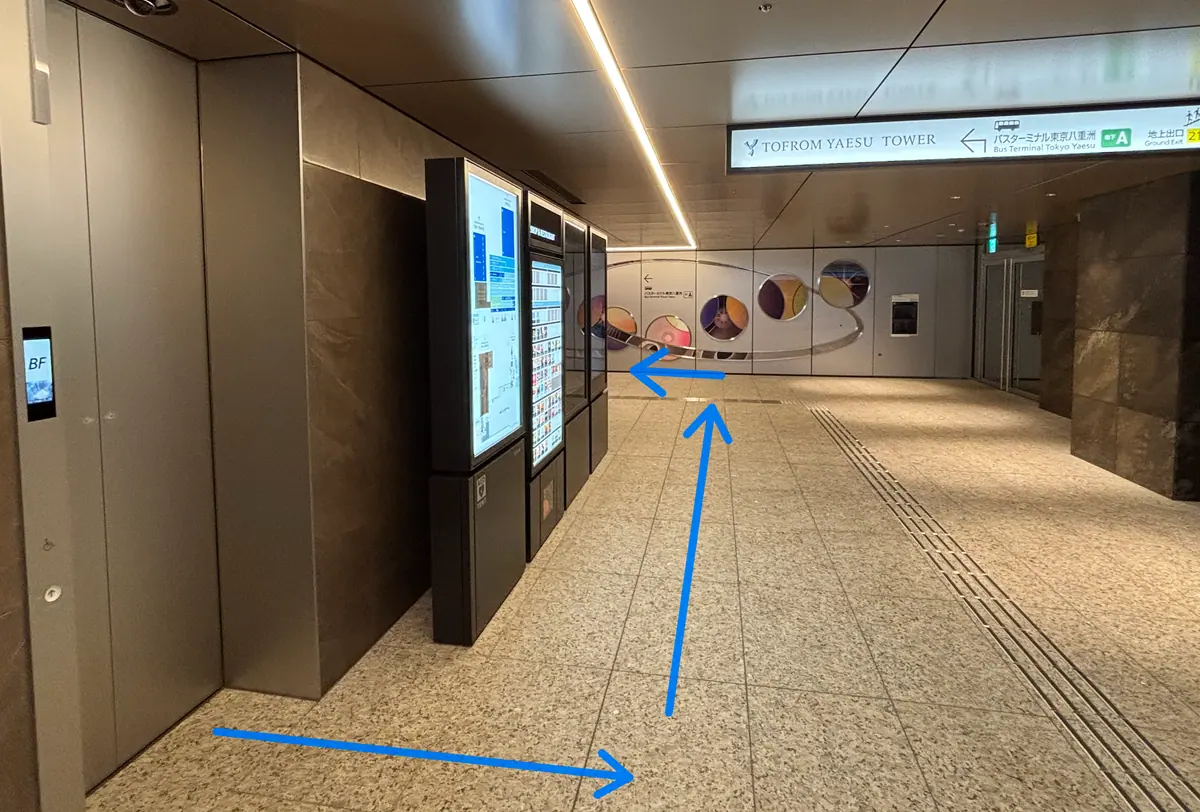
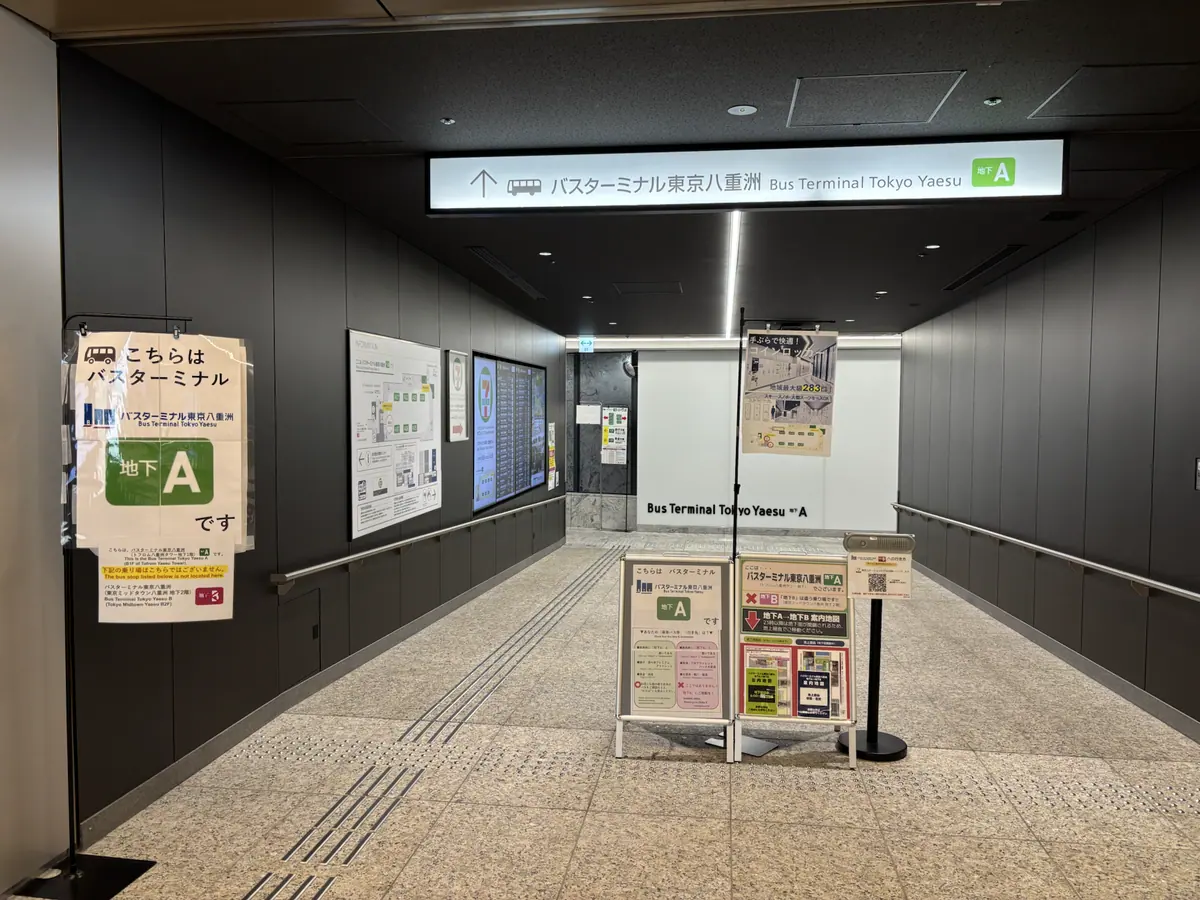
Area A is beneath TOFROM YAESU. I followed the full route from the Yaesu side of Tokyo Station to the terminal entrance and marked it on the map below.
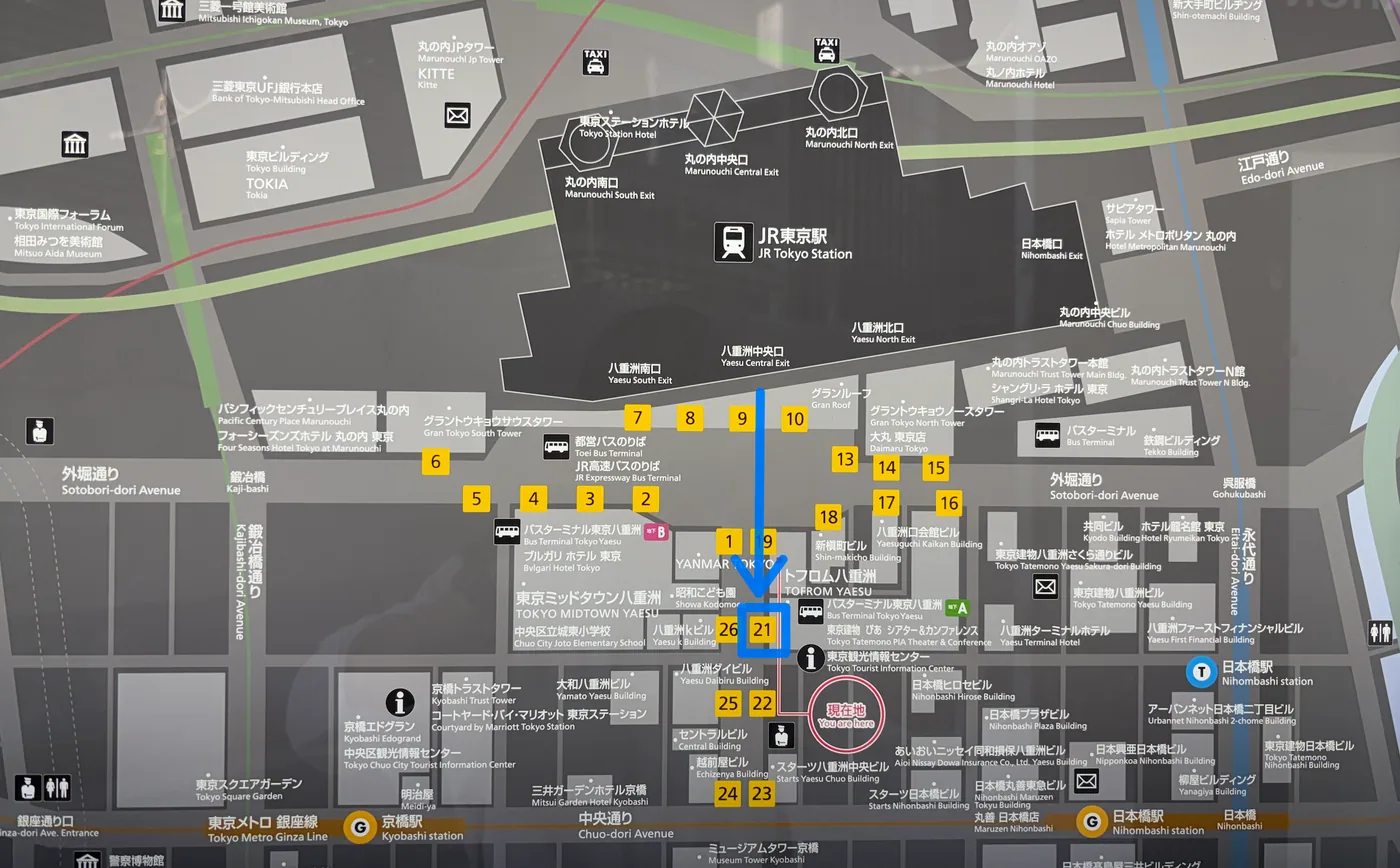
- 1Walk straight from the Yaesu station frontage
Follow the blue arrow toward TOFROM YAESU. Do not turn toward the Marunouchi side.
- 2Continue beside TOFROM YAESU
Stay on the marked sidewalk and follow the building rather than entering at the first doorway.
- 3Take the elevator down
Use the elevator shown in the photo. After descending, follow the Bus Terminal Tokyo Yaesu A signs.
Route to Area B: Tokyo Midtown Yaesu
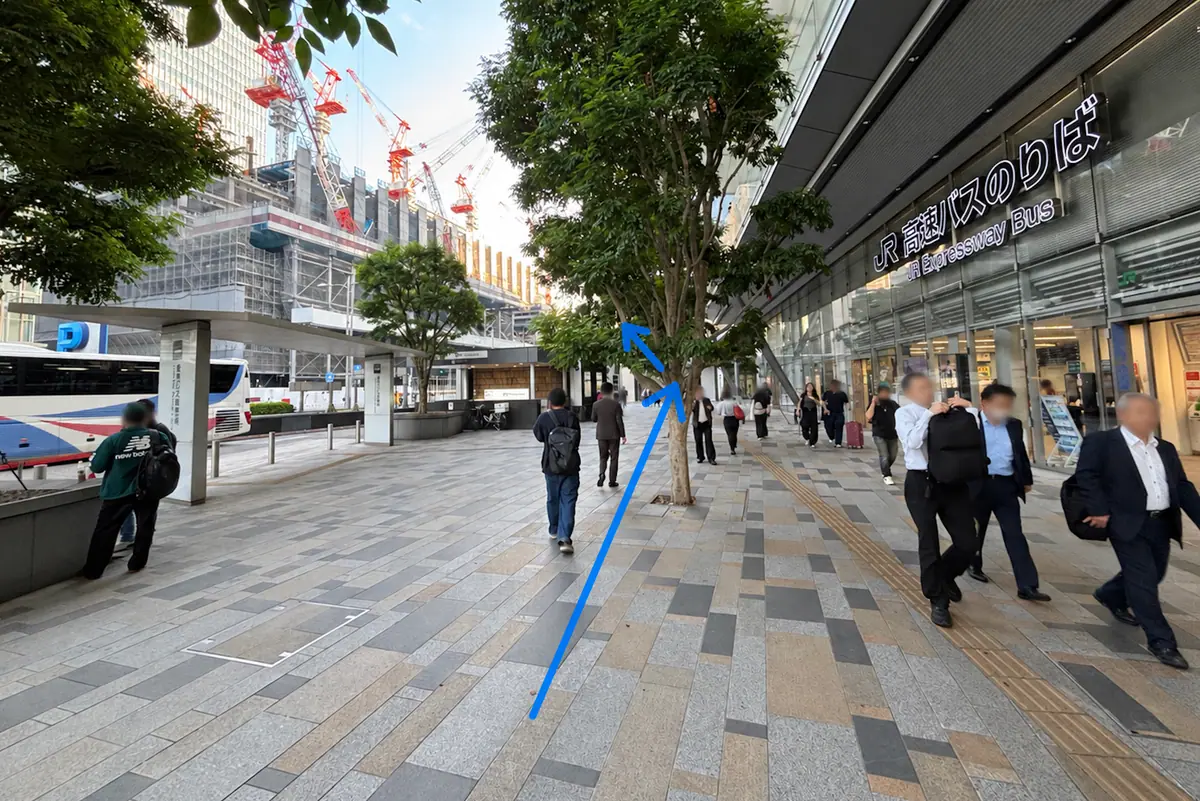
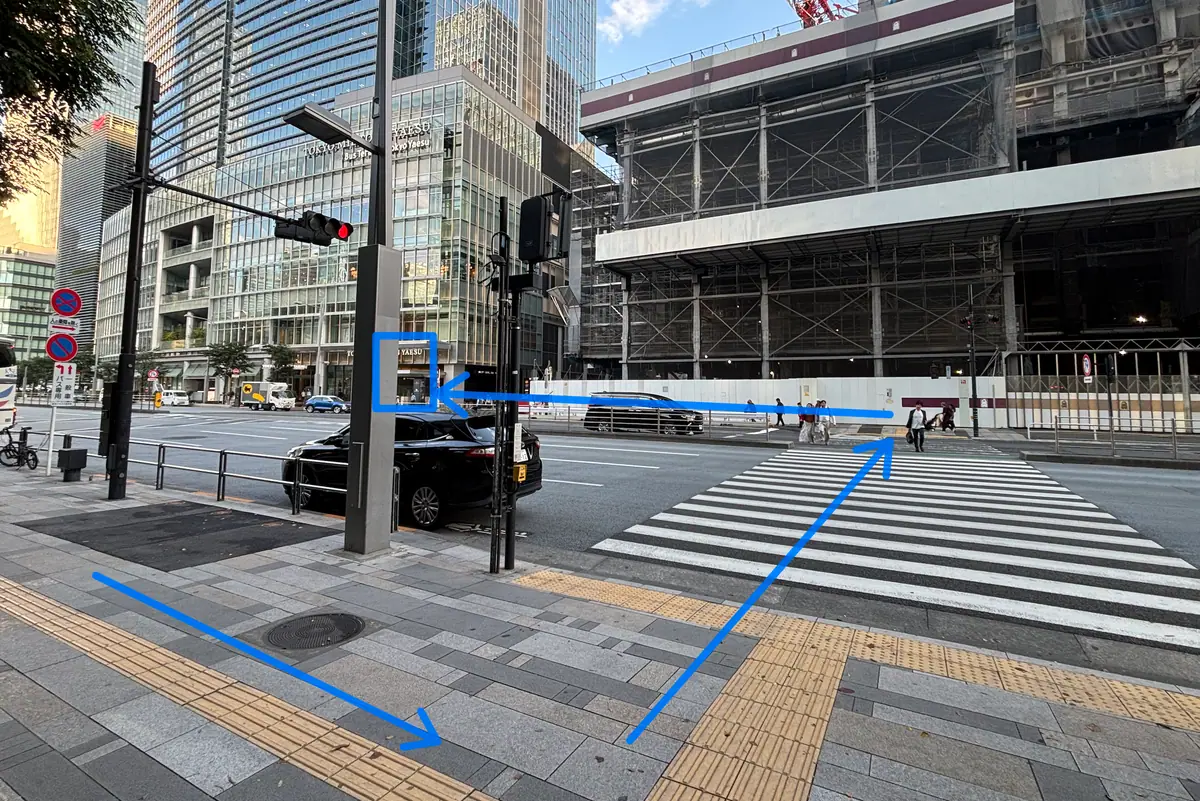
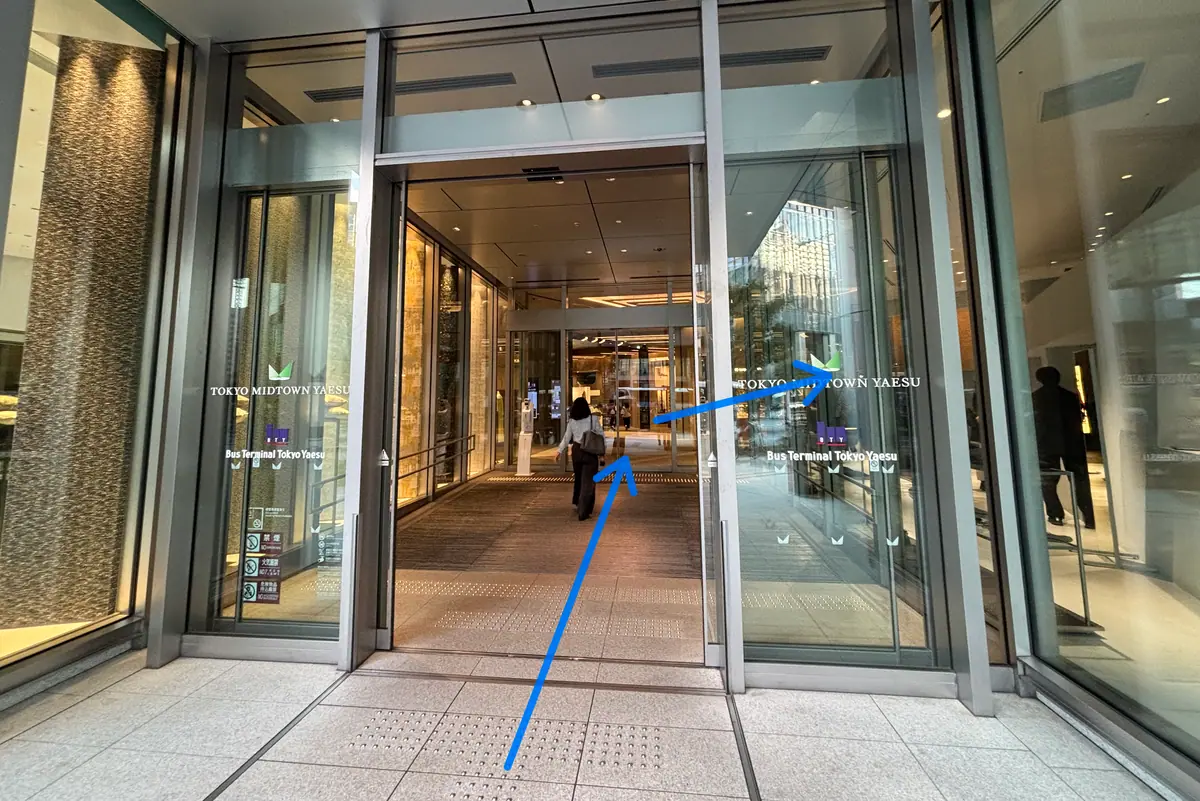
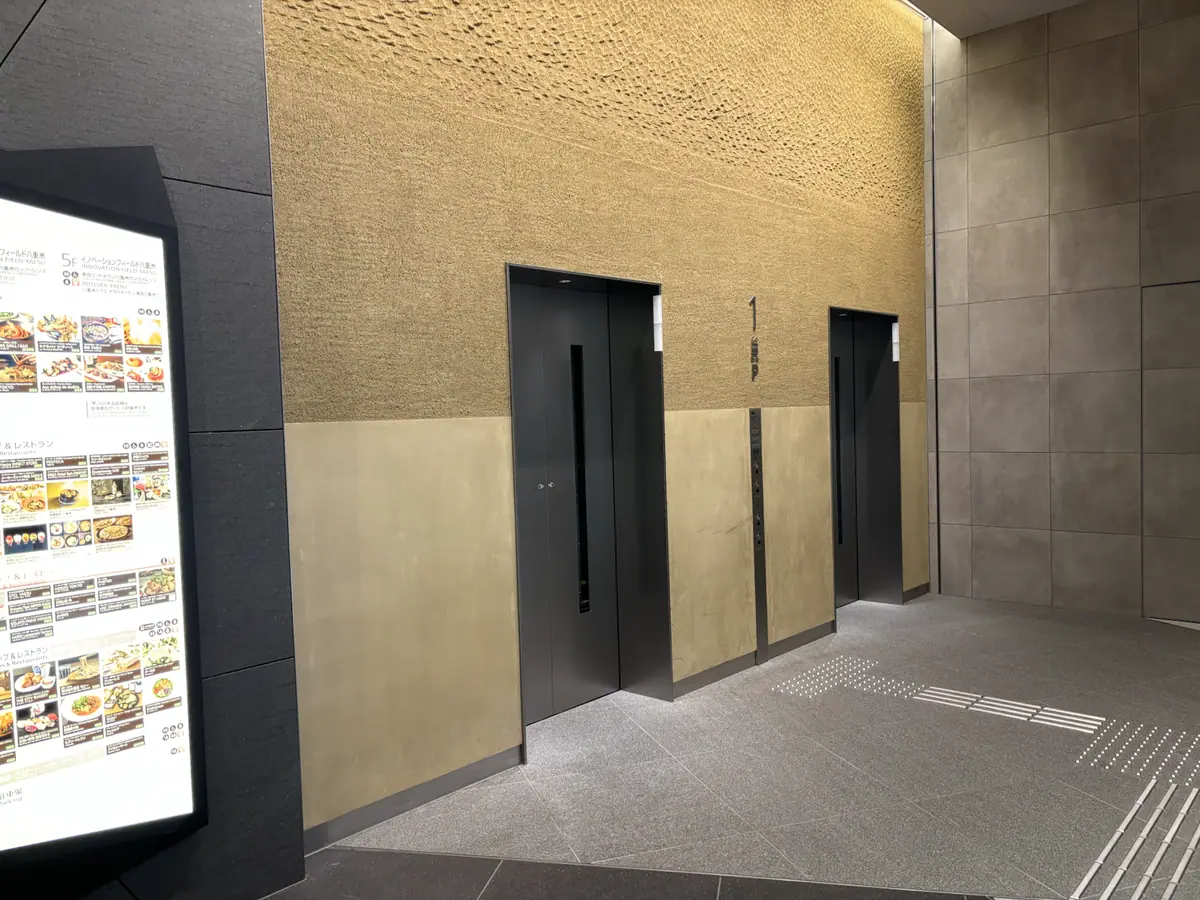
Area B is beneath Tokyo Midtown Yaesu. I followed the route from Yaesu South Exit and found one detail especially important: the ticket/information counter and boarding floor are on different levels.
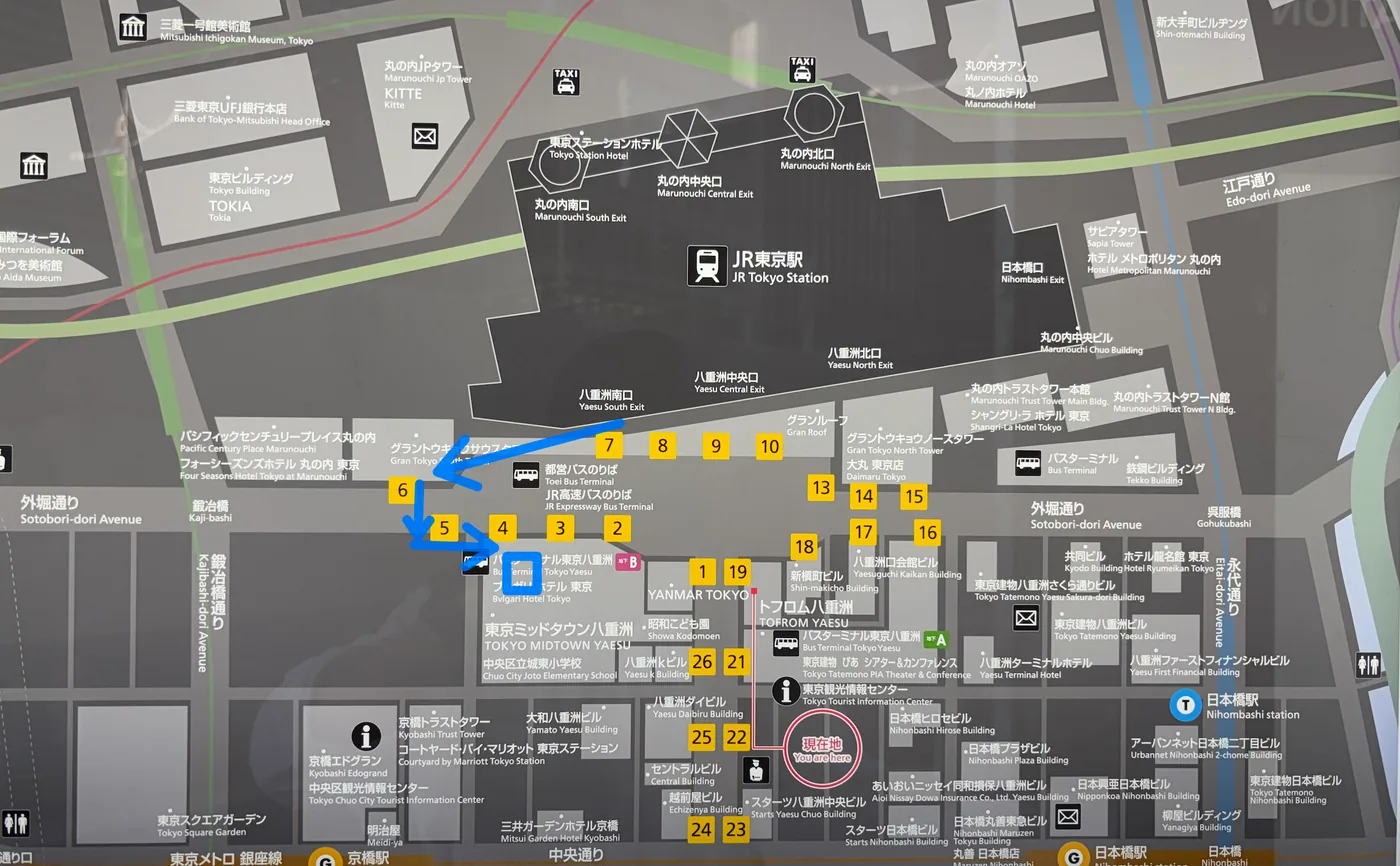
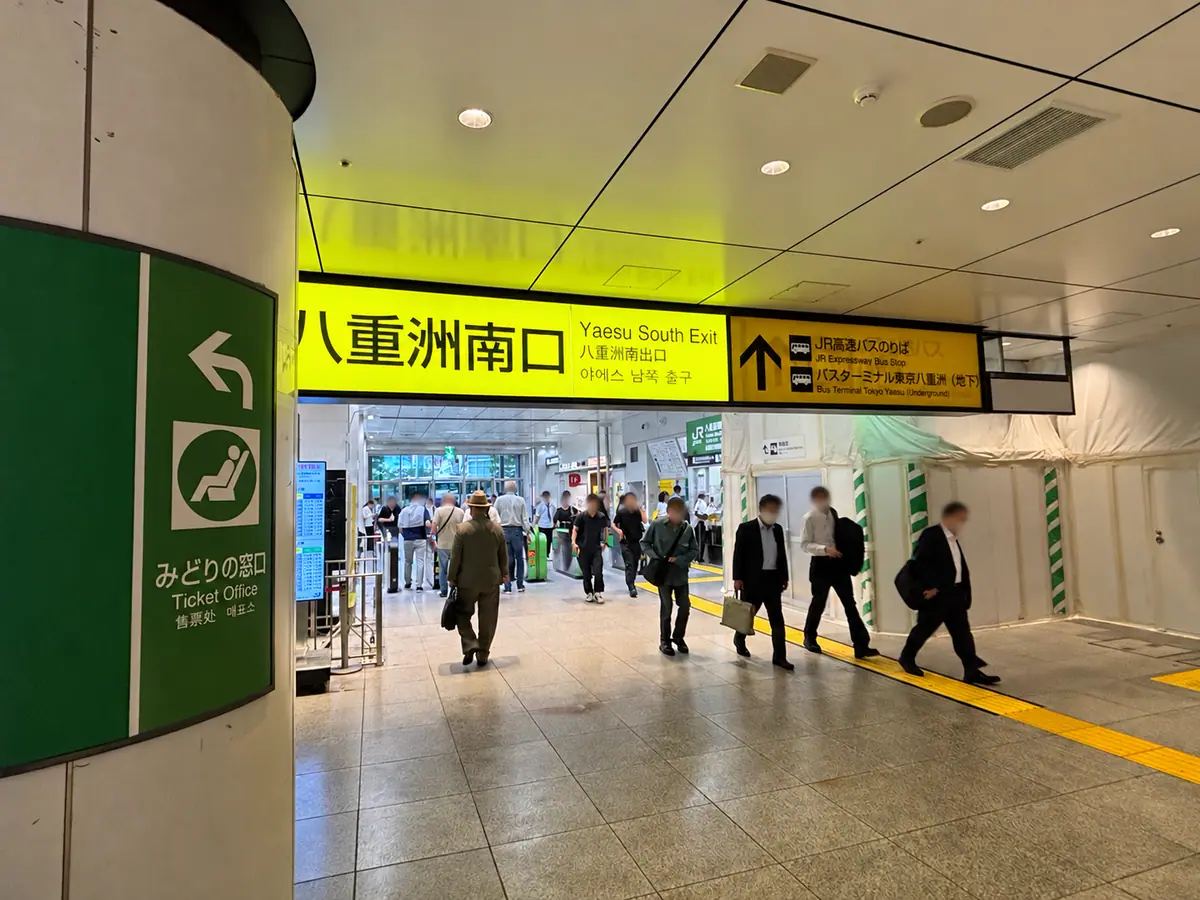
- 1Follow signs for Yaesu South Exit
Leave the JR paid area and continue toward the station frontage.
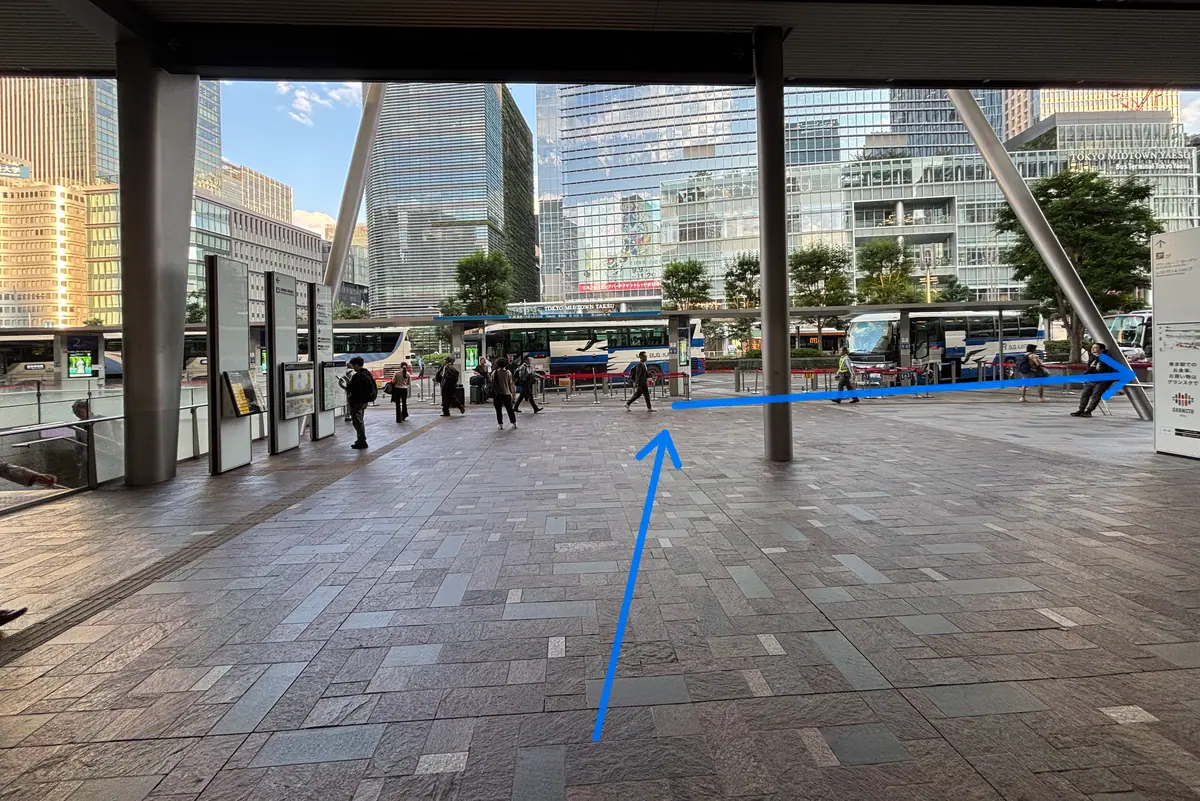
- 2Walk outside and turn right
Continue along the Yaesu side toward the JR highway-bus area.
- 3Cross toward Tokyo Midtown Yaesu
Use the pedestrian crossing shown in the photos, then enter the Midtown building.
- 4Take the elevator down
The Area B ticket and information counter is on B1. Boarding gates B11–B16 are one level lower on B2.
Underground route for rain
Both buildings connect to Yaechika (Yaesu Underground Shopping Mall), so you can reach either terminal without crossing outside in the rain. I follow signs for TOFROM YAESU for Area A or Tokyo Midtown Yaesu for Area B. I find the indoor route comfortable with rolling luggage, but there are several junctions, so I check each sign instead of simply following the crowd.
After 11:00 p.m., shutters restrict movement through Yaechika and between the A and B areas. If your bus leaves around midnight, follow the operator’s late-night access instructions and use the outside route. The terminal particularly recommends reaching Area A before midnight.
Use the official A/B access guide and save its printable terminal map before travel.
4. Buying tickets: reserve first when possible
The terminal itself does not manage reservations for every bus. I recommend finding your route in the official directory, opening the bus operator’s booking page, and reserving directly. If you need English, check whether that operator offers an English page before paying.
| Method | Best for | Important limitation |
|---|---|---|
| Operator website | Reserved, overnight and popular sightseeing routes | English support and cancellation rules differ by company. |
| Terminal ticket counter | A limited set of routes and passes, or travelers who need help | The counter does not sell every bus that departs from the terminal. |
| Ticket machine | Same-day tickets on selected regional routes | Machines cover only listed routes—not the whole departure board. |
| Pay when boarding/exiting | Specific unreserved local highway-bus services | Never assume this is allowed; confirm the route’s payment rules. |
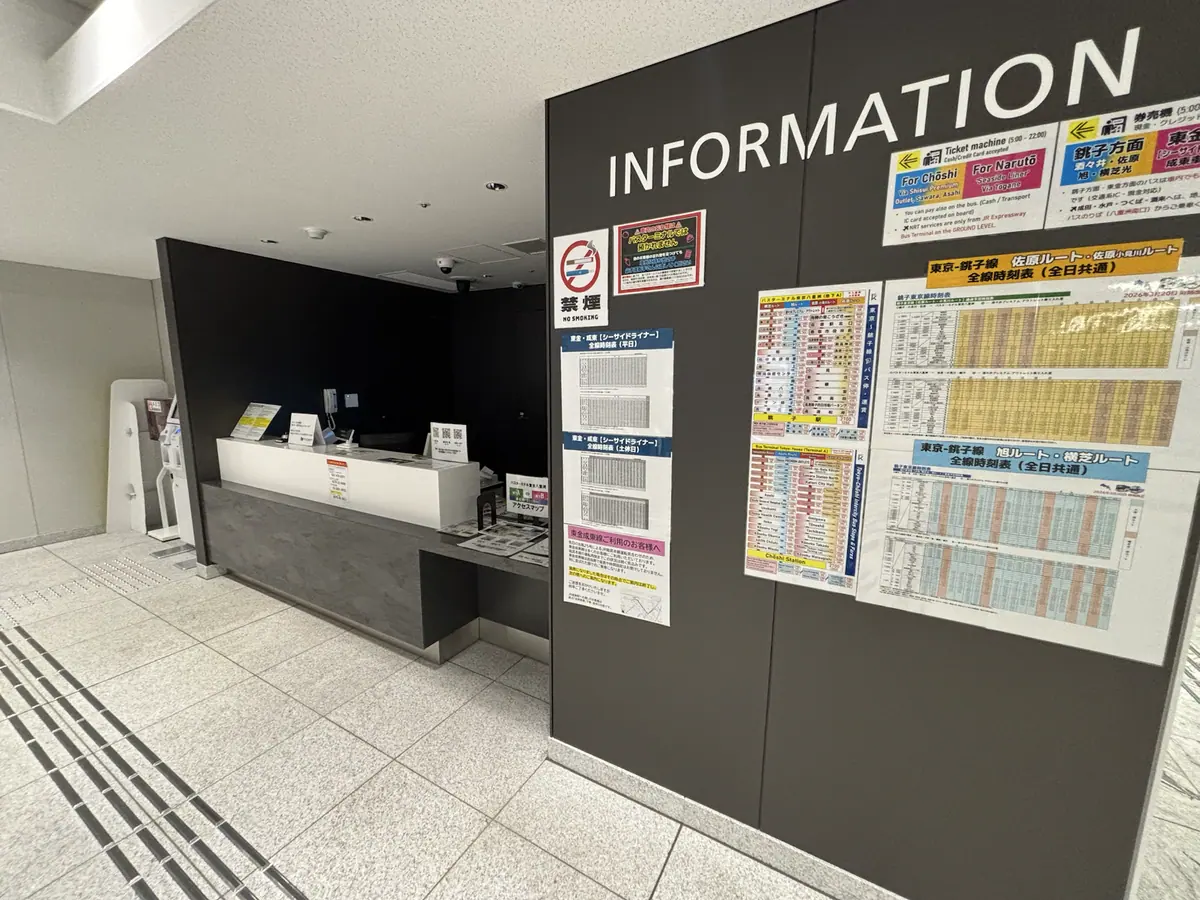
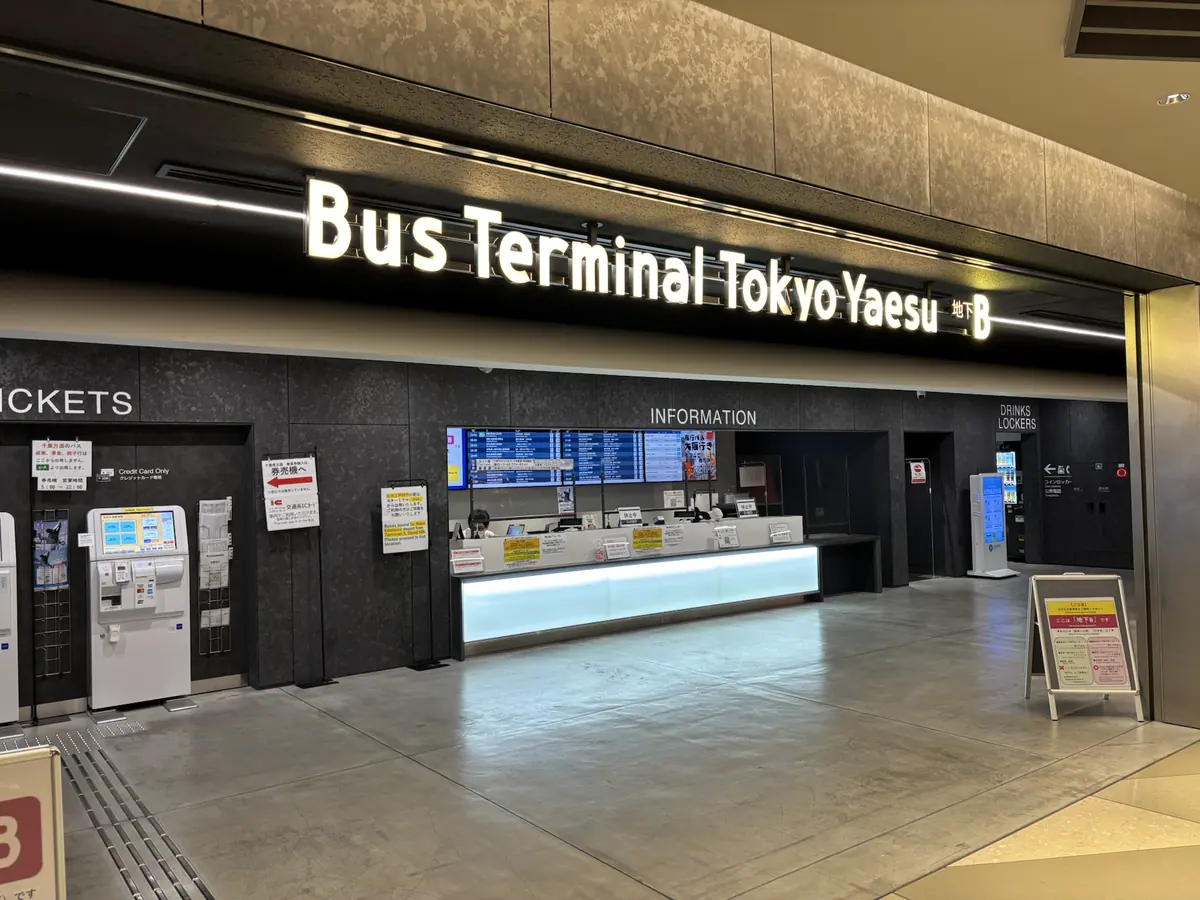
For example, VIP Liner’s English site currently lists a direct Tokyo–Kawaguchiko bus. Use it as one operator example, not as a universal booking site for all departures.
When I checked in October 2026, Area A’s counter was normally open 3:00–7:00 p.m., Area B’s counter 6:20 a.m.–8:00 p.m., and selected machines 6:00 a.m.–10:00 p.m. Some named reserved services have later counter support. Products and hours vary, so check the official service page instead of planning to buy every ticket after arrival.
5. My departure-day checklist
- 1Open the ticket or confirmation email
Confirm A or B, operator, service name/number, time, and destination. “Tokyo Station” alone is not enough.
- 2Arrive 20–30 minutes early
This gives a first-time visitor time to find the correct area, use the restroom, and reorganize luggage.
- 3Read the departure board for your area
Match the service and time, then note the current gate. A bus stop can change on the day, and the A and B boards show only their own departures.
- 4Go to the gate at least 10 minutes early
For a reserved bus, you do not need to queue extremely early, but you must be present before departure. Buses leave on time even if a passenger is missing.
- 5Show your web or paper ticket
Travelers who already hold the required ticket can normally go directly to the stop without visiting the counter.
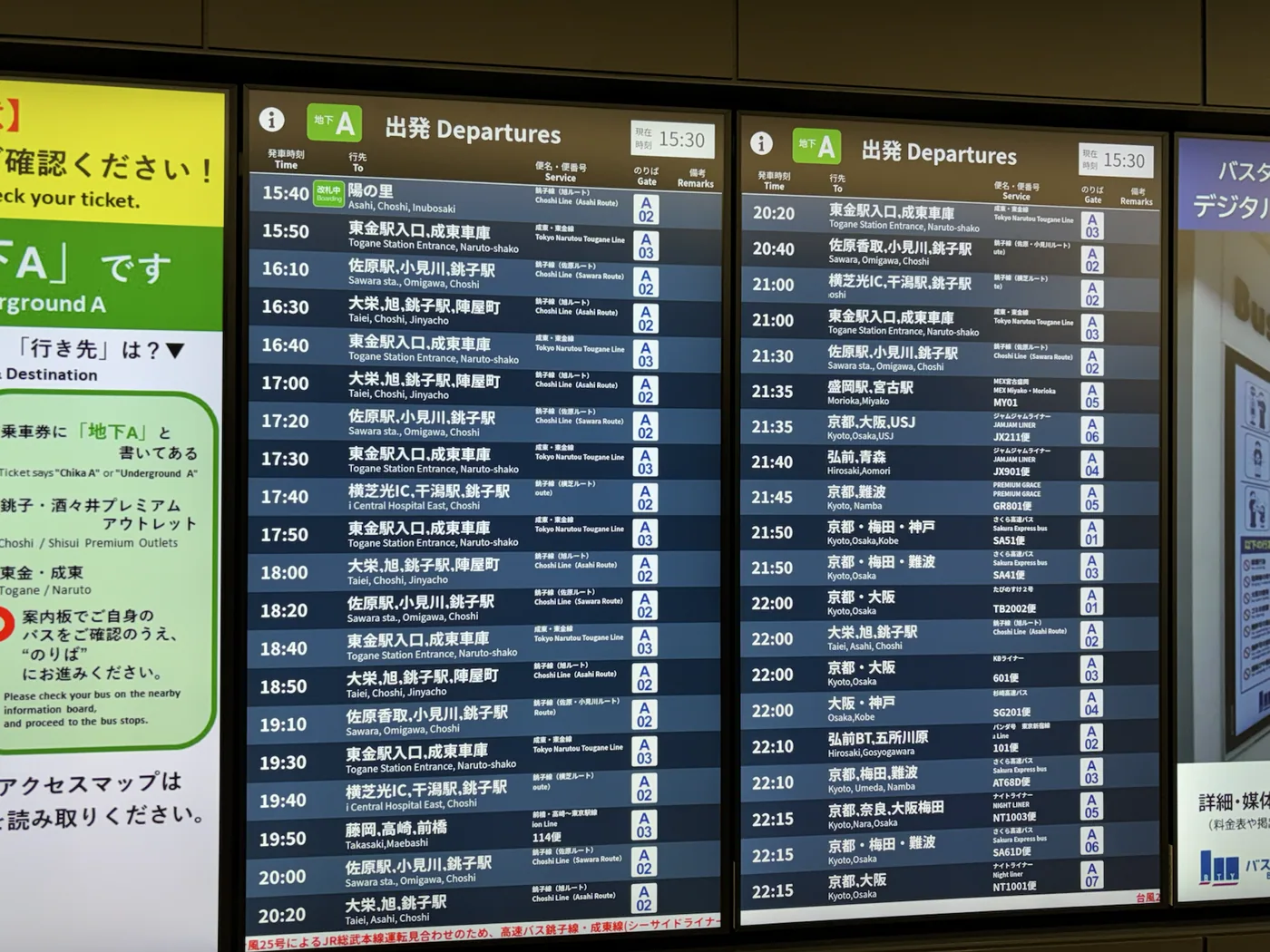
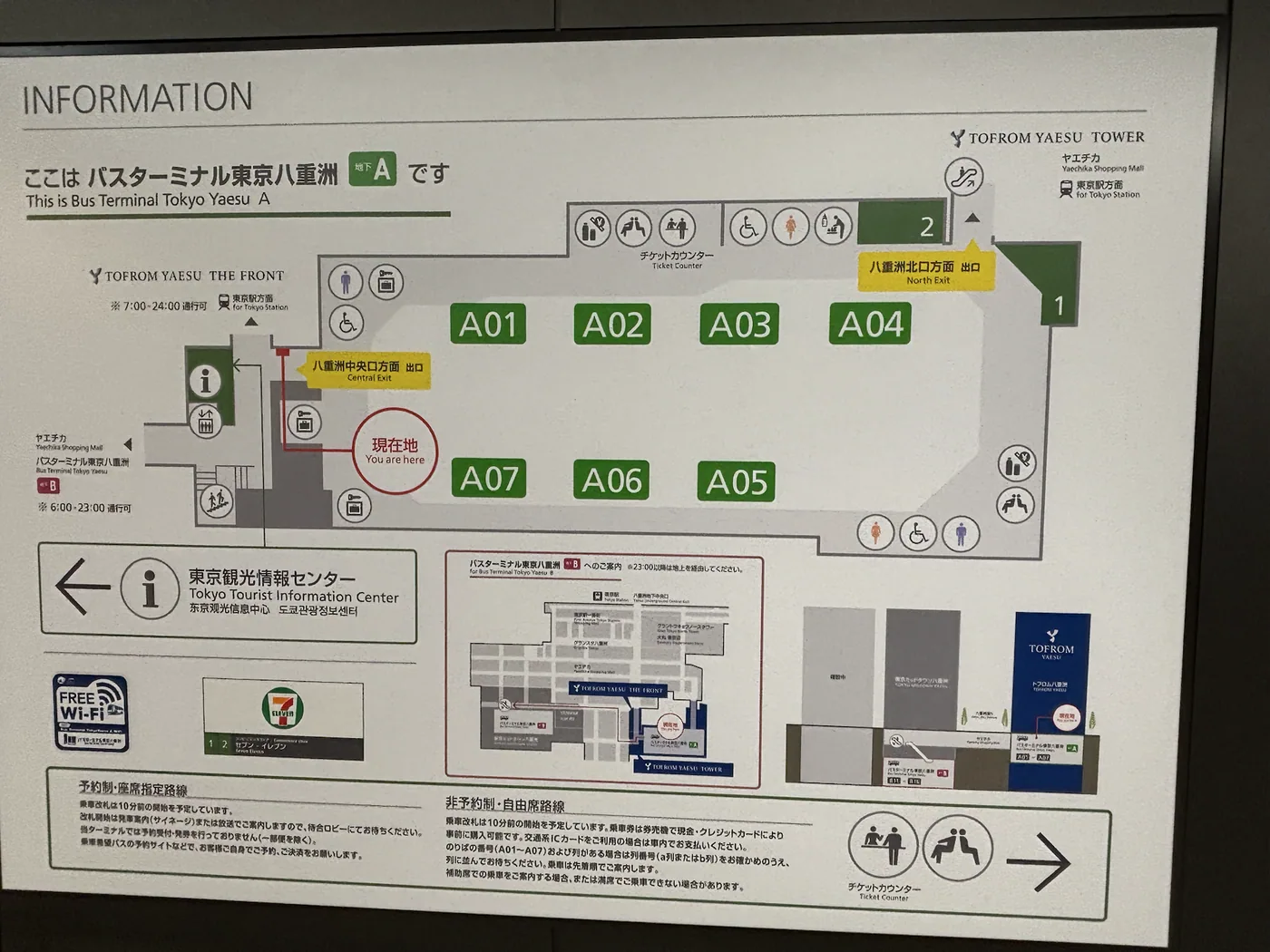
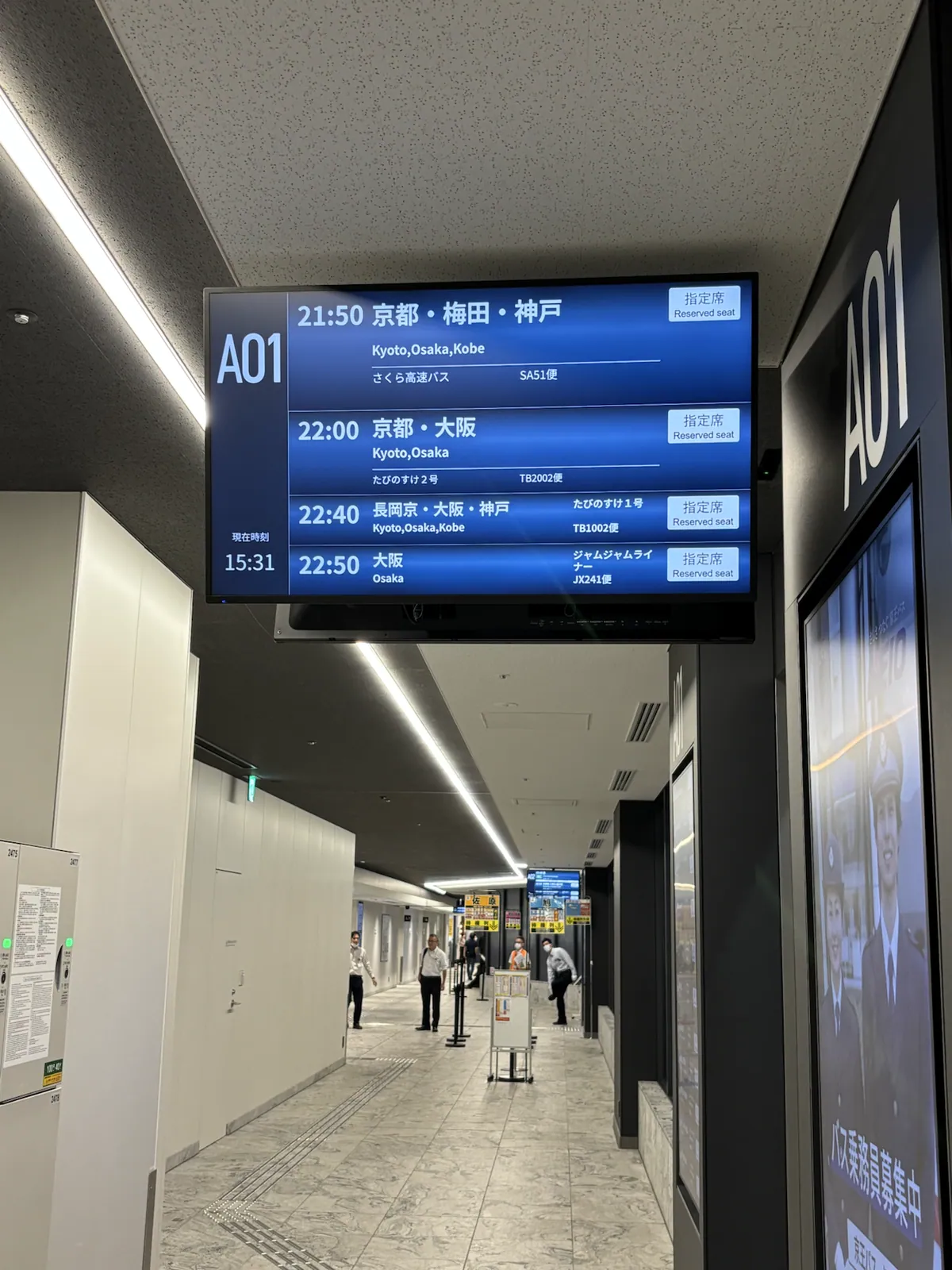
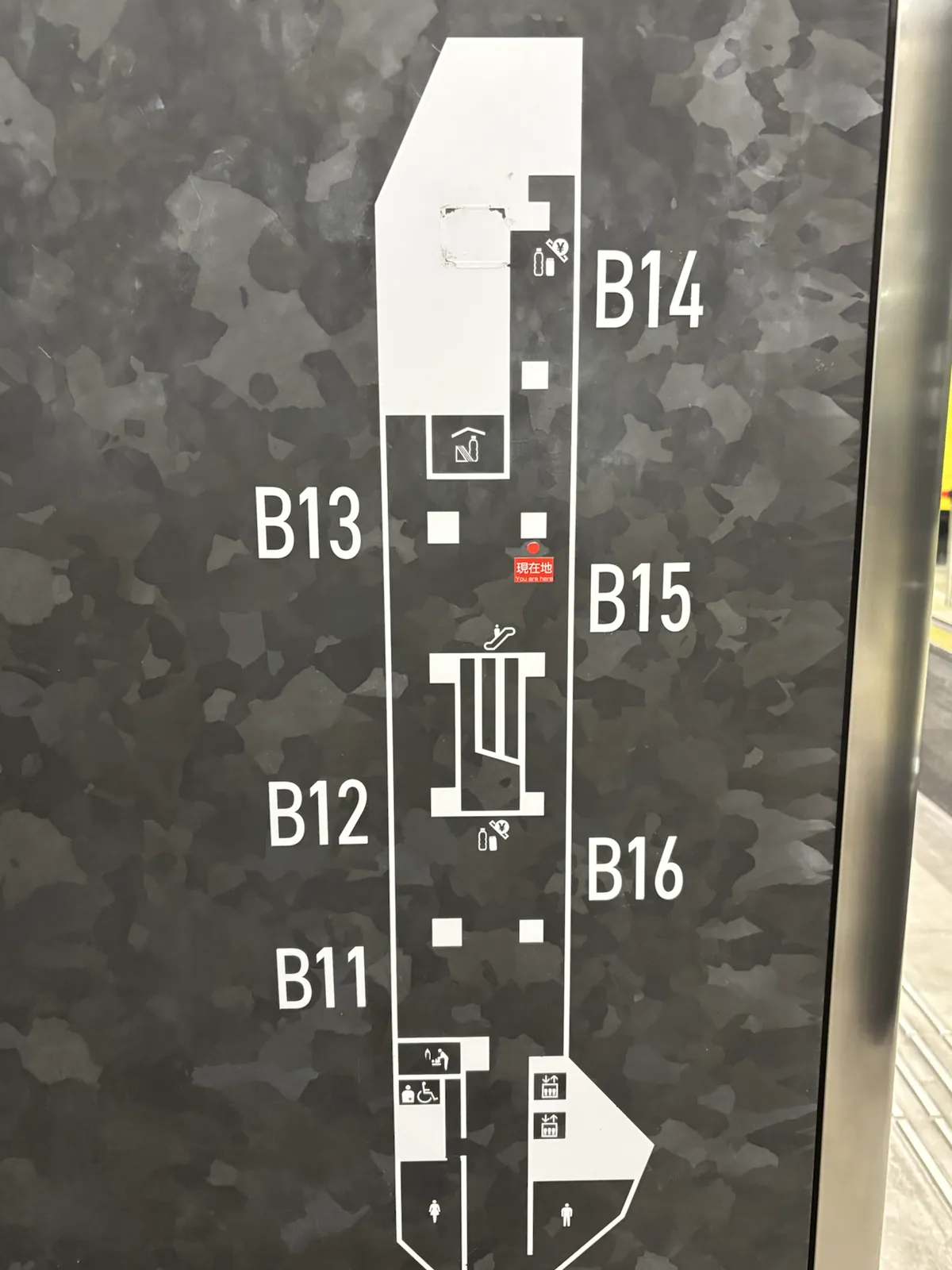
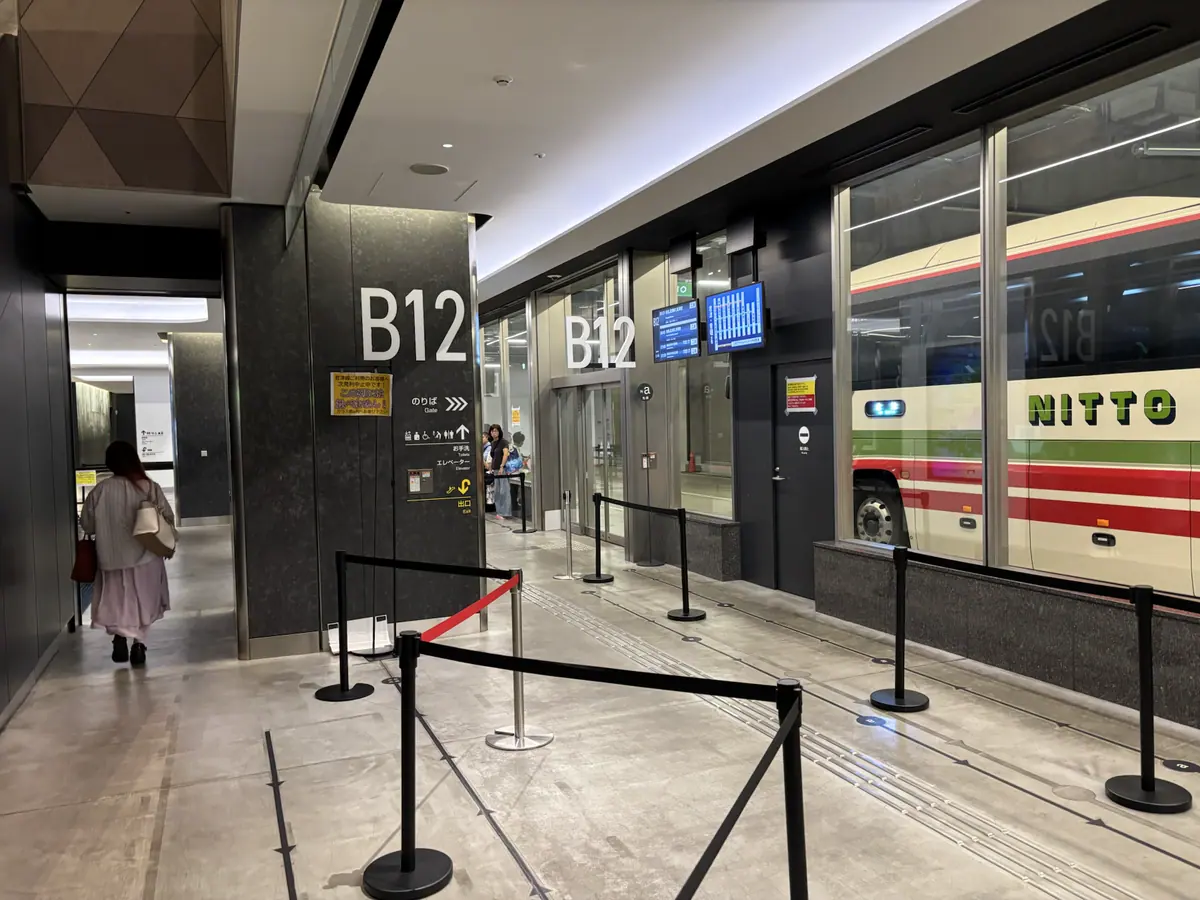
Area → departure time → operator/service → destination → gate
The gate number is the final detail, not the first. If the service name or destination does not match your confirmation, do not board just because the departure time looks right. Recheck the A/B area or ask the information counter.
The official live gate guide is useful before arrival, but always treat the screen inside the terminal and staff announcements as the final instruction.
6. Luggage, bus trunks, and coin lockers
Luggage limits are set by each bus operator, not by one terminal-wide rule. Ordinary suitcases may be accepted in the underfloor trunk on many coaches, while bicycles, musical instruments, surfboards, snowboards, very large cases, fragile items, and valuables may be restricted or refused. Check the operator’s size, quantity, and liability rules before booking.
- Keep valuables with you: passports, cash, medication, phones, cameras, and breakable items belong in your cabin bag.
- Label the suitcase: add your name and contact details before placing it in the trunk.
- Ask before bringing special equipment: do not arrive with a bicycle or board based on another operator’s rule.
- Use a locker for a long wait: both terminal areas list coin lockers, but sizes and vacancies are limited.
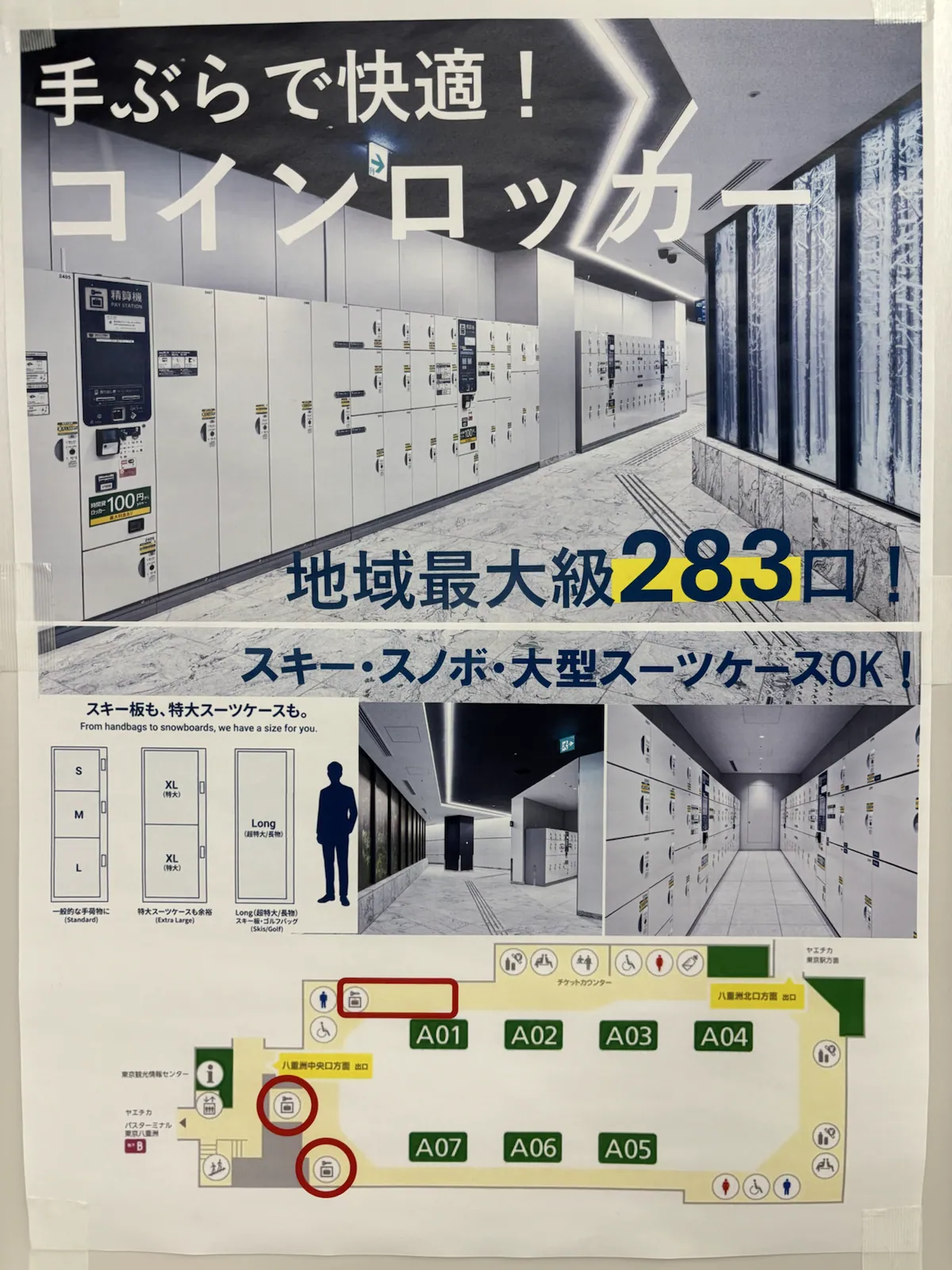
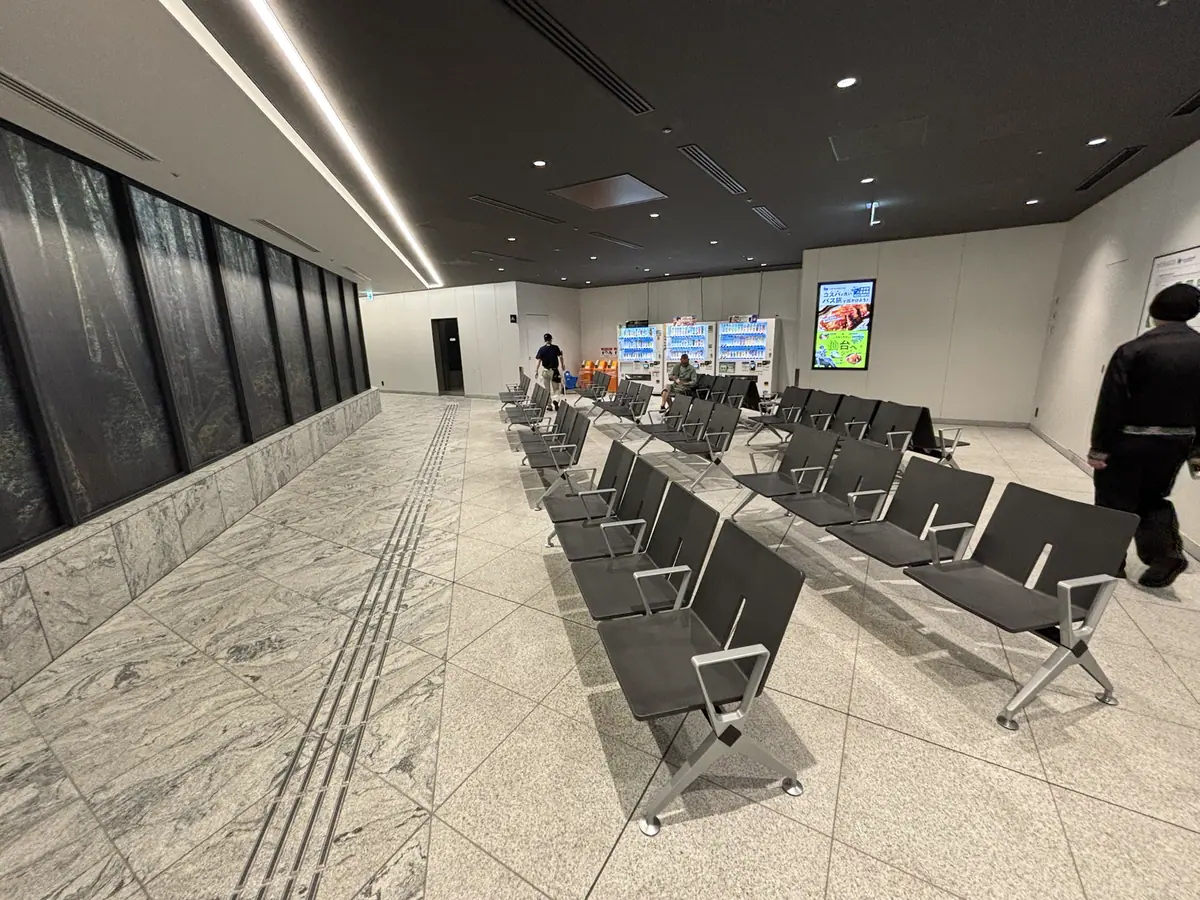
Facilities at a glance
| Facility | Area A | Area B |
|---|---|---|
| Convenience store | 7-Eleven 6:00 a.m.–12:30 a.m. | FamilyMart 6:15 a.m.–12:15 a.m. |
| Nursing room | Opposite gate A03 | On B2 |
| Waiting space | More than 100 seats | Seats and charging facilities |
| Lockers | 283 compartments in multiple sizes | Available, but fewer than Area A |
Facility hours and access can change. Recheck the terminal’s official services page, especially for late-night departures.
For station locker sizes, availability checks, and luggage delivery, see my coin locker and luggage-storage guide.
7. Where to eat before your bus
Choose food based on the terminal area and time remaining. A sit-down restaurant is not worth missing a non-refundable departure.
| Where | Best for | Read before you go |
|---|---|---|
| TOFROM YAESU | Area A passengers; broad choice of quick meals, Japanese food and public rest space | TOFROM YAESU guide |
| Tokyo Midtown Yaesu | Area B passengers; cafés, food hall seating and sit-down restaurants | Midtown Yaesu access guide |
| Sushiro in Yaechika | Affordable sushi when you have enough time for check-in and a possible queue | Sushiro photo guide |
| Tokyo Station ramen | A meal before leaving the JR paid area | First-time Jiro-style ramen guide |
When I arrive, I first confirm A or B and the departure gate. I then set an alarm that gives me at least 10 minutes to return. With children or large luggage, I recommend a takeaway meal or the nearest venue instead of crossing between buildings.
8. Bus or train to Mt. Fuji and Kawaguchiko?
The answer depends on the exact date. When I checked VIP Liner’s timetable on October 14, 2026, it showed a direct service from Bus Terminal Tokyo Yaesu A at 11:10 a.m. to Kawaguchiko Station West at 1:00 p.m. Fares shown for October dates varied, so I treat the figures below as a planning snapshot rather than a promise for another travel day.
| Direct highway bus from Yaesu | Fuji Excursion train | |
|---|---|---|
| Starting point | Bus Terminal Tokyo Yaesu A | Shinjuku Station; transfer from Tokyo Station first |
| Example time | About 1 hr 50 min on the published schedule | Fastest about 1 hr 54 min from Shinjuku, plus the Tokyo–Shinjuku transfer |
| Example one-way fare | Roughly ¥1,400–¥2,500 on dates displayed in October 2026 | ¥4,200 from Shinjuku to Kawaguchiko |
| Transfers | None when the direct service fits your date | One transfer is needed when starting at Tokyo Station |
| Main risk | Road traffic can delay arrival | More expensive; reserved direct trains are limited |
| Best for | Low cost and a simple direct trip from Yaesu | Travelers prioritizing rail and more predictable travel time |
My recommendation: I would choose the bus when its departure time matches the plan and I want the simplest low-cost route from the Yaesu side. I would choose rail when highway traffic could threaten an important reservation, or when the bus schedule does not fit. Check the current VIP Liner timetable and fare and the official Fuji Excursion information before deciding.
9. Useful Japanese at the terminal
| Japanese | Reading | Meaning |
|---|---|---|
| このバスは河口湖に行きますか? | Kono basu wa Kawaguchiko ni ikimasu ka? | Does this bus go to Kawaguchiko? |
| このチケットはAとB、どちらですか? | Kono chiketto wa A to B, dochira desu ka? | Is this ticket for A or B? |
| 乗り場はどこですか? | Noriba wa doko desu ka? | Where is the boarding gate? |
| この荷物は預けられますか? | Kono nimotsu wa azukeraremasu ka? | Can I put this luggage in the bus trunk? |
| 当日券は買えますか? | Tōjitsuken wa kaemasu ka? | Can I buy a same-day ticket? |
10. Quick FAQ
Is Bus Terminal Tokyo Yaesu inside Tokyo Station?
No. Areas A and B are in separate buildings across from the Yaesu side of Tokyo Station, although both connect to the Yaechika underground network.
How early should I arrive?
Aim for the correct terminal area 20–30 minutes before departure on your first visit. Be near the assigned gate at least 10 minutes early. The bus will not wait for a missing passenger.
Are A and B connected underground?
They are linked through the broader underground network during normal hours, but they are distinct boarding areas. After 11:00 p.m., shutters restrict underground movement, so use the street-level route.
Can I buy every bus ticket at the terminal?
No. Counters and machines sell only selected products. Reserve through the bus operator whenever possible, especially for overnight, sightseeing, holiday, and seat-reserved services.
Can I show an e-ticket on my phone?
Many operators accept web tickets, but the format and boarding procedure differ. Follow the instructions in your confirmation email and keep the page or QR code available offline.
Can I take a bus to Narita or Haneda from here?
Do not assume so. Tokyo Station has several unrelated bus stops, and airport services can use a different one. Search the exact airport service and boarding point on the operator’s official site.
Are there toilets, nursing rooms, and convenience stores?
Yes. Both areas have toilets, accessible toilets, waiting space, vending machines, lockers, nursing rooms, and information facilities. Area A has a 7-Eleven, while Area B has a FamilyMart. Recheck current hours before a late-night departure.
Can I move between A and B after midnight?
Do not plan to. Underground access is restricted late at night. Confirm the correct area in advance and approach it directly from street level.
On October 14, 2026, I checked this independent guide against Bus Terminal Tokyo Yaesu’s official homepage, A/B access guide, route directory, boarding guide, service and ticket-counter information, floor maps, FAQ, and the official notice explaining the A/B split. I checked the Mt. Fuji examples against VIP Liner and Fujikyu Railway. Routes, gates, fares, timetables, ticket hours, access restrictions, and luggage rules can change; reconfirm them for your date.