I photographed Tokyo Station’s reserved-seat ticket machine, Midori-no-Madoguchi, and JR EAST Travel Service Center to show the choices you will actually see at the station. My simple rule for a Tokyo–Kyoto or Tokyo–Shin-Osaka trip is to use SmartEX before travel, a reserved-seat ticket machine for a straightforward purchase, or a JR ticket counter when you need help.
1. Quick answer
Book online for certainty, use the machine for flexibility, or ask JR staff for help
I recommend SmartEX when you want to book Tokyo to Kyoto or Osaka before arriving. If you are already in Japan, I recommend a JR reserved-seat ticket vending machine with an English menu for a straightforward purchase, and a JR ticket counter for rail-pass questions, complicated connections, accessibility needs, or anything you are unsure about.
Reserve ahead for Golden Week, Obon, the year-end/New Year period, long weekends, and popular cherry-blossom or autumn weekends. During designated peak periods, Nozomi trains operate with reserved seats only, although Hikari and Kodama may still have non-reserved cars.
2. Three ways to buy a Shinkansen ticket
I recommend the station machine for a straightforward ticket you want to buy immediately, SmartEX for an advance Tokyo–Kyoto–Osaka booking, or a JR counter when your itinerary is complicated or you want to ask questions.
| Method | Best for | Main advantage | Watch for |
|---|---|---|---|
| Station machine | First-time visitors already in Japan with a simple route and date | English menu, seat selection, and immediate paper tickets | Use a reserved-seat machine labeled Shinkansen / Limited Express Tickets |
| SmartEX | Tokyo–Kyoto–Osaka trips and other Tokaido, Sanyo, or Kyushu journeys booked in advance | Reserve before your trip, choose seats, and board with an eligible QR ticket or linked IC card | Registration and a compatible payment card are required; it does not cover every Shinkansen line in Japan |
| JR ticket counter | Families with special requests, rail-pass users, complex journeys, accessibility support, or oversized luggage questions | A staff member can check the whole itinerary | Lines can be long at major stations, especially before busy travel periods |
SmartEX is the official online service for the Tokaido, Sanyo, and Kyushu Shinkansen. Other regions use different JR reservation services, so do not assume SmartEX covers a journey such as Tokyo to Kanazawa, Nagano, Sendai, or Hokkaido.
If you need help at Tokyo Station: which counter should you use?
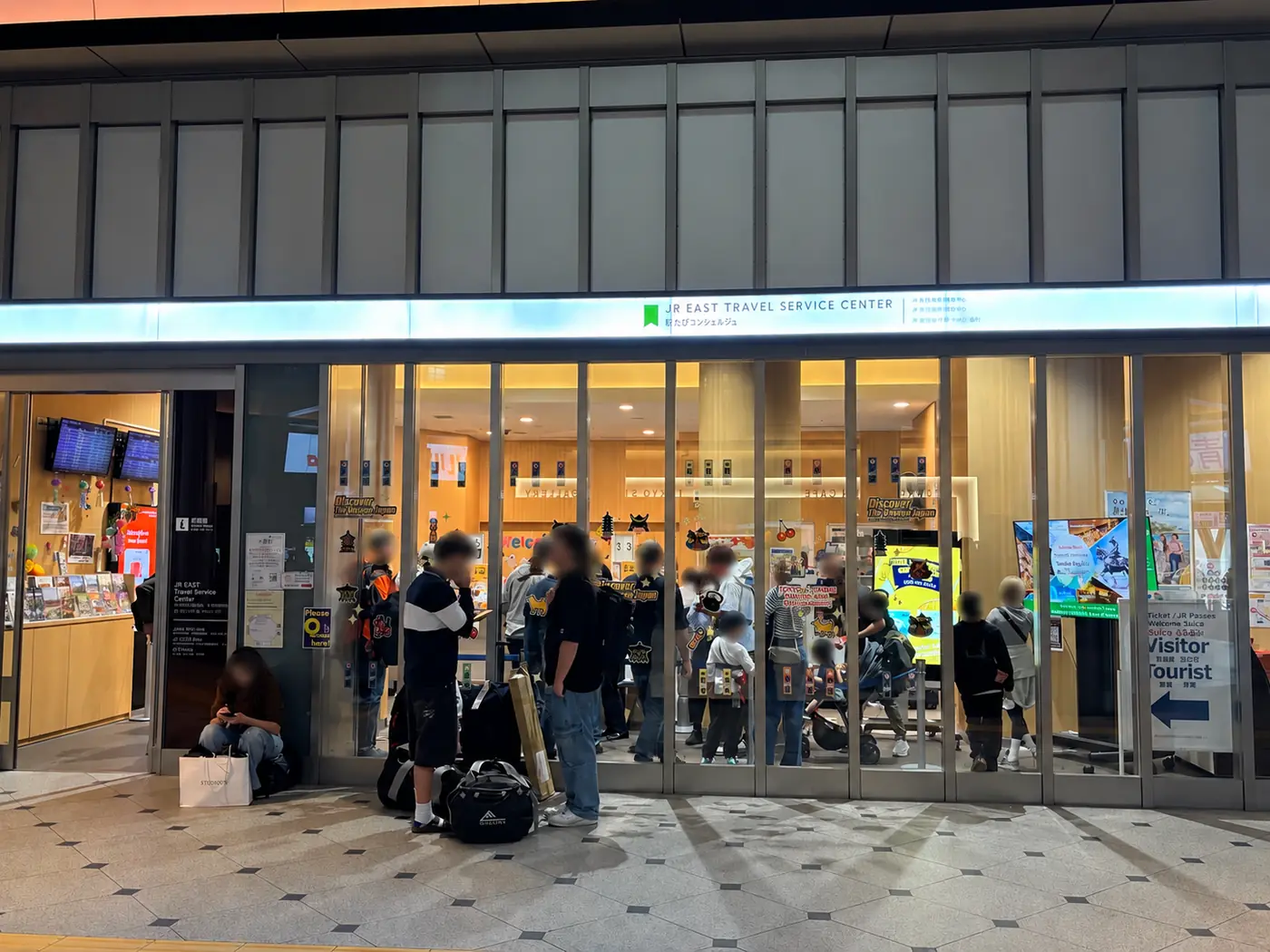
I photographed the two main kinds of staffed ticket support at Tokyo Station. Both can help with JR tickets, but they are designed for slightly different needs.
| Service | What it is best for | Language and travel support |
|---|---|---|
| Midori-no-Madoguchi (JR Ticket Office) | Buying ordinary JR, Shinkansen, limited-express, reserved-seat, and Green Car tickets; requesting eligible changes or refunds | A general JR ticket office. English assistance may be available, but a foreign-language-speaking staff member is not guaranteed. |
| JR EAST Travel Service Center | Buying Shinkansen and limited-express tickets, buying or collecting eligible rail passes, collecting JR-EAST Train Reservation bookings, and asking tourist questions | Designed for international visitors, with foreign-language-speaking staff stationed at the center. |
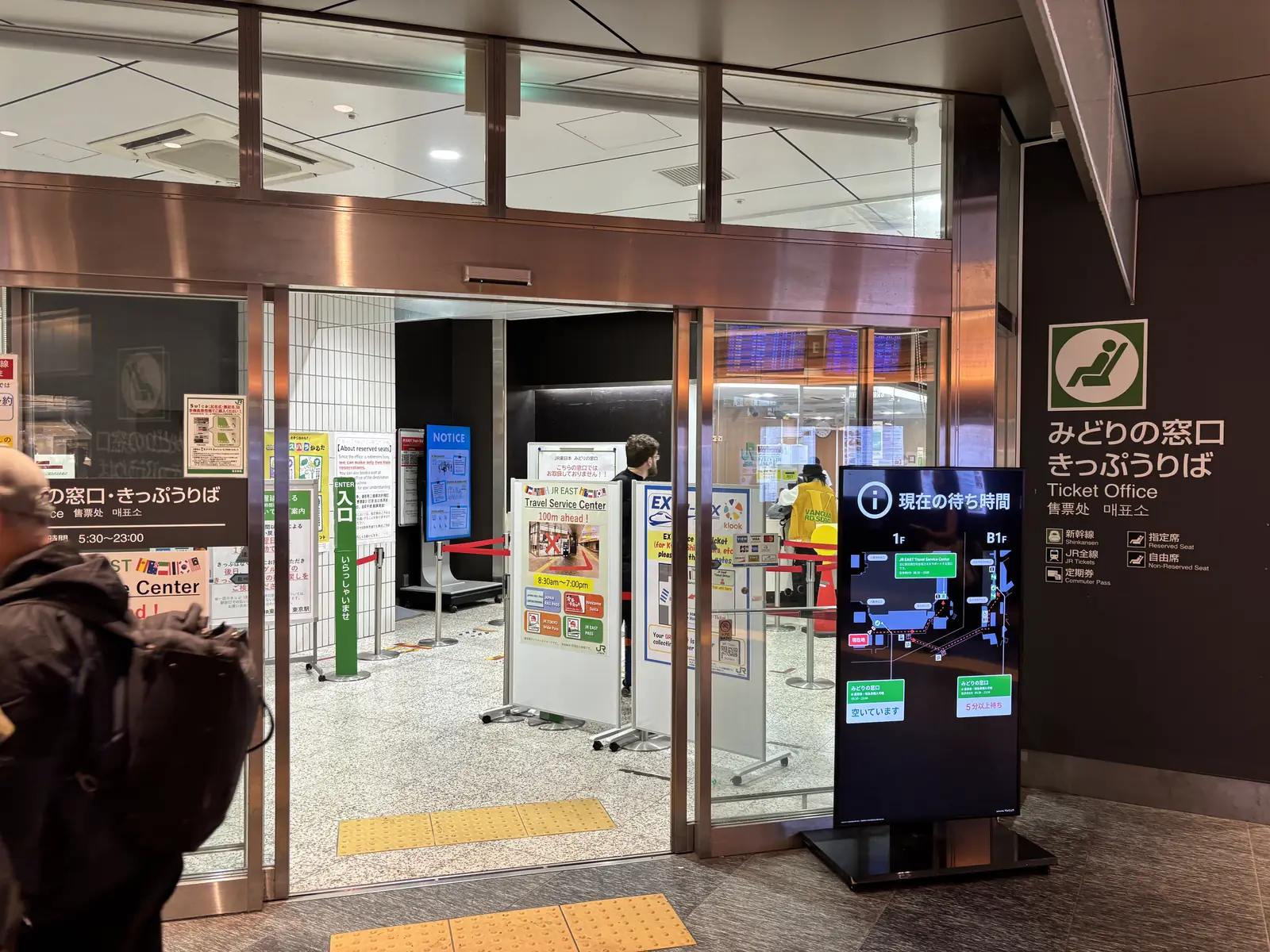
Choose the JR EAST Travel Service Center when you want to explain your trip in English
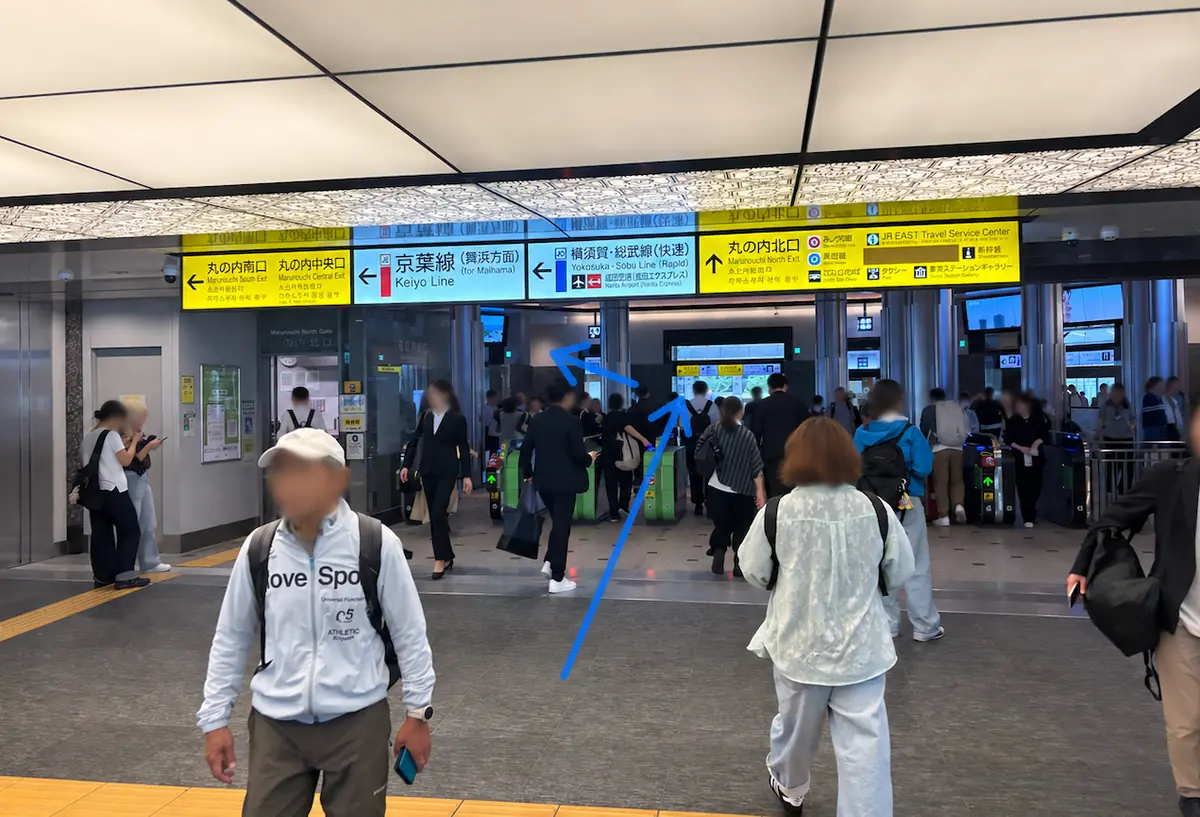
I followed the route from Tokyo Station’s Marunouchi North Exit. After passing through the ticket gates, I turned left and found the center on my left inside the Marunouchi North Entrance Dome. It is on the Marunouchi side of the station—not the Yaesu side. See the officially linked Google Maps location.
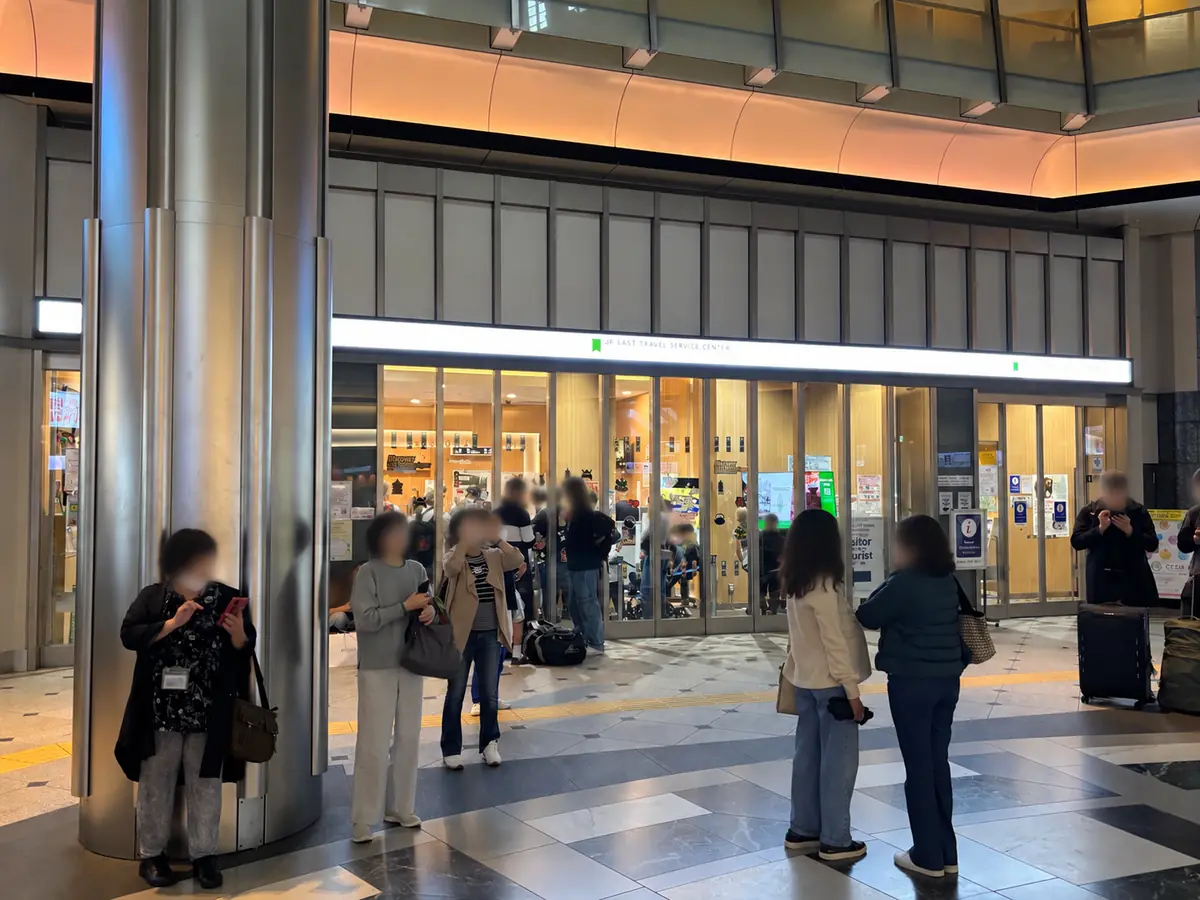
Tokyo Station also has several Midori-no-Madoguchi locations, including the Marunouchi Underground North Exit, Marunouchi South Exit, and Yaesu North Exit areas. If your train and route are already decided and you only need a standard purchase or ticket procedure, use whichever JR ticket office is closest. Check the official Tokyo Station page for current locations and hours, which can change.
This is the counter I recommend for visitors who want help in English:
3. How to buy at a station machine
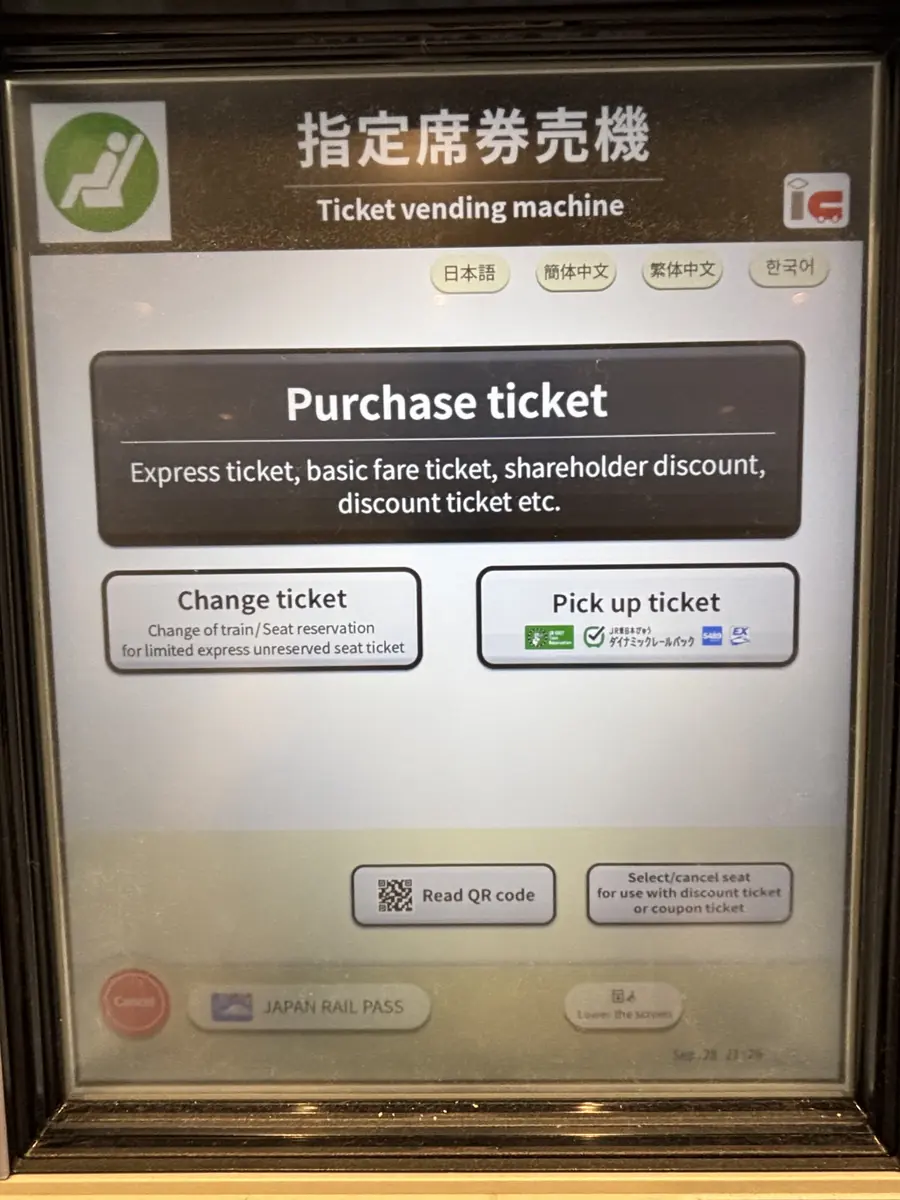
I photographed a reserved-seat ticket vending machine outside the ticket gates for travelers who prefer to buy without visiting a staffed counter. At a major JR station, look for a machine labeled Reserved Seat or Shinkansen / Limited Express Tickets. The color and screen design vary by station, so I recommend checking the label rather than relying on the machine color alone.

- 1Find a Reserved Seat Ticket Machine
Use a machine labeled Reserved Seat or Shinkansen / Limited Express Tickets. A standard local-ticket machine may not sell the ticket you need.
- 2Switch to English and select Shinkansen
Choose the English-language button, then select the option for a Shinkansen or reserved-seat ticket. Avoid selecting only a local-train fare.
- 3Enter the route, date, time, and passengers
Select your departure and arrival stations, travel date, approximate departure time, and number of adults and children. The machine will then show suitable trains. For Tokyo to Kyoto, Nozomi is normally the fastest direct option.
- 4Choose reserved or non-reserved, then select a seat
Reserved seating is easier for a first trip, family, busy date, or fixed itinerary. Use the seat map to choose seats together and select an oversized-baggage seat if required.
- 5Review, pay, and collect every ticket
Check the stations, date, train, passengers, and seat before paying. You may receive one combined ticket or separate basic-fare and limited-express tickets, plus a receipt. Keep every travel ticket until you leave the station at your destination.
When entering with paper tickets, the gate returns the tickets you still need. Pick them up immediately. If you have two valid paper tickets, the Shinkansen gate may require you to insert them together.
4. Reserved vs non-reserved: which is easier?
| Your situation | Best choice | Why |
|---|---|---|
| First Shinkansen trip | Reserved | Your train, car, and seat are fixed, so boarding is easier to understand. |
| Family or group | Reserved | You can choose seats together instead of searching for several open seats. |
| Large or oversized luggage | Reserved | You may need a seat connected to an approved baggage area. |
| Busy holiday or weekend | Reserved in advance | Non-reserved cars may be crowded, and Nozomi becomes all-reserved during designated peak periods. |
| Flexible solo trip on a quiet day | Non-reserved can work | You may take an eligible train without committing to a particular seat, but a seat is not guaranteed. |
“Non-reserved” does not mean standing anywhere you like. Board only a car marked Non-Reserved, and take an empty seat. If all seats are occupied, you may need to stand until one becomes available.
5. Should you book in advance?
- Ordinary weekday: same-day tickets are often practical, but popular morning and evening trains can still fill. Reserve if your schedule is fixed.
- Weekend or long weekend: book ahead if you want a specific time, window seat, or adjacent family seats.
- Golden Week, Obon, and year-end/New Year: reserve as soon as your itinerary is firm. JR announces the exact all-reserved Nozomi dates each year.
- Cherry-blossom and autumn foliage seasons: tourist routes and convenient departures can be busy even outside JR’s formal peak periods.
Standard reserved seats sold at stations normally go on sale at 10:00 a.m. one month before departure. SmartEX accepts some reservations earlier, but train times and seat numbers for early applications are finalized later and availability is limited.
6. Large luggage rules
On the Tokaido, Sanyo, Kyushu, and Nishi-Kyushu Shinkansen, add the suitcase’s length, width, and height:
- 160 cm or less: no special reservation is normally required. Store the bag safely in the overhead rack, at your feet, or in an available permitted area.
- 161–250 cm: reserve a seat with an oversized baggage area before travel. The reservation does not add a separate luggage charge.
- Over 250 cm: the item cannot be brought onboard under the standard rule.
If you board with qualifying oversized baggage without the required reservation, you may be charged ¥1,000 and instructed by the crew where to store it. The area behind the last row is not open storage; it is linked to designated reserved seats.
I recommend measuring your suitcase before booking. Even when a bag is under 160 cm, reserve a luggage-area seat if it is too heavy or awkward for you to lift safely and that seat option is available.
7. Example: Tokyo to Kyoto
- 1Choose the Tokaido Shinkansen
Enter Tokyo as the departure station and Kyoto as the destination. You can also board at Shinagawa if that is easier from your hotel.
- 2Choose Nozomi for the fastest direct trip
Hikari is a slower alternative and is commonly used by travelers whose rail pass does not include Nozomi. Check the conditions of your exact pass.
- 3Book a reserved seat
It is the easiest first-time choice, especially for a family or anyone traveling with luggage.
- 4Collect one or two travel tickets
A paper purchase may produce one combined ticket or two tickets: a basic-fare ticket and a Shinkansen limited-express ticket. The machine may also print a receipt. Keep all travel tickets together.
- 5Follow Tokaido–Sanyo Shinkansen signs
At Tokyo Station, do not follow signs for the Tohoku, Hokuriku, or Joetsu Shinkansen. Confirm your train name, departure time, platform, and car on the board.
For a chance to see Mount Fuji on a clear day, select a seat on the right side of the train when traveling west from Tokyo. The view is never guaranteed because of weather, buildings, and your train’s exact position.
8. Already bought your ticket?
Read the ticket, then follow it from the board to your seat
See my step-by-step photo guide to reading a Shinkansen ticket. I use my real Tokyo–Kyoto tickets and photos to follow Ticket → Departure Board → Platform → Car → Seat at Tokyo Station.
A paper purchase may issue one combined ticket or separate basic-fare and Shinkansen limited-express tickets. Keep every travel ticket together and collect anything returned by the gate.
9. Common mistakes
- Confusing reserved and non-reserved cars: check both the ticket and the car sign before boarding.
- Following the wrong Shinkansen line at Tokyo Station: Kyoto and Osaka use the Tokaido–Sanyo Shinkansen gates.
- Forgetting tickets at the gate: take every ticket that reappears after you insert it.
- Ignoring the oversized-luggage rule: measure the total of three sides and reserve the correct seat before travel.
- Assuming a SmartEX booking is stored in your Suica balance: SmartEX charges the registered payment card. A linked IC card is used as a boarding key; it does not mean the Shinkansen fare is deducted like an ordinary local train ride.
- Linking one IC card to several travelers: each traveler using IC boarding needs an eligible IC card assigned to that person’s reservation.
- Throwing away the SmartEX seat-information slip: the small slip printed at the gate is a seat reminder, not a paper ticket to insert at the exit.
If you plan to link SmartEX to an IC card, see my English-screen guide to buying and using Suica first.
10. My tip for a first Shinkansen trip
Arrive 20–30 minutes early, especially at Tokyo Station. First follow the large Shinkansen signs, then confirm the line, train name, time, platform, and car. If any part makes you nervous, choose a reserved seat and show your ticket to station staff before entering the gate.
Buy food and drinks before going to the platform if you want them; onboard sales are not guaranteed. Stand at the floor marker for your car, let arriving passengers leave first, and keep your tickets accessible until you are fully outside the gates at your destination.
11. Quick FAQ
Can I use Suica by itself on the Shinkansen?
No, not as an ordinary pay-as-you-go city train ride. You need a valid Shinkansen purchase. With SmartEX, an eligible IC card can be registered as the key used to enter after the reservation is paid for separately.
Is SmartEX always the best option?
No. It is excellent for the Tokaido, Sanyo, and Kyushu Shinkansen, including Tokyo–Kyoto–Shin-Osaka. A station machine may be simpler for an immediate paper ticket, and other Shinkansen regions use different JR booking systems.
Does the Japan Rail Pass cover Nozomi?
The ordinary pass does not include Nozomi or Mizuho by itself. Eligible pass holders can purchase the official Nozomi/Mizuho option ticket. Check current pass conditions before selecting a train.
What happens if I miss my reserved train?
The rule depends on the ticket or online product. Some tickets allow use of a later non-reserved service on the same day, but you lose the original reserved seat and exceptions apply. Ask JR staff or check the booking terms before the scheduled departure.
Can I buy a Shinkansen ticket on the day?
Yes, if tickets are available. For weekends, holidays, a group, an oversized-baggage seat, or a fixed itinerary, advance booking is safer.
I took the Tokyo Station counter, route, and ticket-machine photos used above. I checked purchase options and English-machine guidance against JR Central — How to buy tickets; SmartEX coverage, booking, and boarding methods against the SmartEX official service guide; and Tokyo Station ticket offices and machines against JR East — Tokyo Station information. I checked visitor-center services and foreign-language support against the JR EAST Travel Service Center page, peak-period Nozomi seating against JR Central’s all-reserved Nozomi notice, luggage measurements and reservations against its oversized baggage guide, and paper-ticket gate use and ticket fields against the JR Central Shinkansen guide. Rules, locations, and opening hours can change, so confirm the latest information before travel.