
Tokyo Station seriesPart of my Tokyo Station Yaesu Guide — choose the right exit, check whether a place is inside or outside the JR gates, and plan time before trains or buses.
I used my real paper tickets from a reserved-seat trip on Nozomi 93 from Tokyo to Kyoto and photographed each stage at Tokyo Station: Ticket → Departure Board → Platform → Car → Seat. I follow the same order below so you can match the details on your own ticket without guessing where to go next.
Start with the complete buying guide
Compare SmartEX, the station machine, and staffed JR counters in my complete Shinkansen ticket-buying guide.
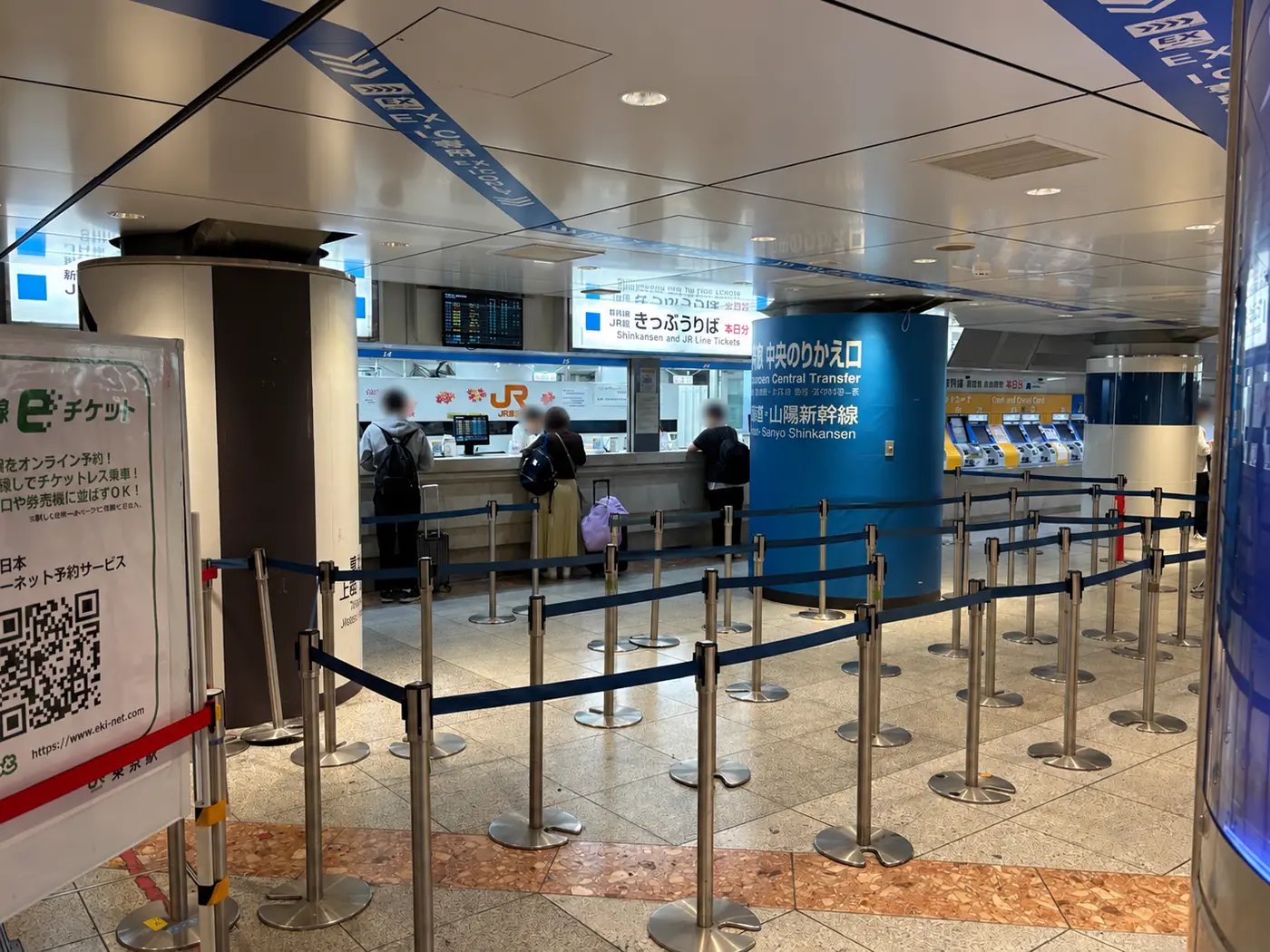
Buying a ticket on the day? You can buy one at a staffed JR ticket office near the Shinkansen gates. An English-speaking staff member is not guaranteed at a regular counter, but you can show your destination and travel time or use a translation app. If you would rather discuss the trip in English, the JR EAST Travel Service Center at Tokyo Station’s Marunouchi North Exit is the easier option for international visitors. See my counter comparison and photo directions before you go.
1. Quick answer: check these four things first
- 1Train
Match the train name and number, such as Nozomi 93. The destination alone is not enough because several trains may use the same route.
- 2Departure time
Use the scheduled time to find the correct line on the live departure board.
- 3Car
Go to the numbered car shown on your ticket and wait at its platform boarding position.
- 4Seat
Find the row number and seat letter printed on a reserved-seat ticket.
2. Your Shinkansen ticket explained
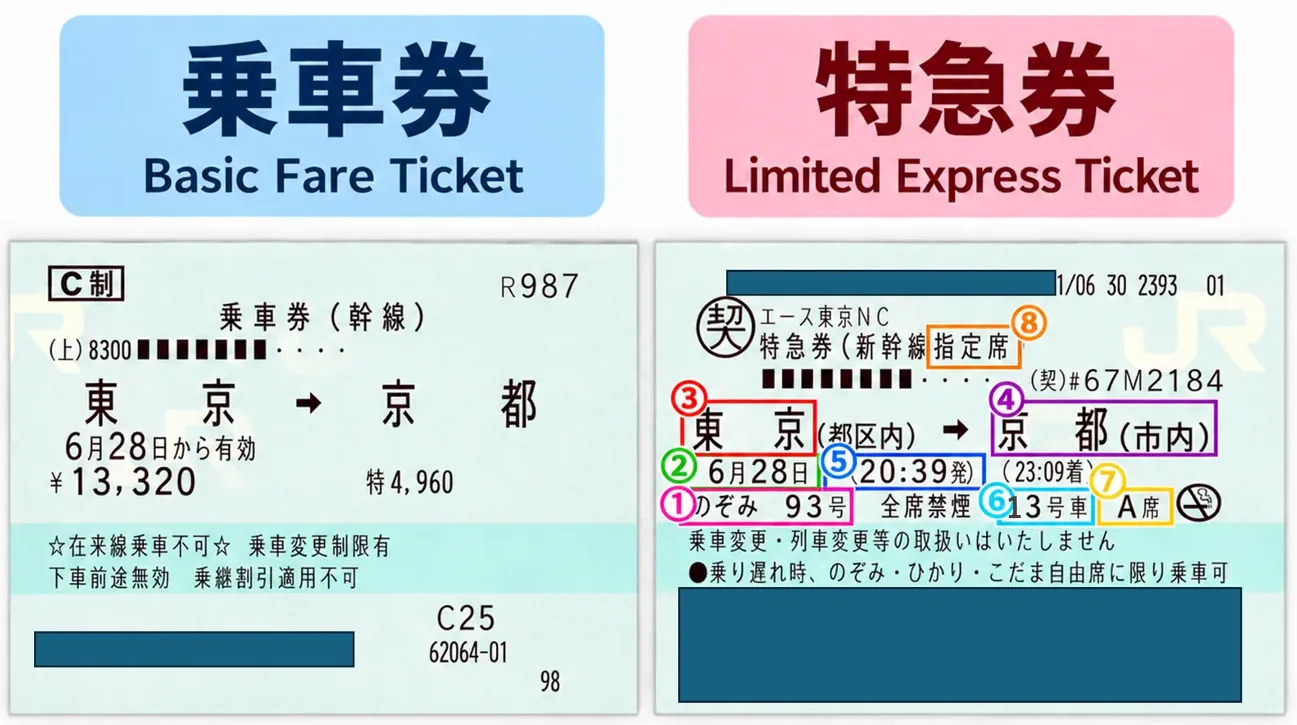
I received these two tickets for my trip from Tokyo to Kyoto. The basic-fare ticket is on the left. My reserved-seat Shinkansen limited-express ticket is on the right, where the train, time, car, and seat information appear. I hid the assigned row number in the published image; the visible A is the seat letter only.
| Number | Ticket field | What it means in this example |
|---|---|---|
| 1 | Train name and number | Nozomi 93. Match both the name and number to the station board. |
| 2 | Date | June 28. Check the date before going through the gate. |
| 3 | Departure station | Tokyo. |
| 4 | Destination | Kyoto. This is where the traveler gets off, not necessarily the train’s final stop. |
| 5 | Departure time | 20:39. This is essential for matching the correct service. |
| 6 | Car | Car 13. Use this to find the correct platform position. |
| 7 | Seat | A is the seat letter. The row number is hidden in this edited example. On your own reserved-seat ticket, read the printed row number and letter together, such as 13A. |
| 8 | Seat reservation | Reserved Seat. Ride the exact train and sit in the assigned seat. |
Your ticket may also say Ordinary or Green. Ordinary is the standard class. Green Car is the premium class and has a different fare. Ticket layouts and the amount of English printed on them vary, so focus on the values rather than expecting an identical design.
3. Why did I get two tickets?
| Ticket | What it covers | Typical information |
|---|---|---|
| Basic-fare ticket 乗車券 | The distance traveled on the JR network | Departure area, destination area, validity, and base fare |
| Shinkansen limited-express ticket 新幹線特急券 | The Shinkansen service and, for a reserved ticket, the assigned seat | Date, train, time, car, seat, and class |
Some purchases issue one combined ticket instead of two. You may also receive a receipt or another information slip. Keep every travel ticket together until you have completely left the station at your destination.
4. Choose the correct Shinkansen gate at Tokyo Station
For my Kyoto trip, I followed signs for the Tokaido and Sanyo Shinkansen. Their signs and transfer gates are commonly blue. The green JR East Shinkansen signs lead toward destinations such as Sendai, Morioka, Niigata, Nagano, and Kanazawa.
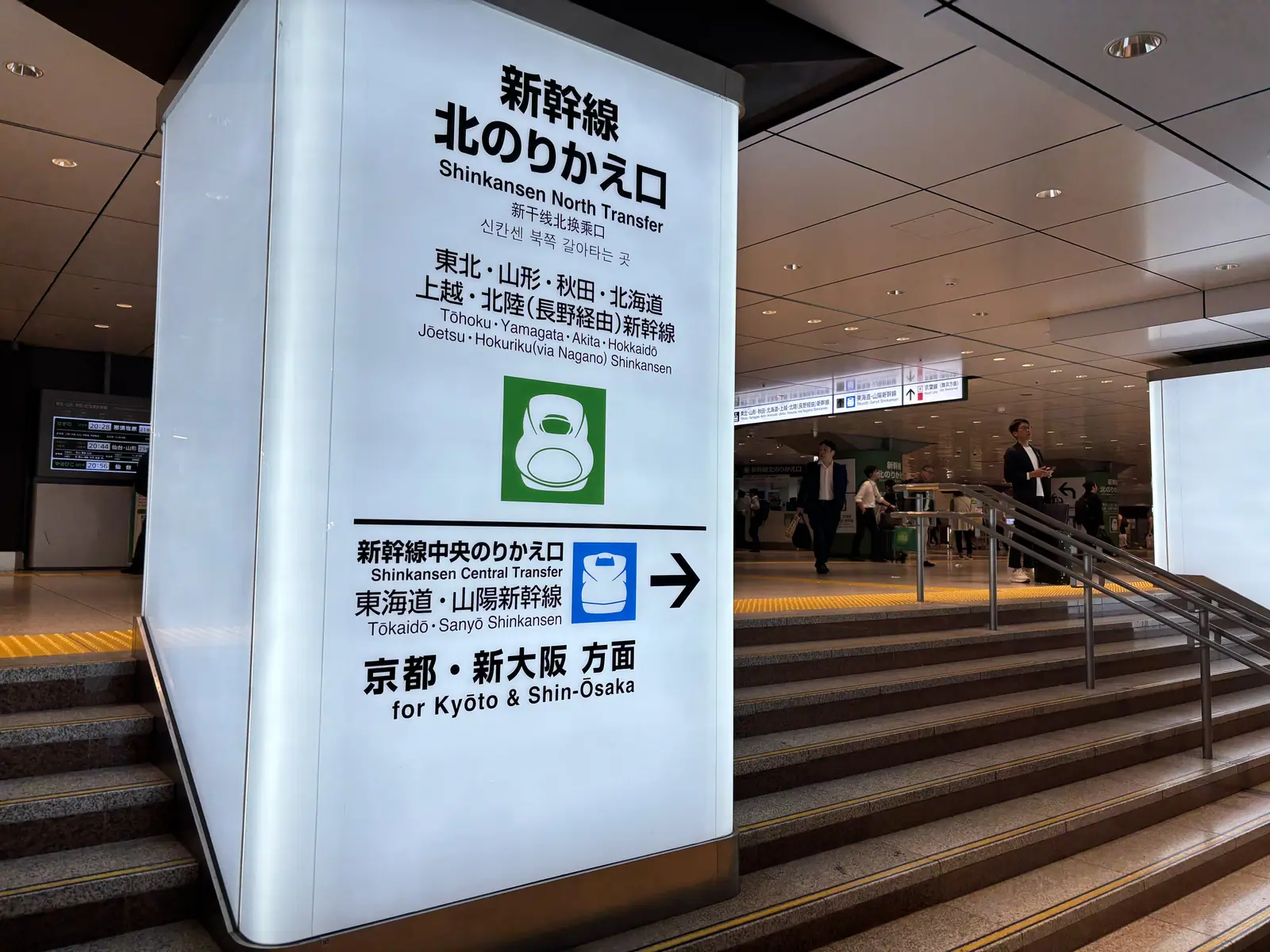
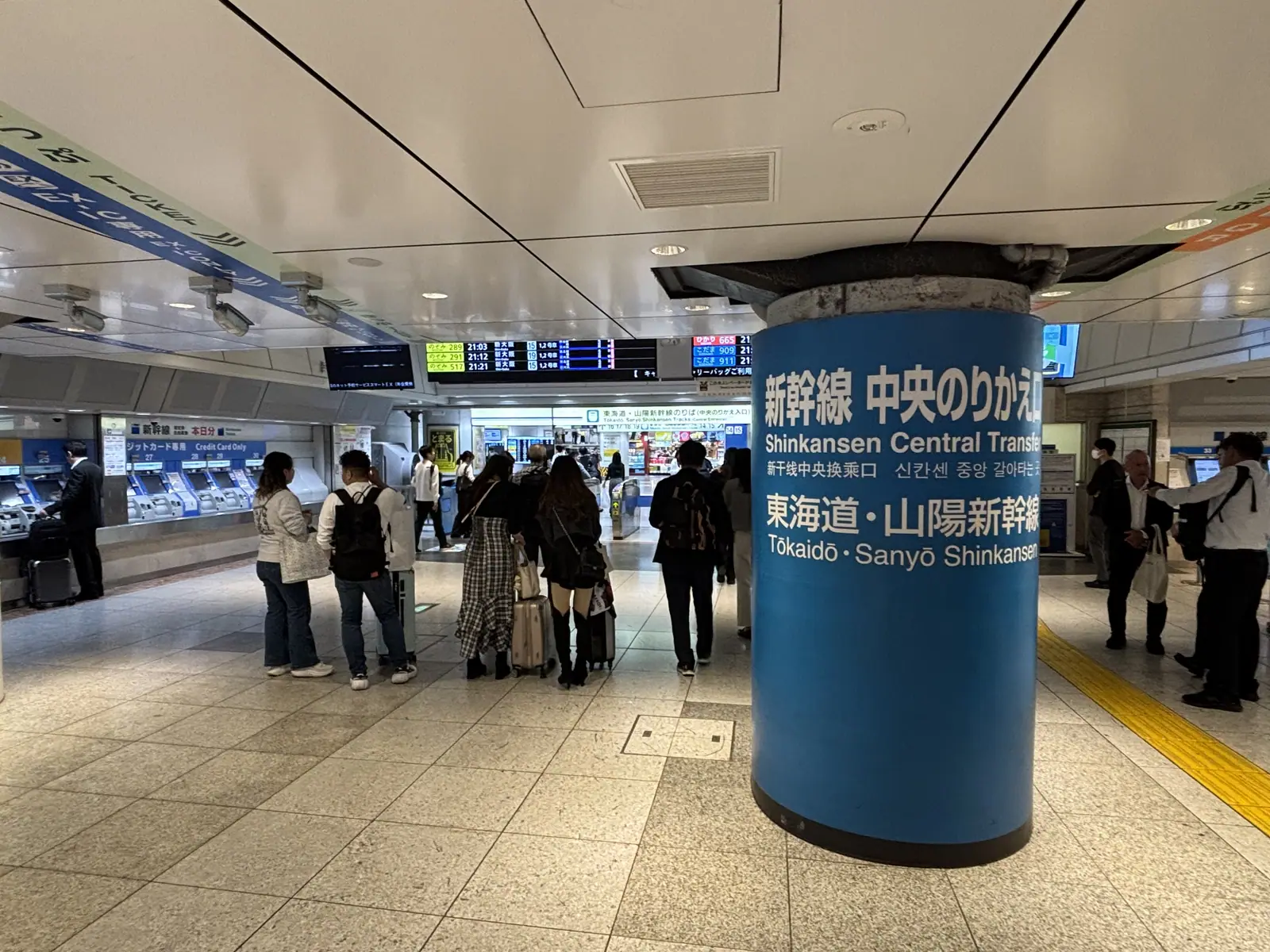
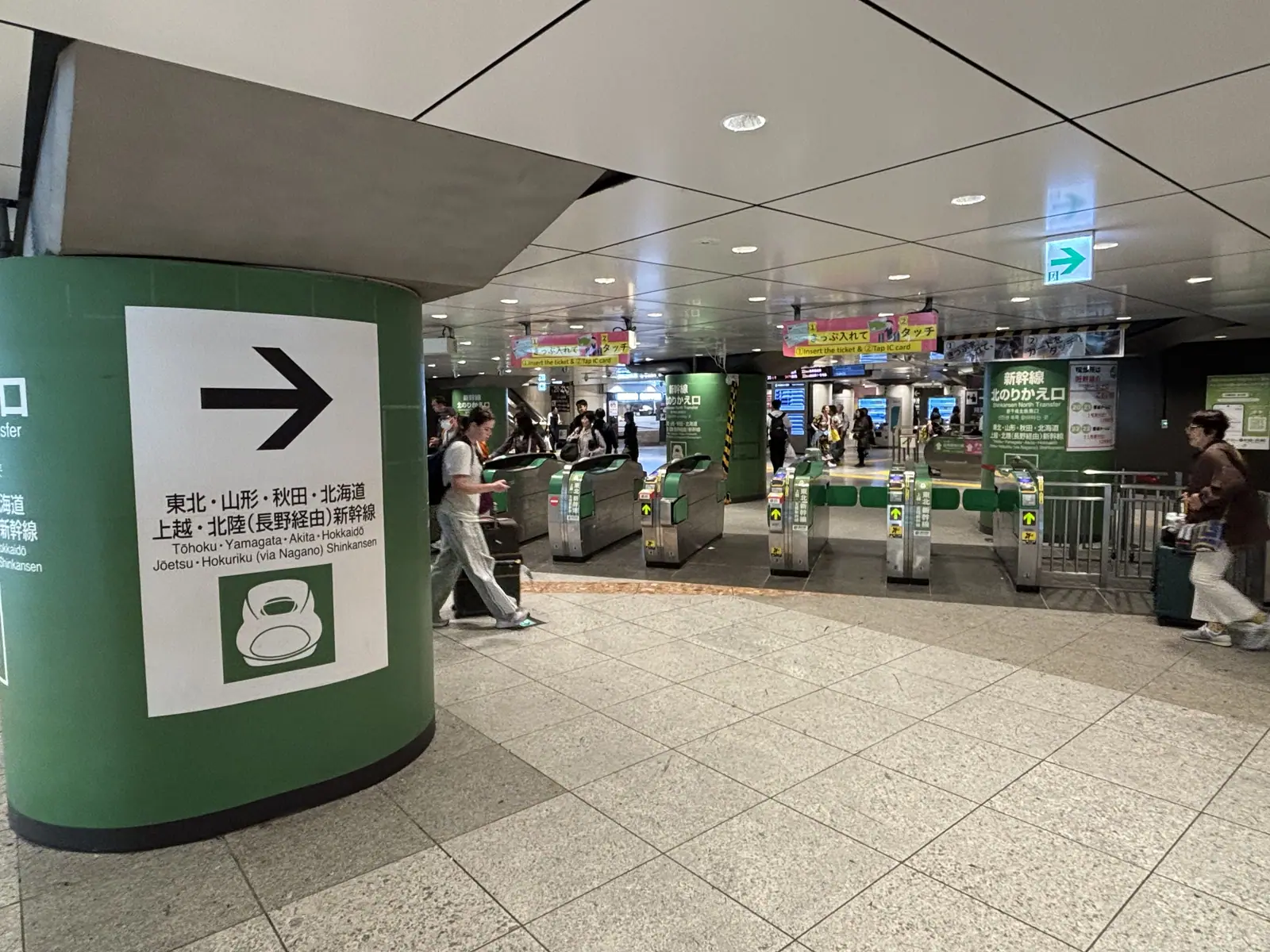
If you are outside the JR conventional-line ticket gates, use an outside Tokaido/Sanyo Shinkansen entrance like the one I photographed below. This is the Yaesu Central North Entrance. Look for the white-and-blue sign reading Tokaido, Sanyo Shinkansen Tracks rather than the green JR East Shinkansen signs.
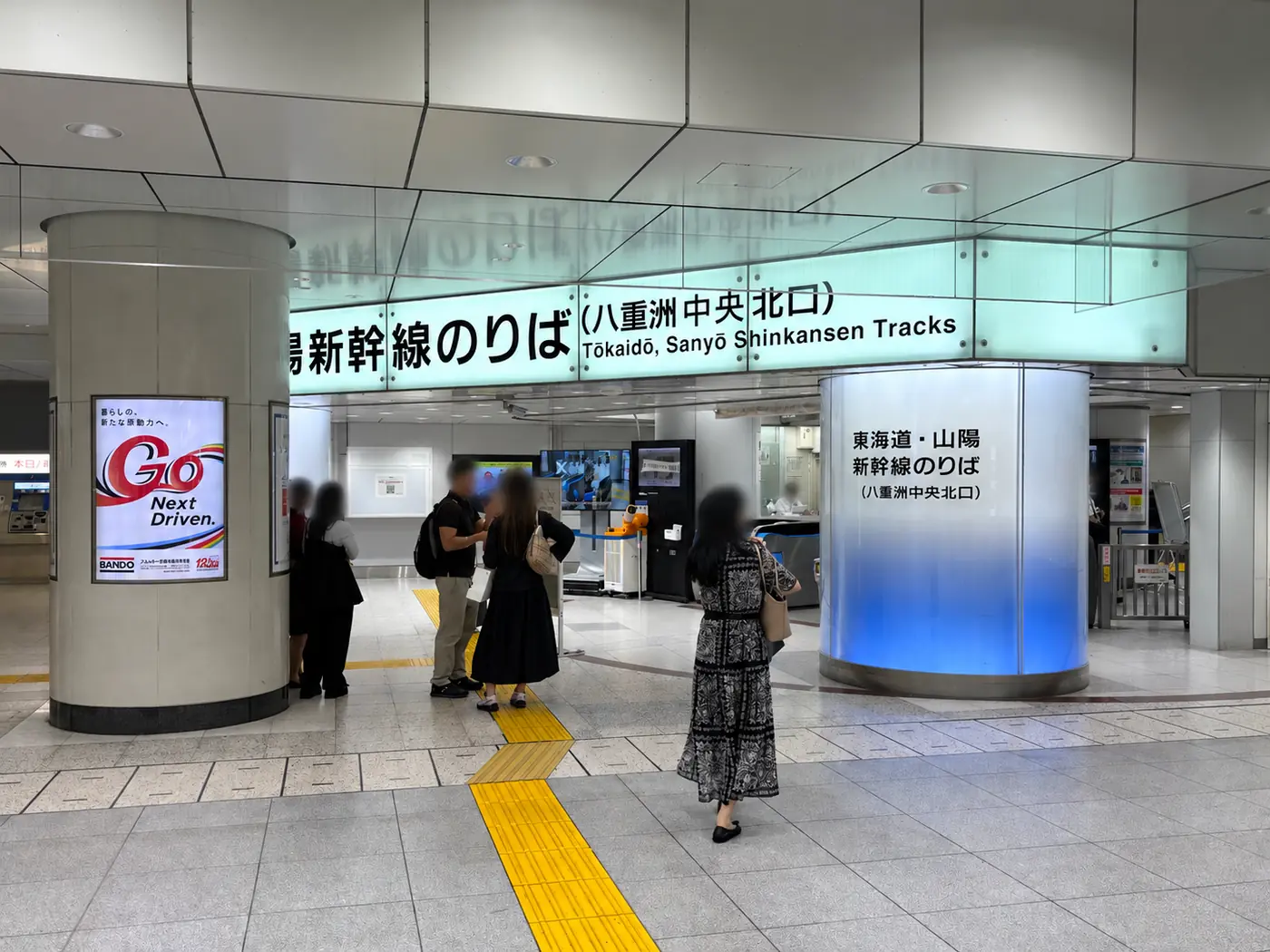
Station designs can change. Always read the line name and listed destinations. If you are unsure, show the ticket to the staff member beside the gate.
5. Match your ticket to the departure board
After I confirmed the correct Shinkansen area, I found my service on the live board by matching the train name and number first, then the departure time. The board also gave me the live platform or track number.
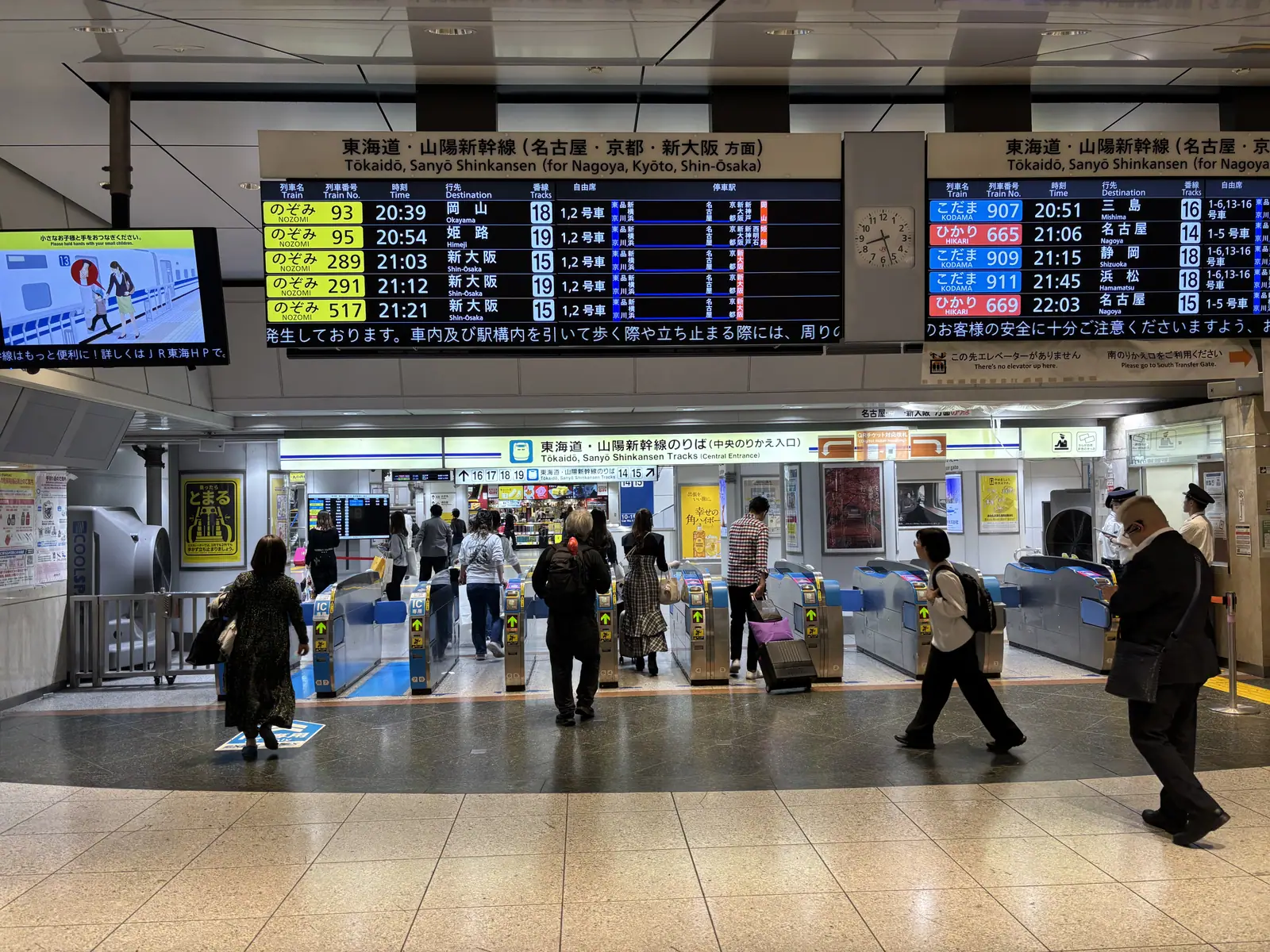
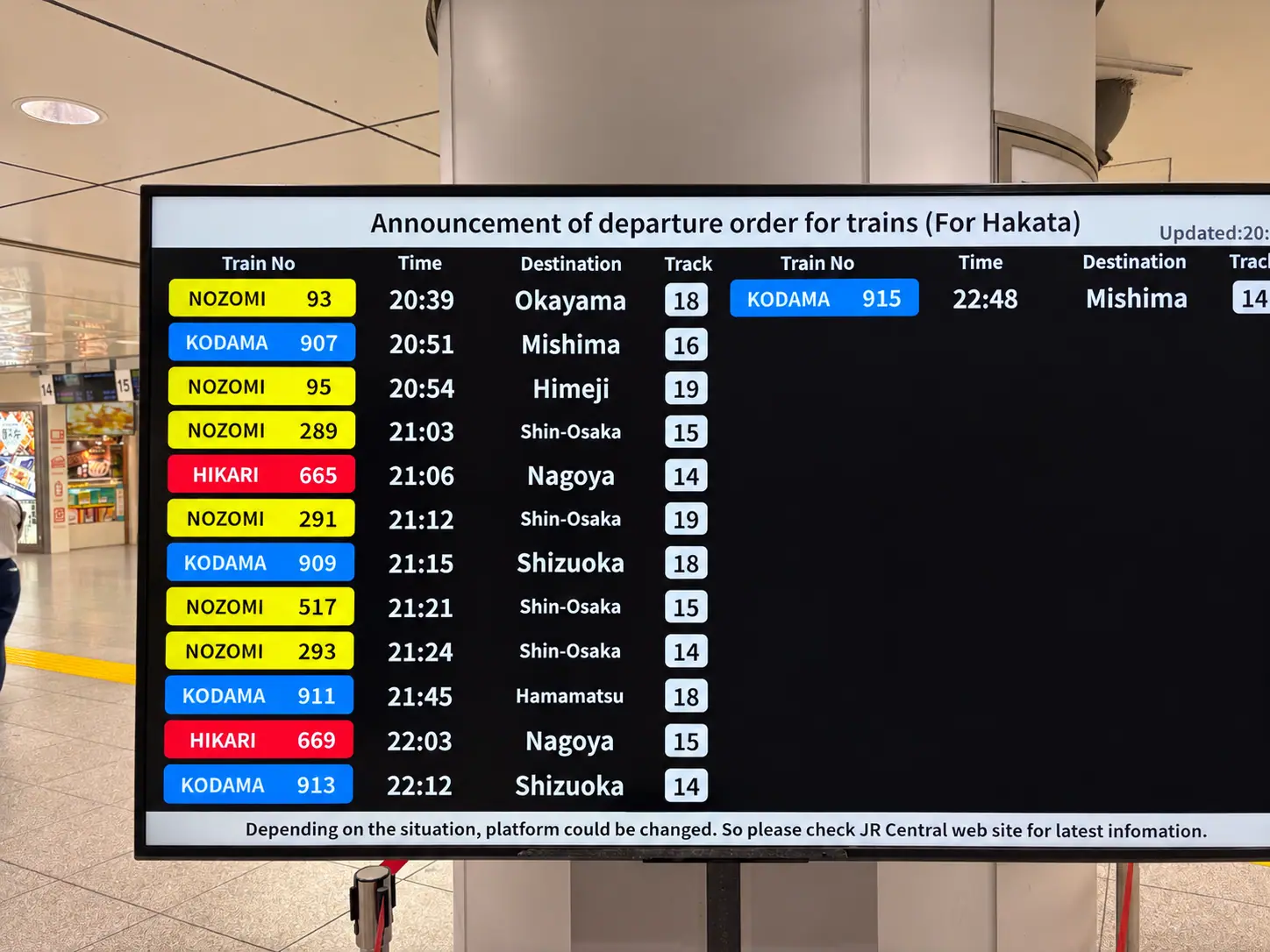
The board may show the train’s final destination—not your stop
The ticket says Tokyo → Kyoto, but the live board lists Nozomi 93 as going to Okayama. Kyoto is an intermediate stop, so this is still the correct train. Match Nozomi 93 and 20:39, then confirm that the train stops at Kyoto.
6. Find your platform
The departure board sent my Nozomi 93 to Track 18. I followed the overhead signs for Tracks 18 and 19, then checked the screen at the platform entrance one more time.
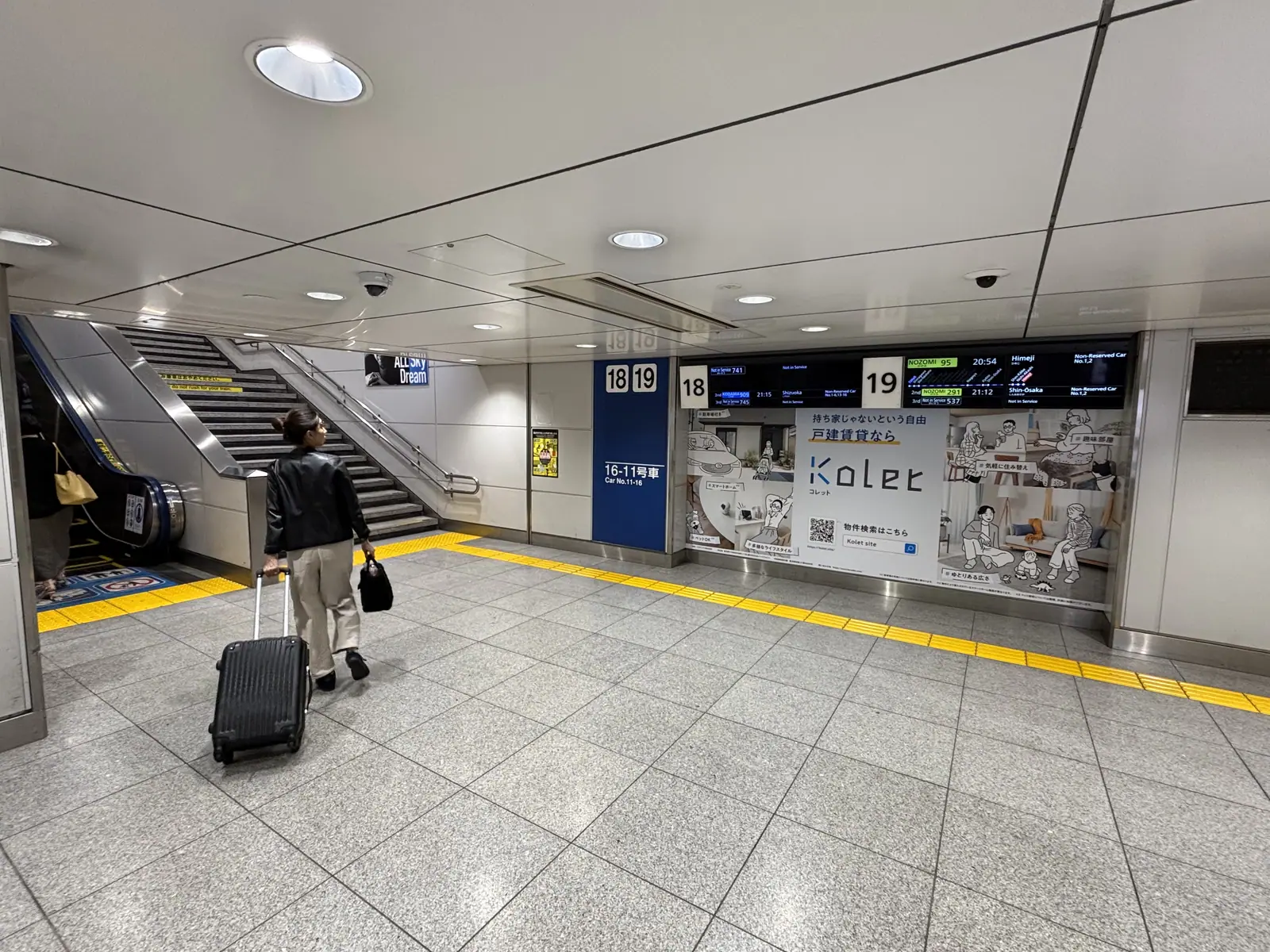
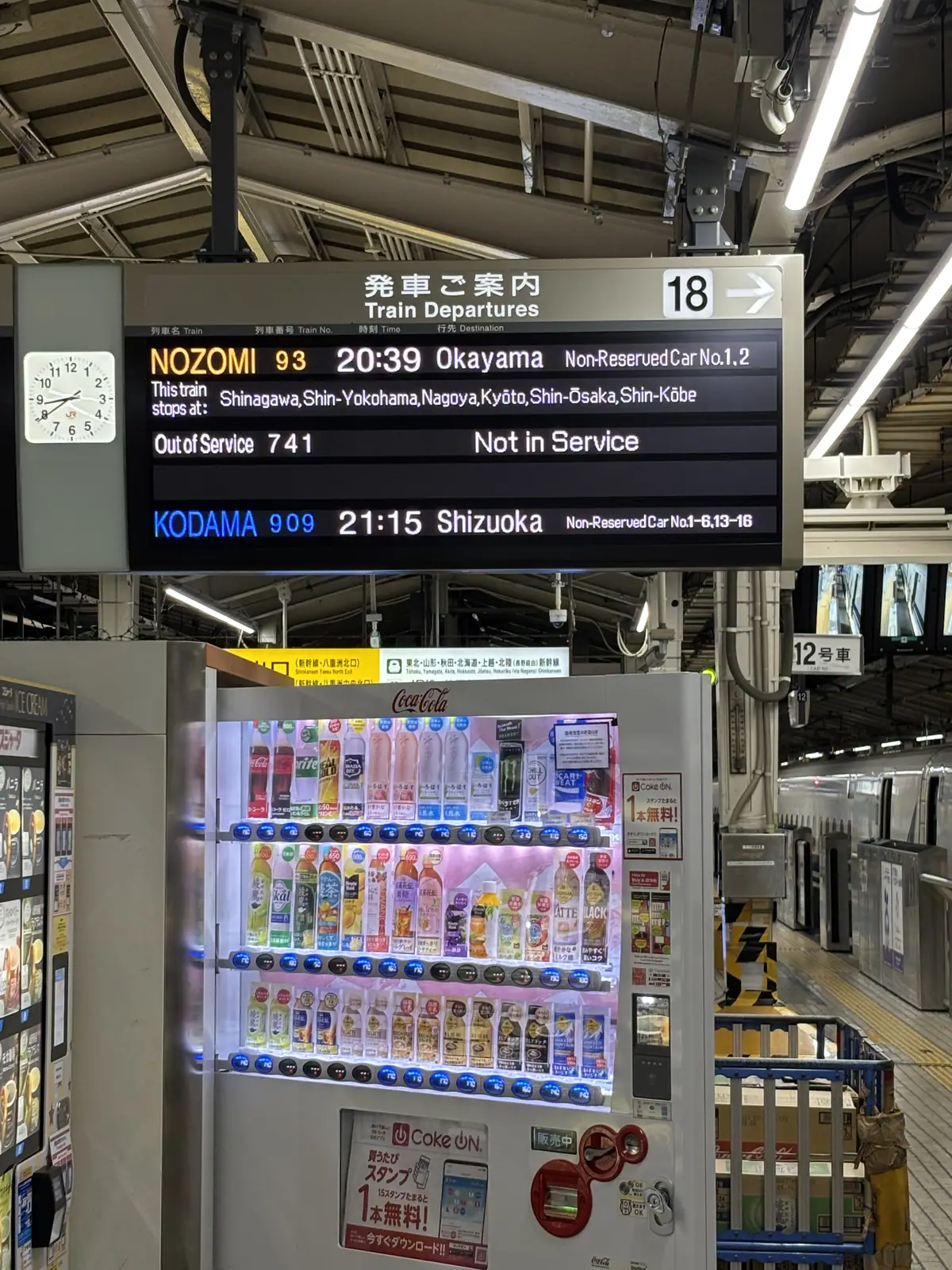
Platform assignments can change. The live station display and announcements take priority over a saved itinerary or an earlier photo.
7. Find your car and boarding position
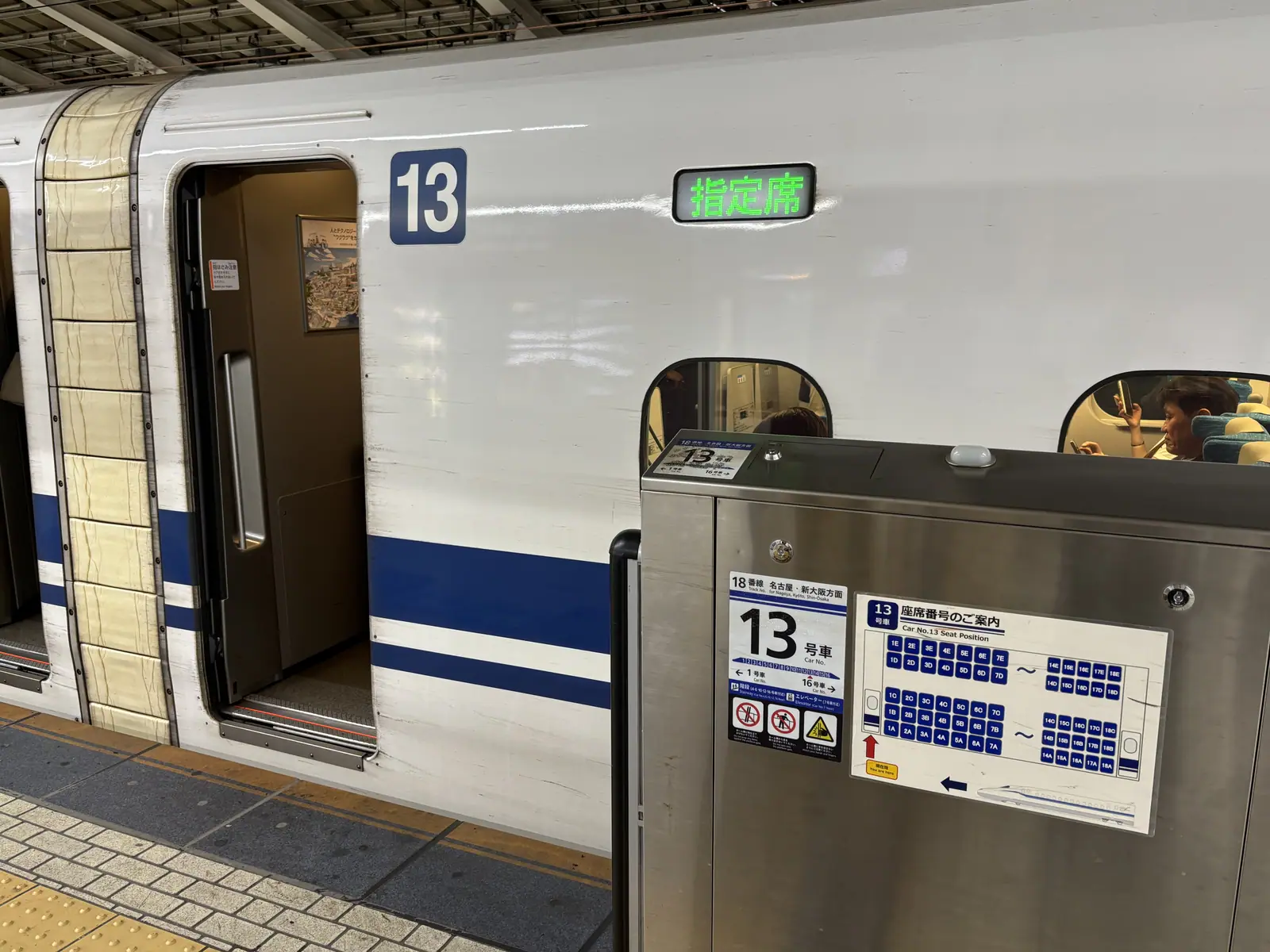
Once I reached the platform, I used the overhead signs and floor markings to find my car. My ticket said Car 13, so I stood at the Car 13 boarding position. The photos below show Cars 12 and 13; always follow the number printed on your own ticket.
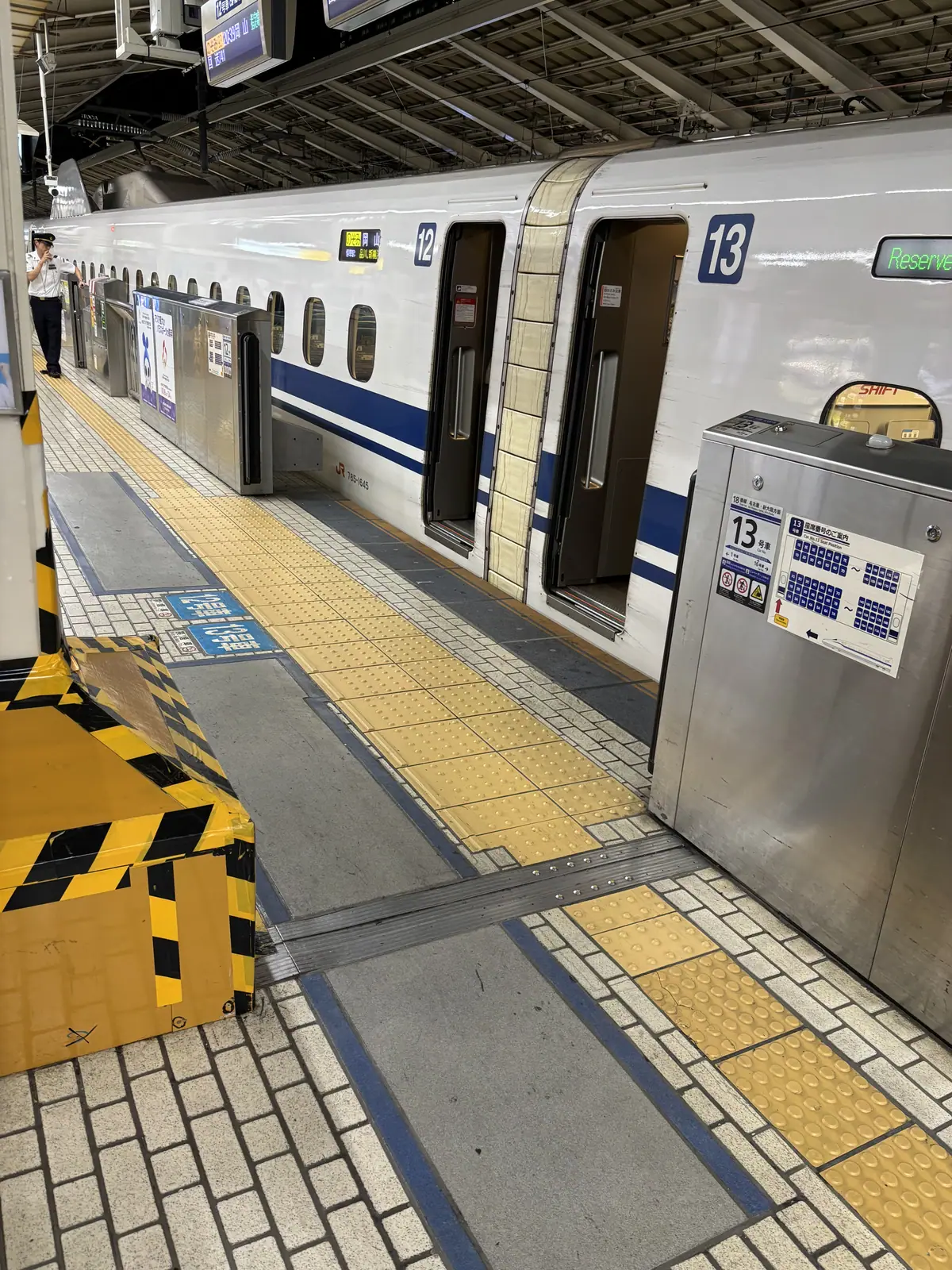
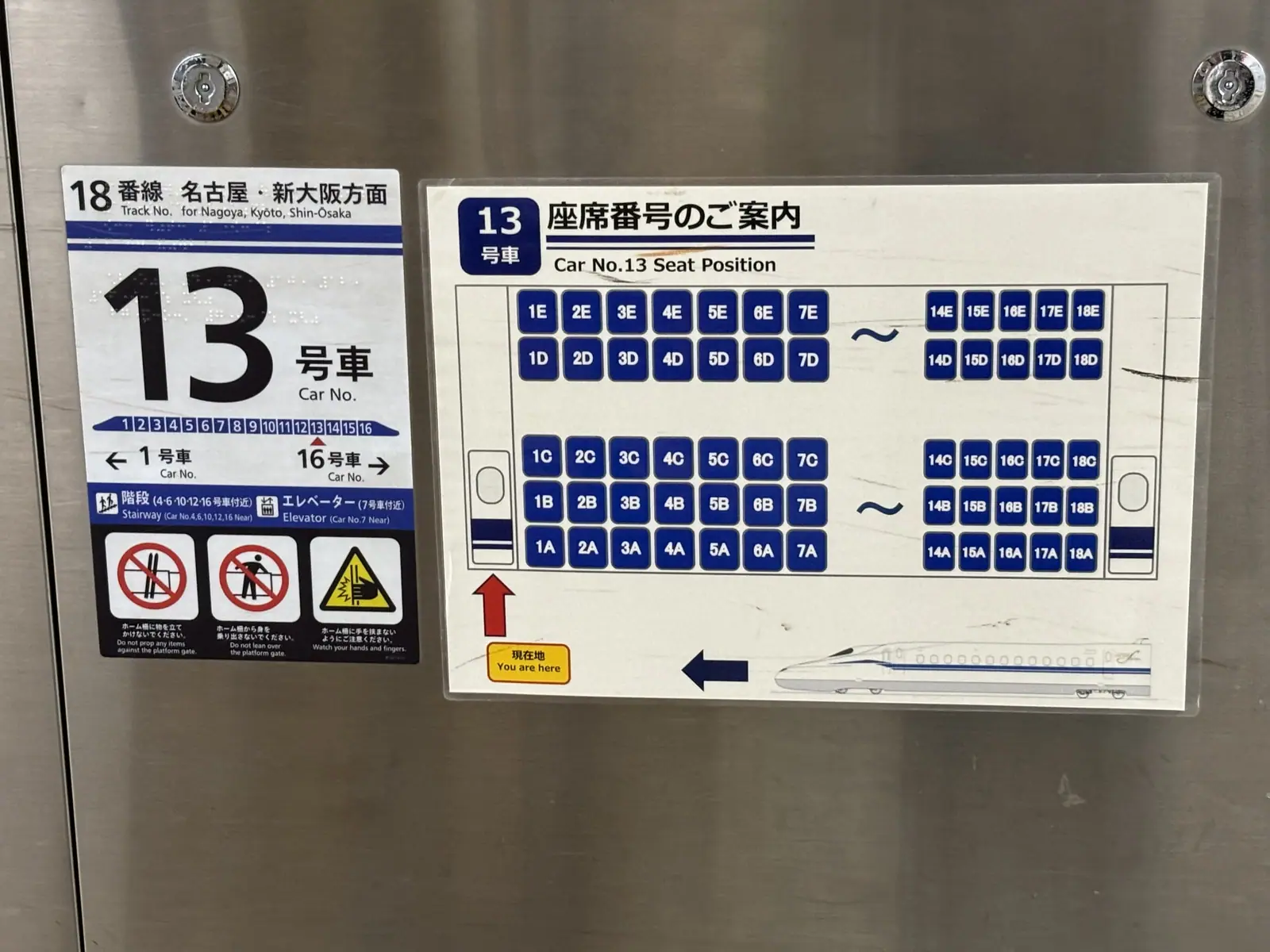
8. Find your seat
Inside the reserved car, I checked the sign above each row for the number and seat letters. For example, 13A means row 13, seat A. Check both parts before sitting down. I photographed row 13 as a separate reading example; it does not reveal the row number hidden on my ticket above.
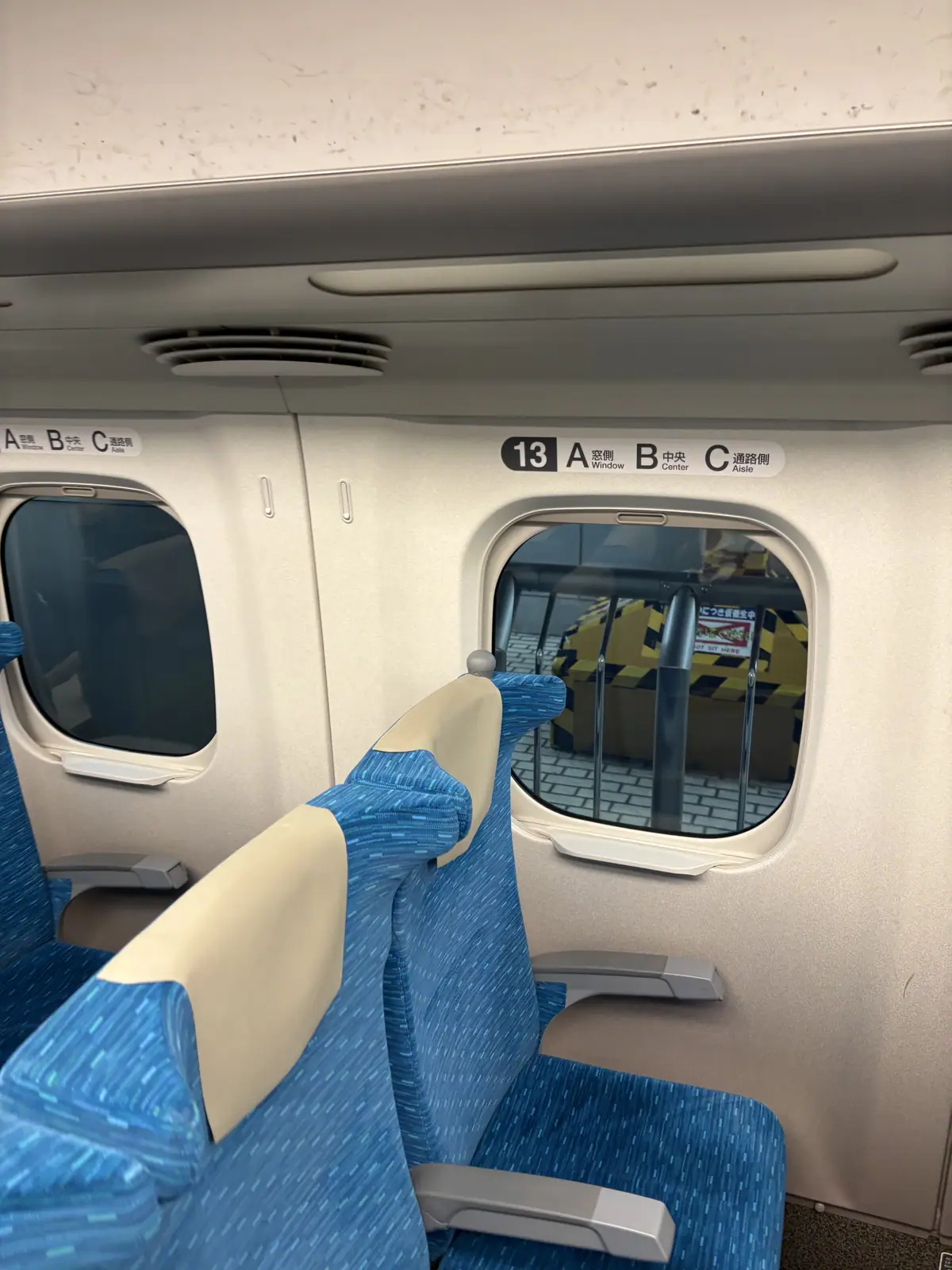
- Car number: the carriage itself—Car 13 in this ticket example.
- Row number: the numbered seat row inside that car.
- Seat letter: the individual window, middle, or aisle position.
9. Before you board: food, coffee, and waiting areas
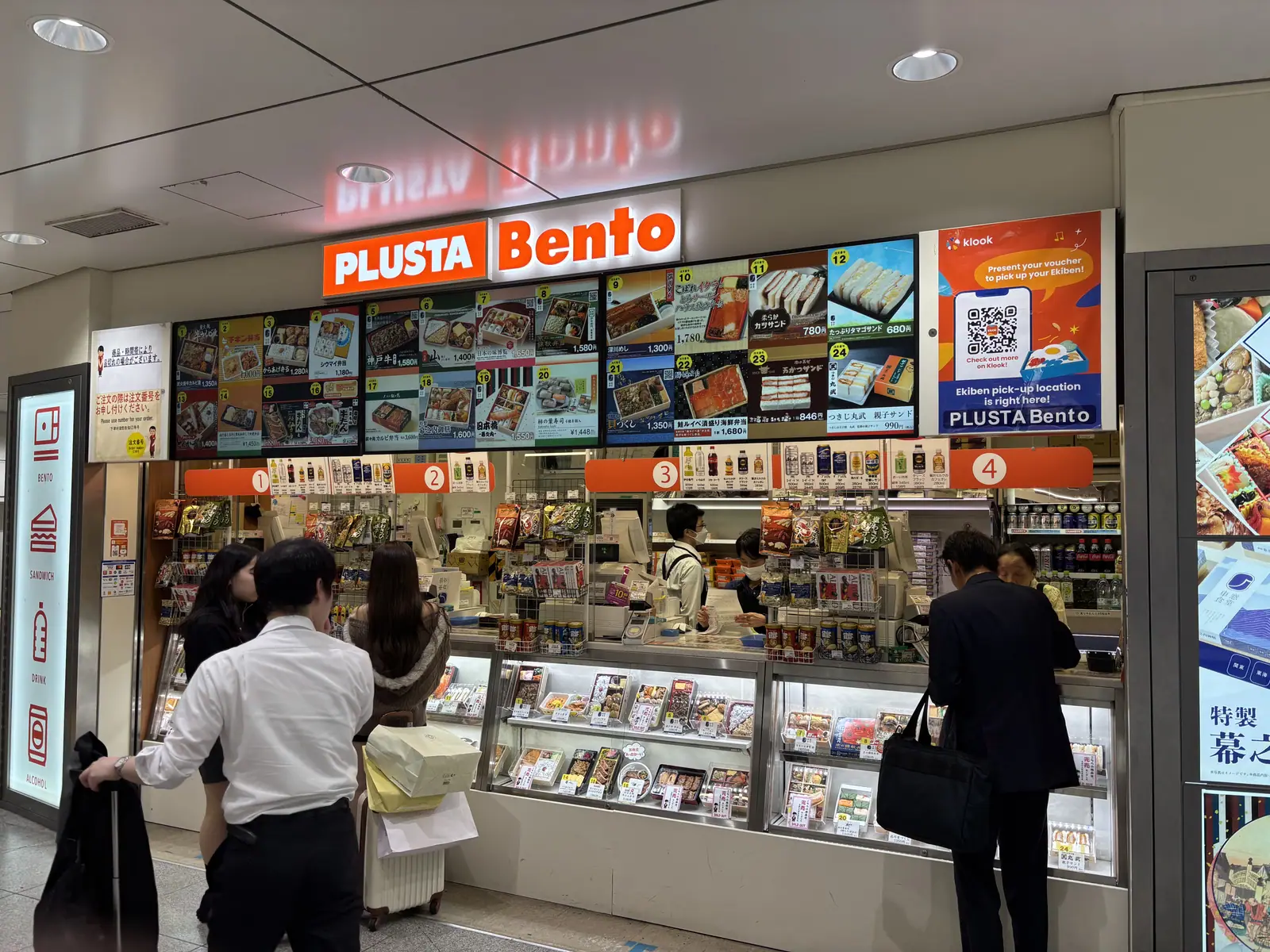
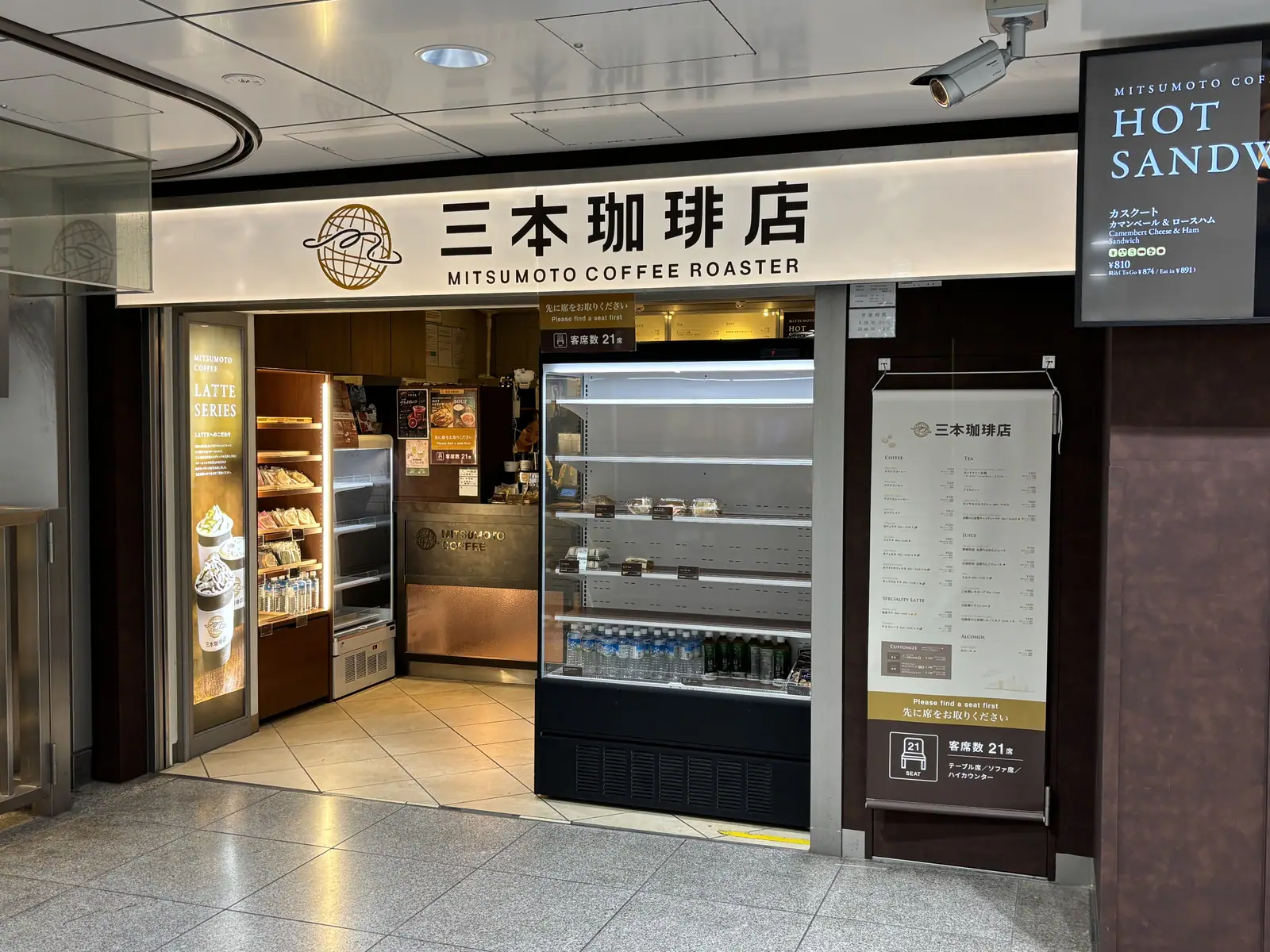
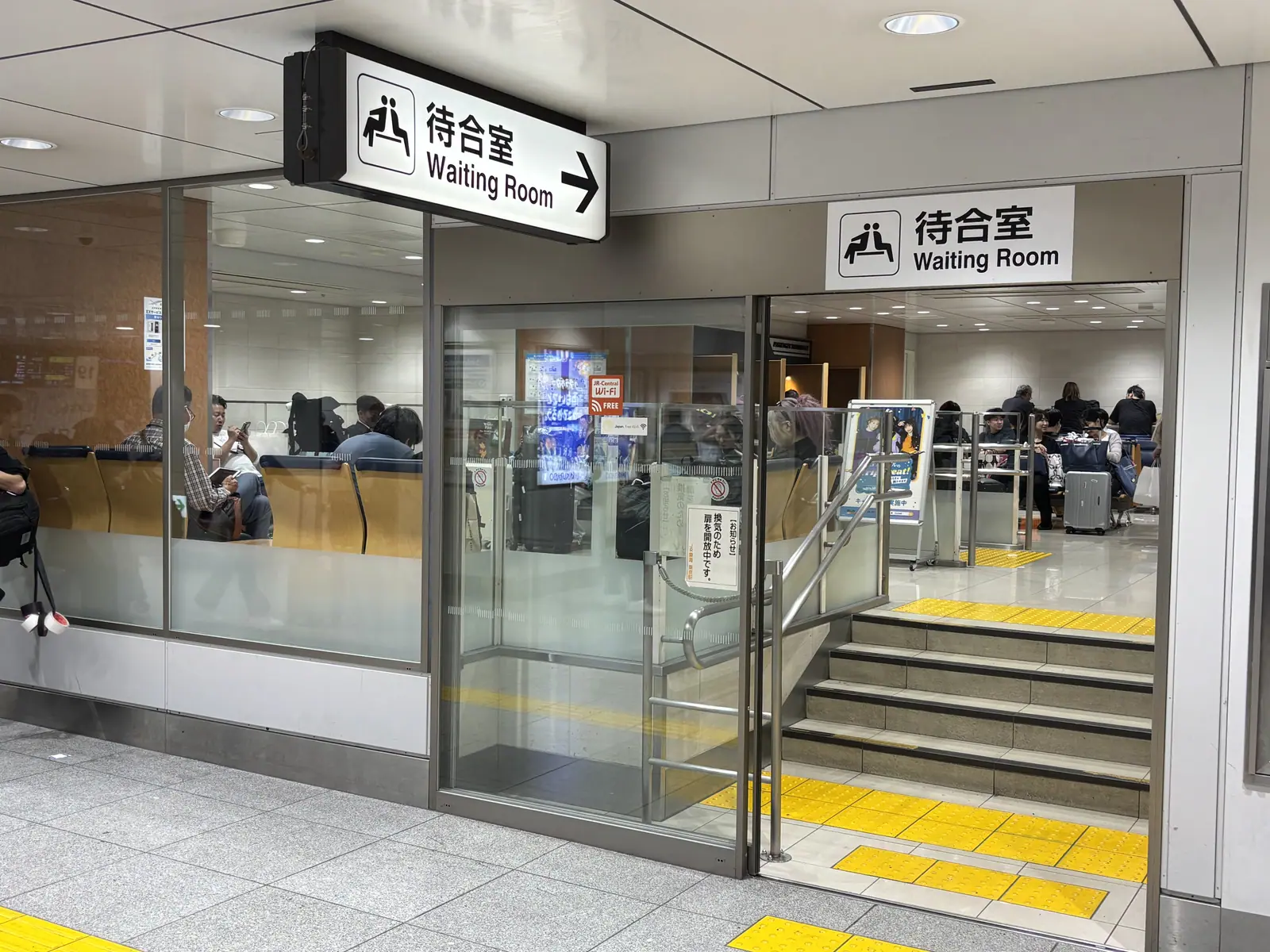
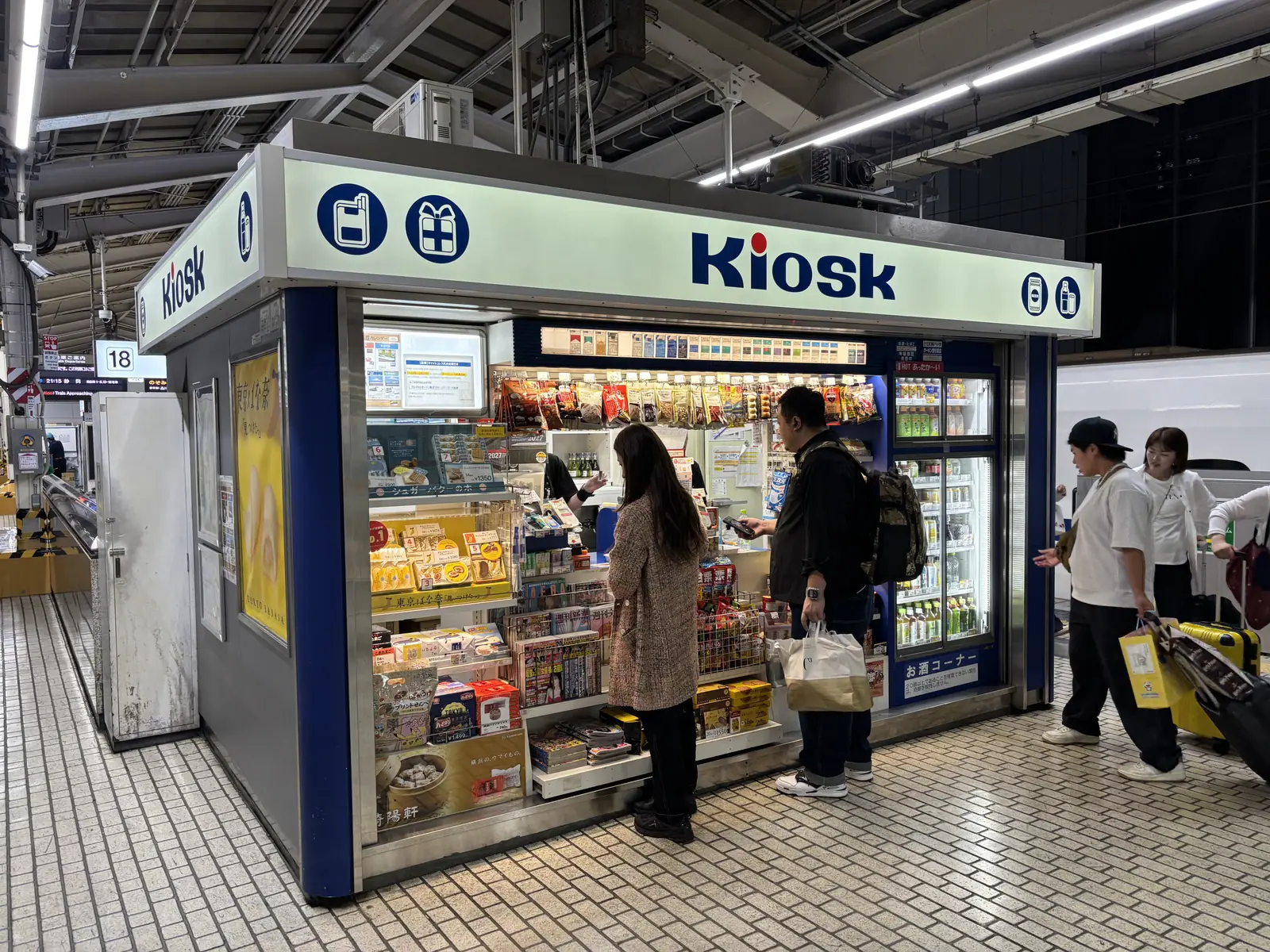
After I confirmed my train, platform, car, and seat, I checked the shops and waiting facilities inside the Shinkansen area. Tokyo Station has places to buy drinks, coffee, snacks, and ekiben lunch boxes, plus a waiting room. Selection and opening hours vary, and shops can be busy before popular departures.
10. Reserved vs non-reserved tickets
| Ticket type | Where to board | Where to sit |
|---|---|---|
| Reserved seat | The exact train and car printed on the ticket | The assigned row and seat letter |
| Non-reserved seat | An eligible train’s car marked Non-Reserved | Any empty seat in that non-reserved car; a seat is not guaranteed |
| Green Car | The Green Car printed on the ticket | The assigned premium-class seat |
During designated peak periods, Nozomi trains may operate with reserved seats only. Always check the current rule for your travel date rather than assuming that every train has a non-reserved car.
11. How to use paper tickets at the gate
- 1Keep the necessary tickets together
If your trip uses separate basic-fare and limited-express tickets, the Shinkansen gate may require both to be inserted together. Follow the gate label or show them to staff if unsure.
- 2Walk through only after the gate opens
If the gate closes or sounds an alarm, do not force it. Use the staffed lane.
- 3Take every ticket that comes back out
The gate returns tickets you still need. Pick them up immediately and keep them until you fully exit at your destination.
Pause after walking through and check the return slot. A ticket may be required again at Kyoto or another destination station.
12. Common mistakes
- Confusing the train number with the platform: Nozomi 93 is the service; Track 18 is where it departs.
- Confusing the car with the seat: Car 13 tells you which carriage to board; the row and letter identify your seat.
- Treating A as the complete seat number: A is only the seat letter. Use it together with the row number printed on your own reserved-seat ticket.
- Looking only at the destination: the board may show the train’s final stop, such as Okayama, while your ticket is to Kyoto.
- Boarding a different train with the same destination: match the train name, number, and departure time.
- Following the green JR East Shinkansen signs for Kyoto: use the Tokaido/Sanyo Shinkansen direction.
- Using a reserved-seat car with a non-reserved ticket: follow the car designation shown at the platform and on the train.
- Forgetting a returned paper ticket: take everything from the gate’s return slot.
13. Quick FAQ
Why does the board say Okayama when my ticket says Kyoto?
The board often shows the train’s final destination. Kyoto is an intermediate stop on this Nozomi service. Match the train number and time, then confirm that Kyoto appears in the stopping pattern.
Is the platform number printed on every Shinkansen ticket?
Do not depend on it. Platform assignments may change, so use the live departure board and station announcements on the day.
What if I cannot read the Japanese ticket?
Show the ticket to station staff. You can also match the train name and number, departure time, car, and seat visually even when some labels are in Japanese.
What if someone is sitting in my reserved seat?
First compare the car, row, and seat letter on both tickets. If you still believe it is your seat, politely show your ticket or ask the conductor for help.
Can I take an earlier or later train with a reserved ticket?
Not in the same reserved seat. Rules depend on the fare product and timing, so ask JR staff before your scheduled departure if you need to change trains.
What should I do if I enter the wrong Shinkansen gate?
Do not continue toward a platform that does not match your route. Speak to the staff beside the gate and show your tickets.
I photographed my real tickets and the Tokyo Station sequence shown in this guide. I checked the two-ticket structure against JR Central’s official pages on ticket types and ticket combinations. I checked paper-ticket gate use against its official train-use guide, and the departure-board fields and boarding sequence against the Shinkansen Perfect Guide. See the current Nozomi peak-period notice before relying on non-reserved seating. Train and platform information should always be confirmed on the live station display. For purchasing, seat selection, and luggage rules, see my Shinkansen ticket-buying guide.