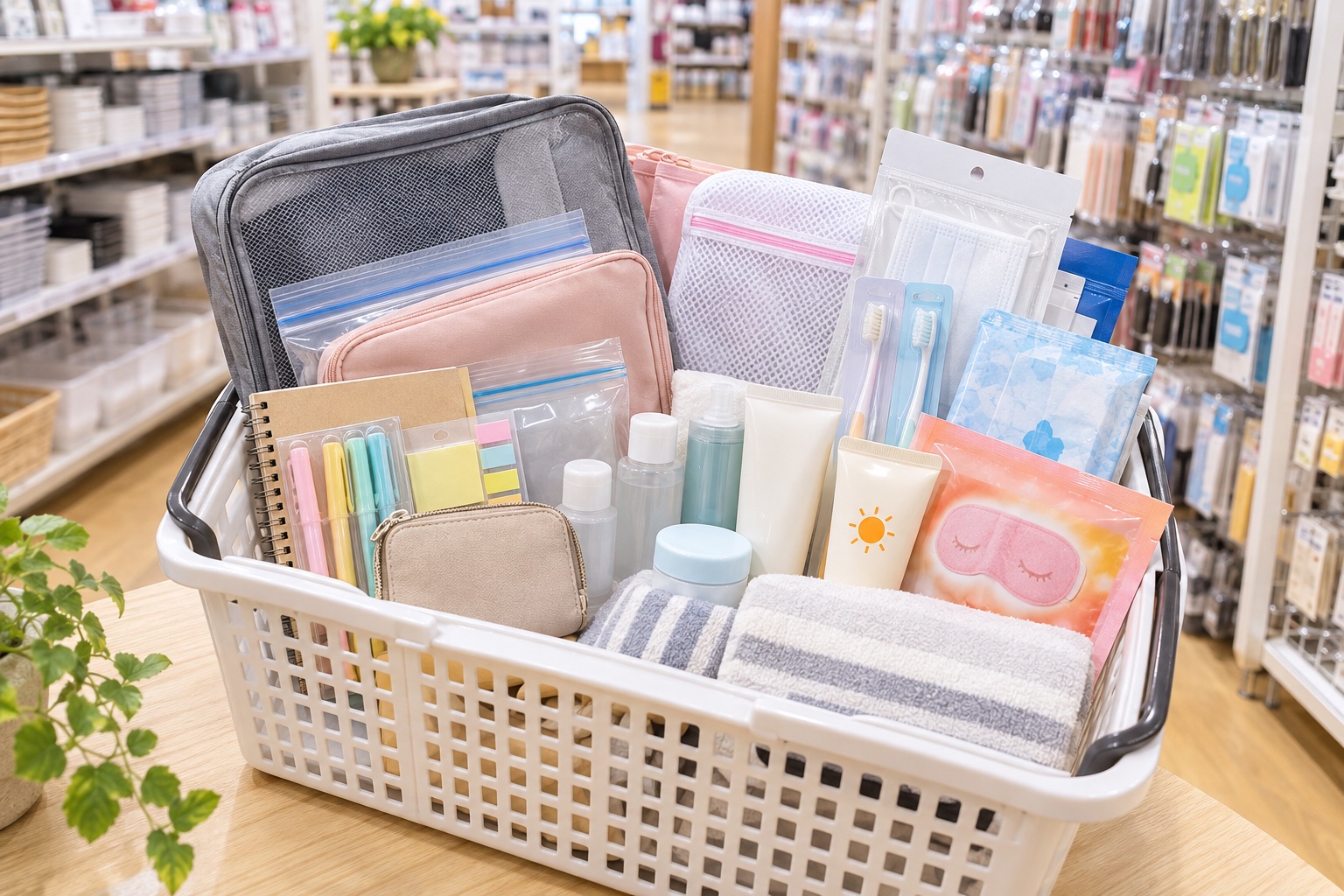
Japan's 100-yen shops and drugstores are two of the easiest places to buy small travel helpers, practical souvenirs, toiletries, and beauty products. The best strategy is simple: use the 100-yen shop for low-risk everyday tools, then visit a drugstore for products where ingredients, quality, or staff advice matter.
1. The quick shopping list
Buy simple tools at the 100-yen shop and personal-care items at the drugstore
Start with packing pouches, zipper bags, laundry nets, stationery, coin cases, and small household helpers. At a drugstore, look for sunscreen, skincare, oral-care products, travel-size toiletries, masks, and relaxing steam eye masks.
“100-yen shop” is a category, not a promise that every item costs exactly ¥100. Many chains sell products at several price points, and consumption tax is added unless the shelf label already shows the tax-included price. Check the small print before filling your basket.
2. Best things to buy at a 100-yen shop
| Item | Why it is useful | Check before buying |
|---|---|---|
| Packing pouches | Separate clothes, cables, and small souvenirs inside your luggage. | Zip quality and the actual dimensions. |
| Laundry nets | Protect delicate clothes and organize worn items during a trip. | Use a coarse mesh for everyday clothes and fine mesh for delicates. |
| Zipper bags | Contain snacks, damp items, toiletries, or loose coins. | Food-safe and freezer or microwave markings vary. |
| Coin purse | Useful for Japan's ¥500, ¥100, ¥50, and ¥10 coins. | Choose one that opens wide enough to see small coins. |
| Cable ties | Keep chargers and adapters from tangling. | Avoid cheap mains-power adapters and chargers. |
| Stationery | Notebooks, brush pens, sticky notes, stickers, and folders make light souvenirs. | Test pens only where a sample is provided. |
| Tenugui-style cloths | Compact hand towels or wrapping cloths with Japanese patterns. | Some decorative cloths are polyester rather than cotton. |
| Rain covers and ponchos | An inexpensive backup for sudden rain. | Size, thickness, and whether it is intended for one use. |
Large branches usually have clearer category signs and a wider range, but a small neighborhood shop is often faster when you only need one travel essential.
Good souvenir-sized finds
- Japanese-patterned envelopes and gift bags for cash gifts or small presents.
- Origami paper and stickers that pack flat and work well for children.
- Chopstick rests and small dishes if they are wrapped carefully in your luggage.
- Seasonal decorations such as cherry-blossom, summer-festival, or New Year designs.
3. Best things to buy at a Japanese drugstore
Japanese drugstores combine a pharmacy, beauty store, and convenience shop. Selection varies by branch, but these categories are consistently useful:
- Sunscreen: lightweight face and body formulas are widely available. Check SPF, PA rating, fragrance, water resistance, and bottle size.
- Skincare: cleansing oils, sheet masks, lotions, and moisturizers are easy to compare by skin type. Patch-test unfamiliar products.
- Steam eye masks: individually wrapped warming masks are compact and useful on flights or after a long sightseeing day.
- Oral care: compact toothbrushes, interdental brushes, floss picks, and travel sets are practical buys.
- Travel toiletries: mini shampoo, conditioner, body wash, cleansing products, and refill containers.
- Cooling sheets and heat packs: useful comfort products; follow the package instructions and avoid irritated skin.
- Japanese cosmetics: mascara, eyebrow products, lip color, and makeup removers are easier to assess when testers are available.
- Masks, tissues, and hygiene goods: lightweight items that are useful immediately and easy to replace.
The word keshōsui (化粧水) usually describes a hydrating toner, not the thicker body lotion many English speakers expect. Check the product category and directions rather than relying only on the English word.
4. Buying medicine safely
Do not choose an over-the-counter medicine only because the packaging is popular online. Active ingredients, dosage, contraindications, and strength may differ from products with similar branding in your country.
- 1Describe the symptom
Tell the pharmacist or registered seller what you need, how long you have had the symptom, and who will use the medicine.
- 2Mention allergies and current medicines
Also mention pregnancy, chronic conditions, or medicines that cause drowsiness when relevant.
- 3Confirm the dosage
Use a translation app if the package has no directions in a language you understand.
- 4Check import rules
Some Japanese cold, allergy, pain, or stimulant products contain ingredients restricted elsewhere.
Some medicines can only be sold while qualified staff are present, even when the drugstore itself remains open. If the medicine shelf is closed, return during the pharmacy counter's staffed hours.
5. What is usually better to skip?
- Unfamiliar electrical adapters and chargers: use a reputable, correctly rated product for anything connected to mains power.
- Knives and sharp tools without a transport plan: airline, customs, and local carrying rules can complicate the bargain.
- Large bottles simply because they are cheap: liquids add weight and may not fit cabin-baggage limits.
- Cosmetics bought only for viral packaging: check shade, ingredients, expiration information, and skin compatibility.
- Medicine for someone else: the correct product depends on the individual, their conditions, and other medicines.
6. A simple 30-minute shopping plan
- 1Make a short list
Separate “need during the trip” from “take home as a souvenir.”
- 2Visit the 100-yen shop first
Buy organizers, bags, stationery, and items where premium quality is not essential.
- 3Finish at the drugstore
Compare ingredients and ask staff about personal-care or medical products.
- 4Photograph the packaging
Keep the directions and product name available after discarding bulky boxes.
7. Can these purchases be tax-free?
Some large 100-yen stores and drugstores are registered tax-free shops, but many smaller branches are not. Look for the official tax-free logo and ask before paying. Through October 31, 2026, eligible consumables such as cosmetics and medicine generally need a tax-excluded same-store, same-day total of ¥5,000 to ¥500,000, and specially sealed items must not be opened in Japan.
Japan's system changes on November 1, 2026, when eligible visitors pay the tax-inclusive price first and receive the tax amount back after departure inspection. See our complete tax-free shopping guide before a large purchase.
8. Quick FAQ
Are all items at a 100-yen shop ¥100?
No. Most basic items are priced around ¥100 before tax, but many shops also carry products at ¥200, ¥300, ¥500, or more. Check the shelf and product label.
Can I open tax-free cosmetics in Japan?
Through October 31, 2026, specially packaged consumables must remain sealed and leave Japan. From November 1, consuming them in Japan makes them ineligible for the departure refund.
Can drugstore staff speak English?
It varies. Larger tourist-area branches may have multilingual staff or tablets. A translated note listing symptoms, allergies, and current medicines is helpful.
Which 100-yen chain is best?
Daiso usually has the widest general range, while Seria and Can Do may feel different in design and selection. The individual branch size matters more than the logo.
Tax-free thresholds and procedures were checked against the National Tax Agency and the Japan Tourism Agency's November 2026 refund-method guide. Store selection, prices, and qualified-staff hours vary by branch.