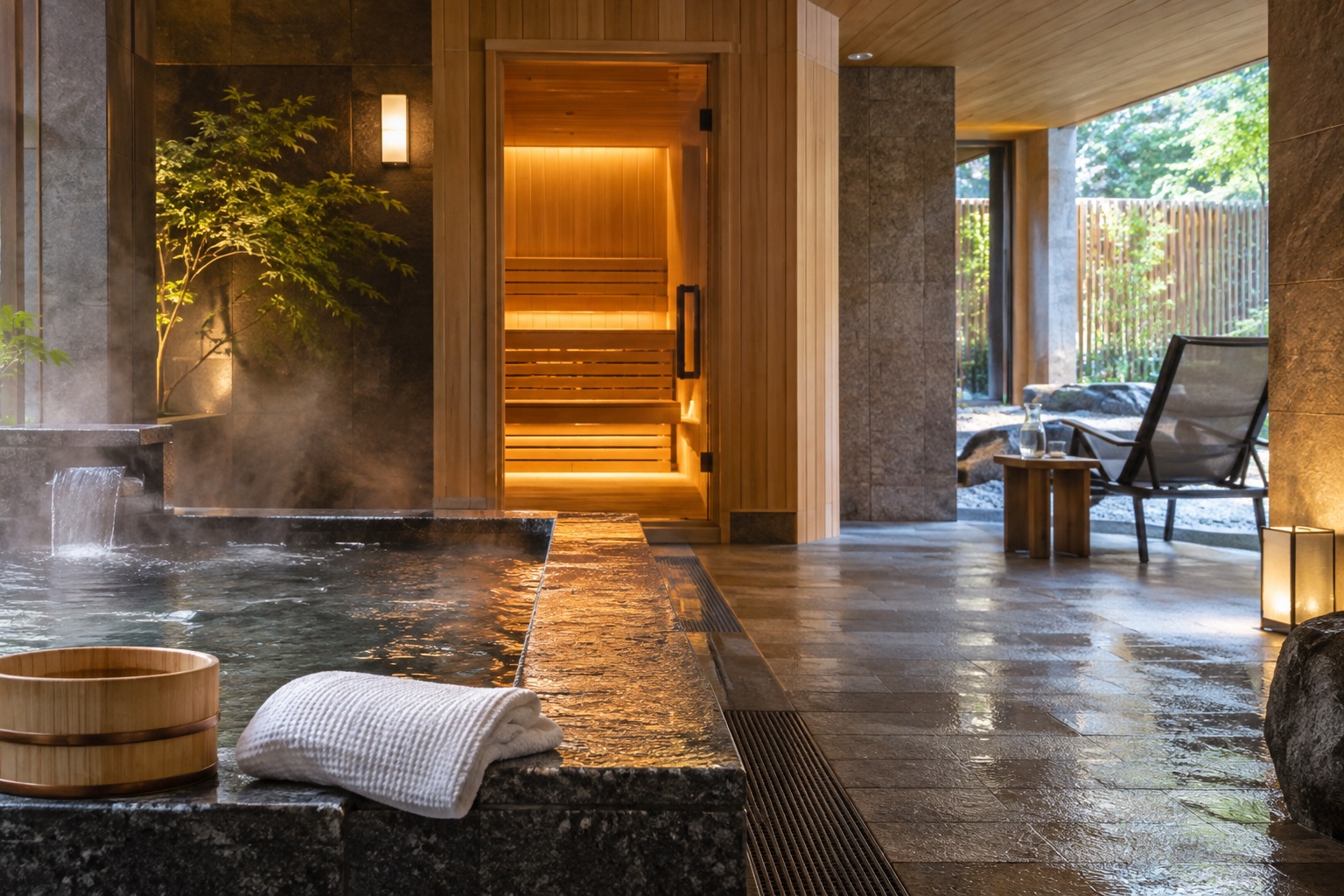
A super sento is a large Japanese bathing complex with several hot baths and often saunas, cold baths, outdoor baths, restaurants, and relaxation spaces. The easiest way to enjoy one is to slow down: wash first, soak briefly, hydrate, try the sauna only if you feel well, and treat the cold bath as optional.
1. What is a super sento?
A neighborhood sento is a public bathhouse. A super sento is a larger leisure-oriented version with multiple baths and extra facilities. An onsen uses naturally occurring hot-spring water that meets Japan’s legal definition. A facility can be both a super sento and an onsen if it uses qualifying spring water.
Admission arrangements vary. Some places use a ticket machine; others give you a wristband or locker key and total your food, massage, and other purchases when you leave. Paid areas such as a stone sauna or relaxation lounge may require a separate plan.
2. What to bring and check
- Small bath towel: for washing and modesty while walking; never put it in the bath water.
- Large towel: dry yourself before returning to the changing room. Towels may be included, rented, or sold.
- Hair tie: keep long hair out of the shared bath.
- Water: drink in the permitted rest area, not inside the bath or sauna unless the facility allows it.
- Payment: bring a backup method because lockers and ticket machines may use coins, cash, a wristband, or electronic payment.
Check the facility’s tattoo policy, age rules, last-entry time, towel policy, and whether re-entry to the bathing area is permitted. Rules differ significantly, and a tattoo-friendly sento does not mean every super sento is tattoo-friendly.
3. Bathing step by step
- 1Store your shoes
Take off outdoor shoes at the entrance and use the shoe locker. Keep the key or attach it to your wrist as directed.
- 2Pay and receive what you need
Choose the correct admission plan and collect any towels, clothing, locker key, or wristband.
- 3Enter the correct changing room
Look for 男 (men) or 女 (women). Bath assignments can change, so follow the current curtain and signs.
- 4Undress completely
Ordinary public baths are used without swimwear. Lock your phone, camera, clothes, and valuables away.
- 5Wash before soaking
Sit at a shower station, wash with soap, and rinse every trace of soap away. Keep water from splashing other guests.
- 6Ease into a bath
Use the entry steps, move slowly, and keep your small towel and hair out of the water. A short comfortable soak is enough.
- 7Dry before the changing area
Use the small towel to remove excess water at the bath-room exit, then finish drying at your locker.
4. A safe first sauna cycle
The Japan Sauna and Spa Association promotes a sequence that begins with hydration: drink water → sauna → cool down → rest. There is no universal number of minutes or required number of rounds. Temperature, humidity, bench height, your health, and your experience all matter.
Comfort, not endurance
Drink some water, enter clean and dry, sit on a towel where required, choose a lower bench, and leave while you still feel steady. Rinse off sweat, cool gently, rest until your breathing feels normal, and decide whether you actually want another round.
- 1Hydrate before entering
Drink water in the designated area. Do not use alcohol as hydration.
- 2Start on a lower bench
Heat rises, so lower seating is usually gentler. Sit or lie only where the facility permits.
- 3Leave early
Exit immediately for dizziness, nausea, chest discomfort, headache, unusual shortness of breath, or any sense that something is wrong.
- 4Rinse off sweat
Use the shower or water provided before entering a cold bath. Do not jump or splash.
- 5Cool gradually
A cold bath is optional. A cool or lukewarm shower is a perfectly good alternative, especially for beginners.
- 6Rest and rehydrate
Sit or recline in the designated area. Stand up slowly because sudden temperature changes can contribute to light-headedness.
5. What does “totonou” mean?
Totono-u (ととのう) literally suggests becoming ordered or balanced. In sauna culture it is an informal word for the deeply calm, clear, refreshed feeling some people notice while resting after heat and cooling.
It is not a medical target, a competition, or proof that a sauna “worked.” Do not chase tingling, dizziness, faintness, or an altered state. A pleasant warm shower followed by quiet rest can be just as satisfying as an intense hot-and-cold cycle.
Make the rest period the main event. Close your eyes, breathe normally, and notice when your body feels comfortable again. The best round is the one you finish safely.
6. Sauna and bath etiquette
- Shower before the bath, and rinse sweat before a cold bath.
- Use a sauna mat or towel under your body when the facility asks you to.
- Keep conversation quiet and do not reserve a place with belongings.
- Never bring a phone or camera into the changing, bathing, or sauna areas.
- Do not perform self-directed löyly or pour water on the heater unless clearly permitted.
- During an aufguss or heat event, follow staff instructions and leave whenever you wish.
- Do not wring a wet towel onto the sauna floor or benches.
- Return borrowed items and put used towels in the marked collection point.
7. When to skip the sauna
Skip it when you are feverish, dehydrated, severely sleep-deprived, or otherwise unwell. Do not enter alone if you already feel faint. Ask a medical professional for personal advice if you are pregnant, have cardiovascular or blood-pressure concerns, take medication affected by heat or dehydration, or are unsure whether rapid temperature changes are safe for you.
Do not lock or block the sauna door, touch the heater, or try to outlast another guest. If someone collapses or appears confused, alert staff immediately and follow their instructions.
8. Useful Japanese
| Japanese | Pronunciation | Meaning |
|---|---|---|
| タオルは料金に含まれていますか? | Taoru wa ryōkin ni fukumarete imasu ka? | Is a towel included? |
| サウナは別料金ですか? | Sauna wa betsuryōkin desu ka? | Is the sauna an extra charge? |
| タトゥーがあります | Tatū ga arimasu | I have a tattoo. |
| 水飲み場はどこですか? | Mizunomiba wa doko desu ka? | Where is the drinking-water area? |
| 気分が悪いです | Kibun ga warui desu | I feel unwell. |
9. Quick FAQ
Do I wear a swimsuit?
Usually no in the gender-separated public bath. Some mixed or special bathing zones use facility-provided clothing, so follow the posted rule.
Is the cold bath required?
No. Skip it or use a comfortable shower. Never force yourself into extreme cold to copy someone else’s routine.
How many sauna rounds should I do?
There is no required number. One comfortable round—or none—is enough. Stop when the experience is no longer pleasant.
Can I enter with a tattoo?
It depends on the facility. Some allow tattoos, some accept a small covered tattoo, and others refuse entry. Check before paying.
This original guide summarizes customs rather than reproducing another publication. Bath etiquette was checked against the Japan National Tourism Organization’s guides to enjoying onsen and Japanese manners. The hydration-first sauna sequence was checked against the Japan Sauna and Spa Association’s “Totonou 2.0” safety campaign. This article is general travel information, not medical advice; follow facility rules and personal medical guidance.