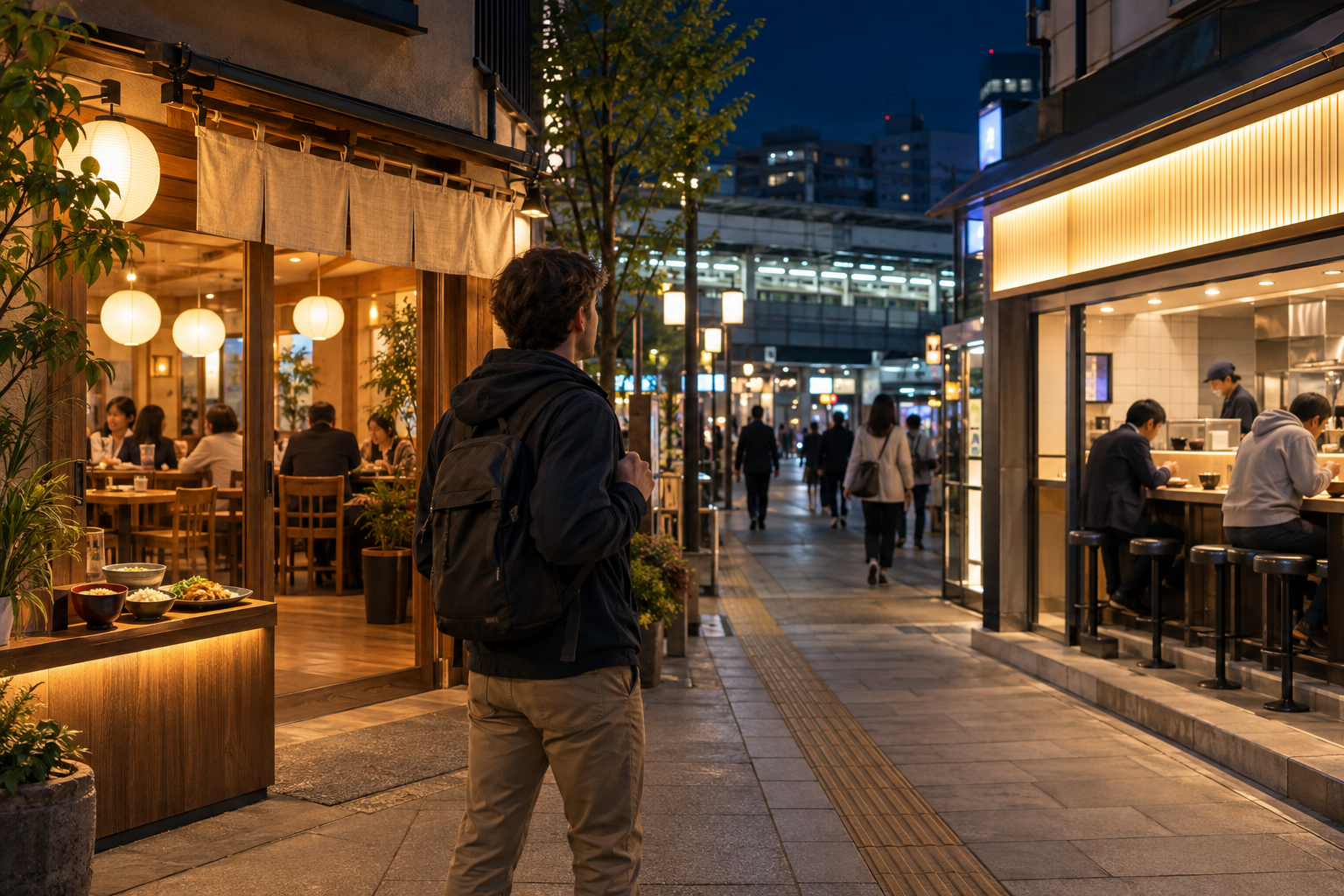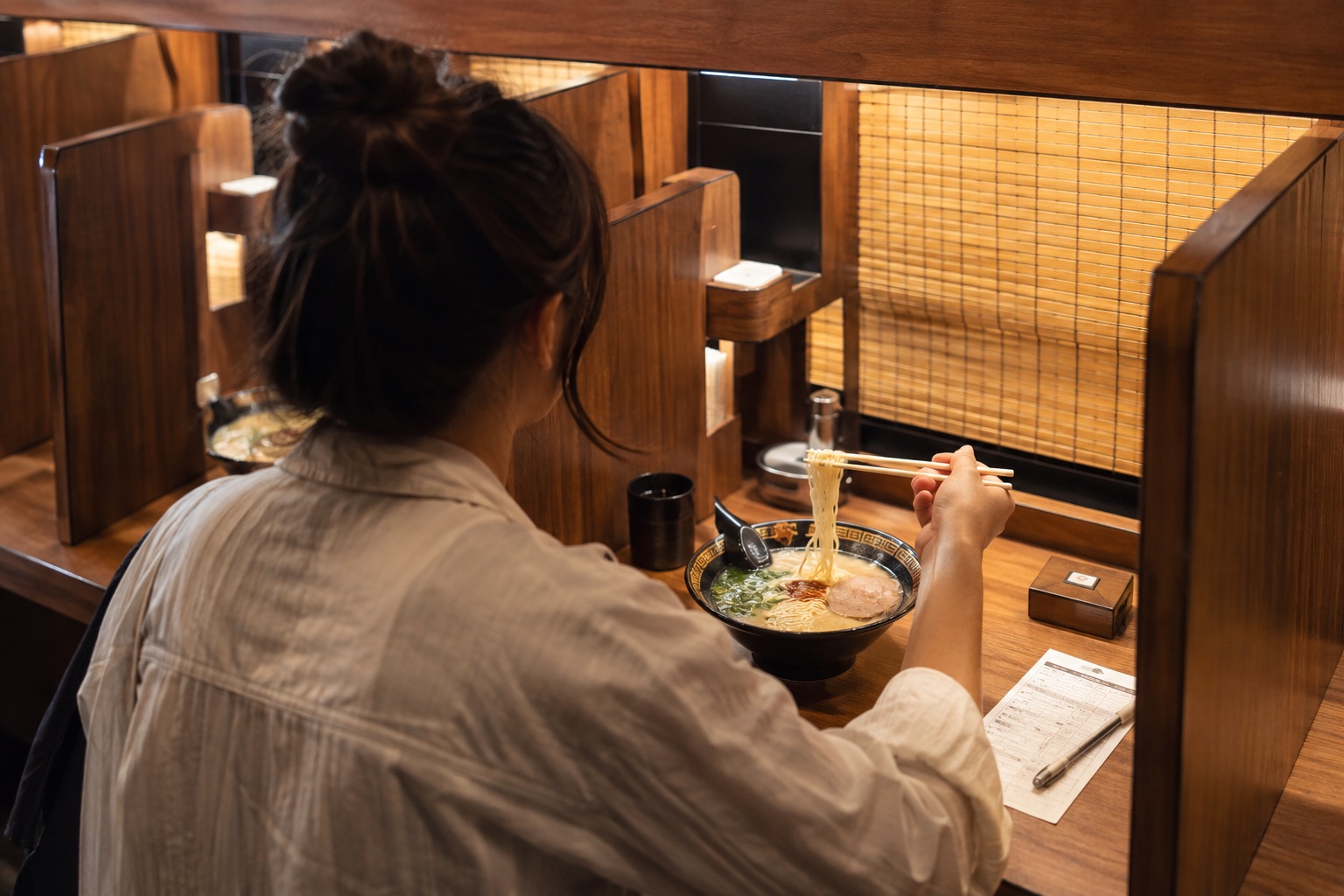
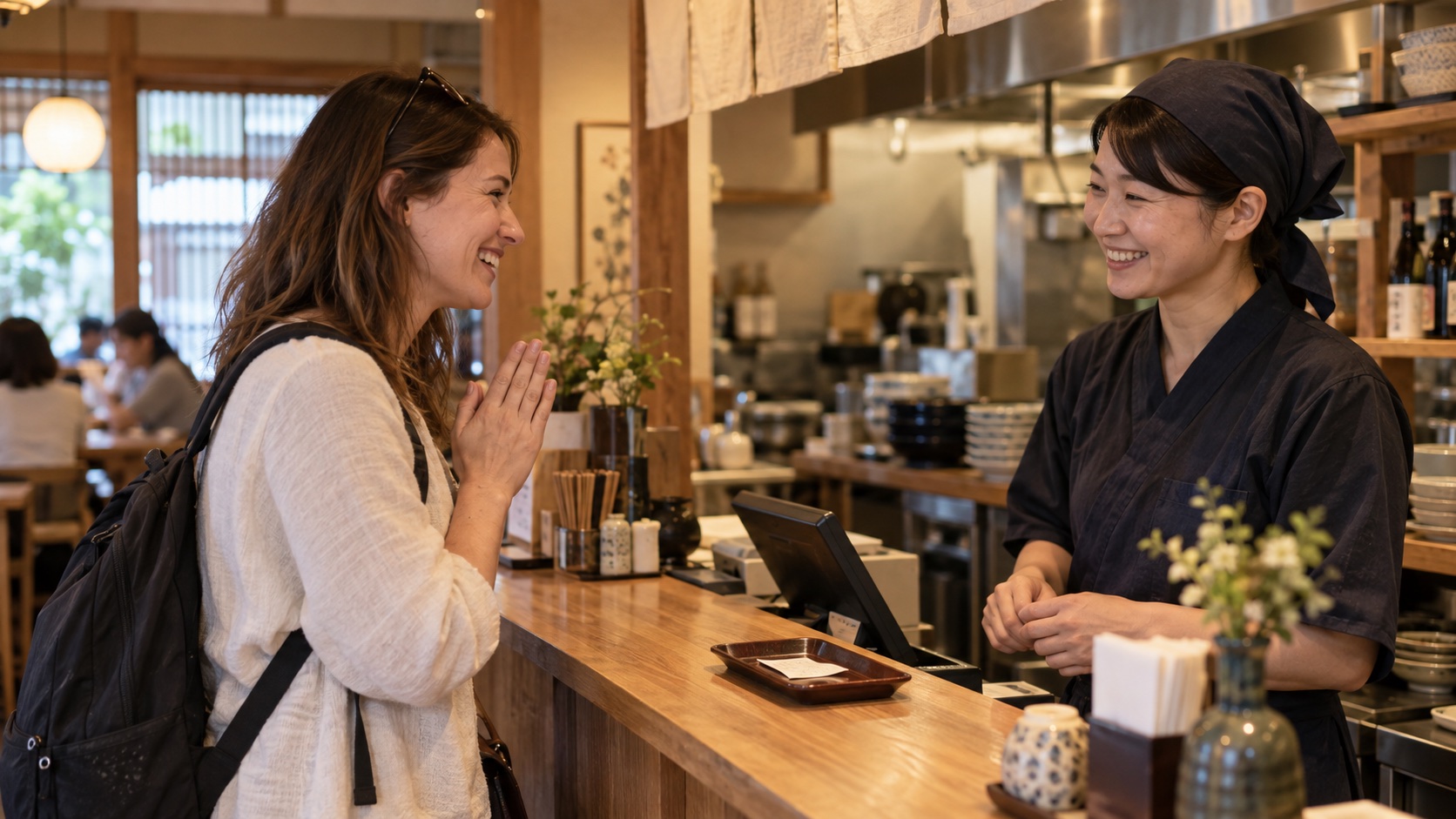
In ordinary Japanese restaurants, cafés, bars, taxis, and hotels, pay the amount shown and do not add a tip. Good service is treated as part of the experience you purchased, not as a separate favor that requires extra cash. A warm thank-you, a small bow, and considerate behavior will usually communicate more clearly than money.
1. The quick answer
Pay the stated total, take your change, and say thank you
Leaving coins on the table can cause confusion. A staff member may think you forgot your money and try to return it. At a register, wait for the total, place cash or a card on the payment tray when one is provided, and accept your receipt and change.
2. Why tipping is not expected
Japan’s service customs developed without routine percentage-based tipping. The listed price, plus any clearly disclosed tax, service charge, or seating charge, is the amount the business expects you to pay. Staff do not normally signal that better treatment depends on an extra payment.
This does not mean service work is effortless or that gratitude is unnecessary. It means appreciation is usually expressed through words, respectful behavior, and returning as a customer. Trying to force cash on someone can put them in an awkward position if workplace rules do not allow them to accept it.
If someone declines extra money, smile, thank them, and put it away. Repeatedly pressing it into their hand turns a kind intention into an uncomfortable exchange.
3. Better ways to show appreciation
- 1Say “arigatō gozaimasu”
This polite “thank you” works in shops, hotels, taxis, stations, and almost any service setting.
- 2Add a small bow
A relaxed nod or shallow bow is enough. Visitors are not expected to perform a formal business bow.
- 3Use “gochisōsama deshita” after a meal
Say it as you leave to thank the people who prepared and served the food.
- 4Be an easy guest
Arrive on time, follow the house rules, keep the table reasonably tidy, and tell staff promptly if you need help.
- 5Leave a thoughtful review
When appropriate, mention the staff member or specific help you received without sharing private information.
If someone went far beyond an ordinary service—such as helping recover a lost bag—say exactly what helped you: “Hontō ni tasukarimashita” means “That really helped me.” Specific thanks feels personal without creating confusion about money.
4. Are there any exceptions?
A private guide or interpreter who regularly works with overseas guests may be comfortable accepting a gratuity, but it is still not automatically expected. Check the booking page or ask the company. If you choose to give cash, Japan’s National Tourism Organization advises presenting it discreetly in a small envelope rather than handing over loose bills.
Traditional kokorozuke—a small gift of money “from the heart”—exists in limited ceremonial or highly personal situations. It is not a rule tourists need to recreate at a restaurant, hotel desk, or taxi. For a friend or host, a small wrapped gift from home may be more natural than cash, but even that depends on the relationship and occasion.
5. Charges that are not tips
- Service charge: some hotels and higher-end restaurants add a stated percentage. Pay it as part of the bill; no extra tip is required.
- Otoshi or seating charge: many izakaya serve a small appetizer and add a table charge. It is not a tip to the server.
- Taxi rounding: if you say “keep the change,” a driver may accept the simplified payment, but do not treat this as a required custom.
- Delivery and apps: follow the amount and options shown by the service. Do not assume an overseas app’s tipping habit applies to every Japanese platform.
6. Useful Japanese
| Japanese | Pronunciation | When to use it |
|---|---|---|
| ありがとうございます | Arigatō gozaimasu | Polite thank you |
| 本当にありがとうございました | Hontō ni arigatō gozaimashita | Thank you very much for what you did |
| 助かりました | Tasukarimashita | That helped me |
| ごちそうさまでした | Gochisōsama deshita | Thank you for the meal |
| すみません | Sumimasen | Excuse me; also thanks for the trouble |
7. Quick FAQ
Should I tip at a luxury hotel?
Not as a routine. Pay any service charge shown. If the hotel publishes a gratuity policy for a special service, follow that policy.
What if I already left money on the table?
Return and explain if you are nearby. Staff may hold it as lost property rather than recognize it as a tip.
Can I tip a private tour guide?
Sometimes, especially when the guide serves international clients, but check first. A sincere note or review is also appreciated.
Is a gift better than cash?
For a personal host or someone you know, a modest wrapped gift can be appropriate. It is unnecessary for ordinary staff interactions.
This independently written guide was checked against the Japan National Tourism Organization’s official Tipping in Japan, traveler FAQ, and Custom & Manners guidance. Individual businesses and private professionals may set their own policies, so follow any clearly stated current instructions.