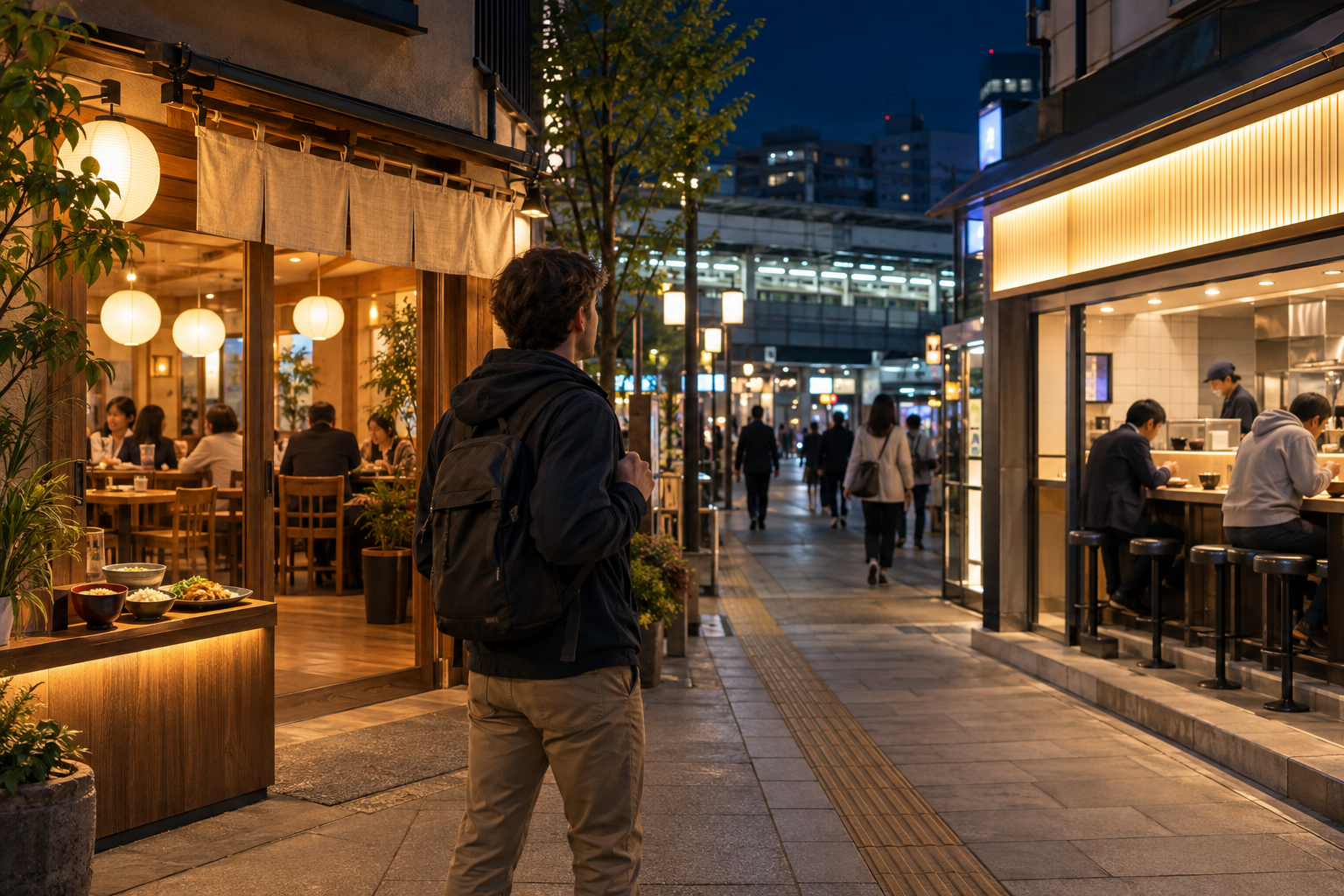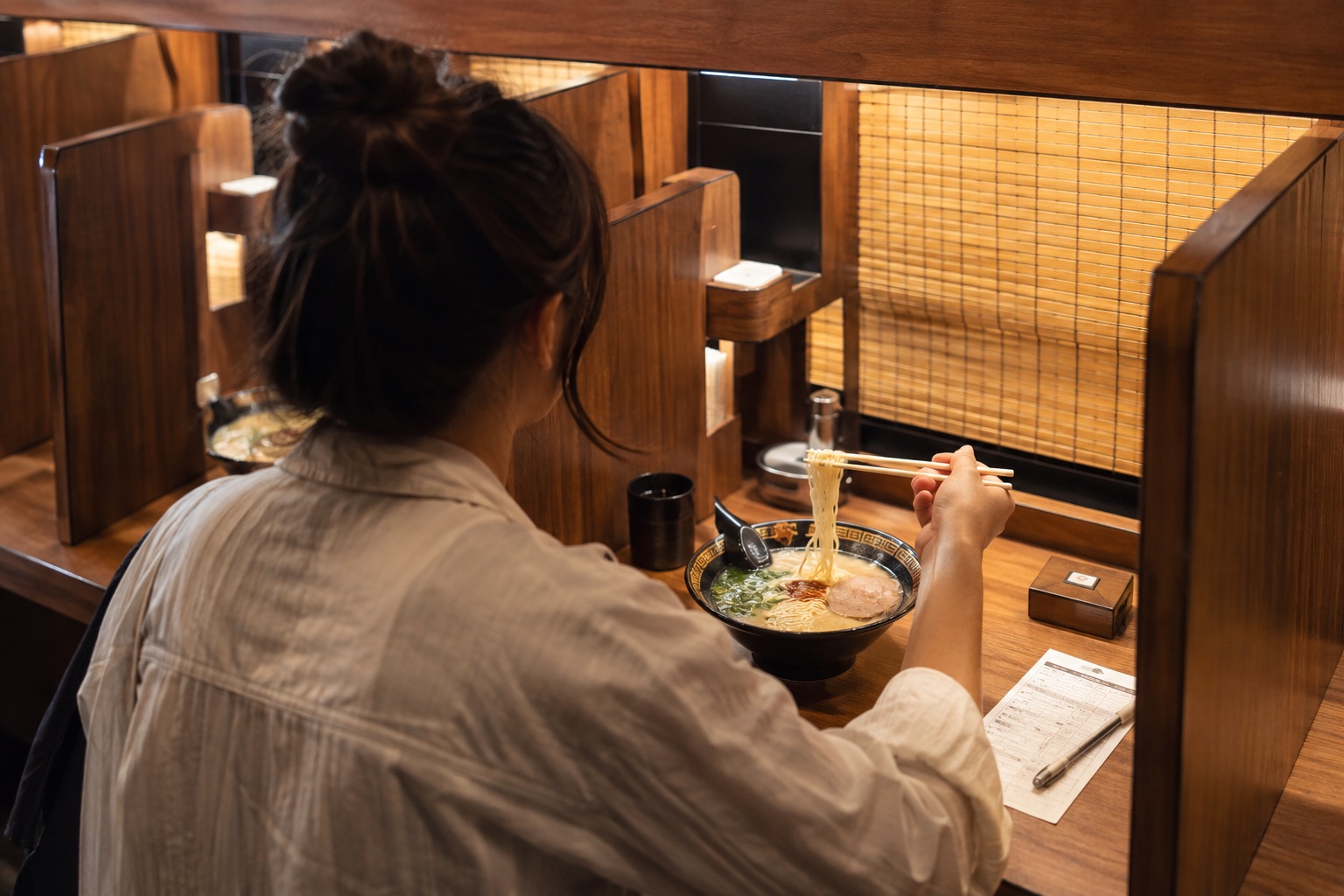
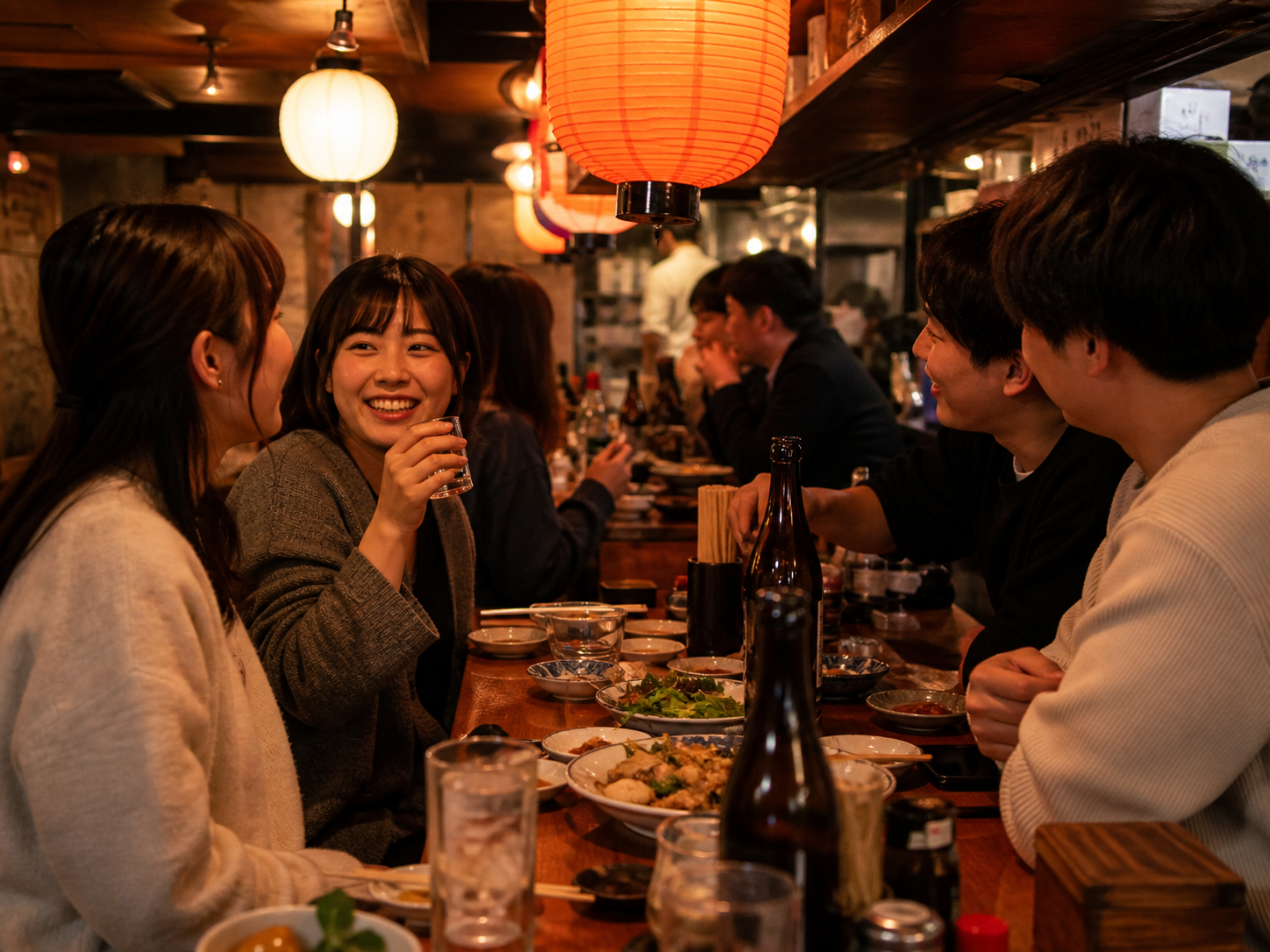
An izakaya is a casual place to drink and share several small dishes. The easiest first visit is to enter with your whole group, accept the seating instructions, order one drink and a few dishes, then add more as you go. The main surprise for many visitors is otoshi: a small appetizer that may come with a per-person seating charge.
1. What is an izakaya?
An izakaya sits somewhere between a pub and a casual restaurant. People commonly order beer, highballs, sake, shochu, cocktails, or non-alcoholic drinks together with grilled, fried, simmered, raw, and vegetable dishes. Drinking alcohol is not required unless the establishment clearly has a drink-order rule.
Some izakaya are national chains with large picture menus and touchscreen ordering. Others are tiny neighborhood businesses with counter seats and handwritten Japanese menus. If you want the simplest first visit, choose a place with posted prices, visible payment logos, and a menu you can read.
2. Arriving and getting seated
- 1Enter with the full group
Small restaurants may wait until everyone is present before seating you.
- 2Tell staff the number of guests
Hold up fingers or say “futari” for two, “sannin” for three, or “yonin” for four.
- 3Confirm smoking conditions
Rules and designated rooms vary. Ask before sitting if smoke is a concern.
- 4Ask about time limits
Busy restaurants and all-you-can-drink plans may assign a fixed seating period.
You may be asked to remove your shoes for a raised tatami or sunken-floor section. Put footwear only where staff indicate and keep the entrance clear.
3. Otoshi, seating charges, and unexpected appetizers
The small appetizer may be part of the seating charge
Many izakaya automatically serve an otoshi after you sit down and charge each adult a modest amount. It is not usually a free sample, and it is not a tip.
The amount and policy differ. Some businesses use a separate table charge, some include a small dish, and some have no charge. Check the entrance, menu, or booking page for words such as お通し (otoshi), 席料 (sekiryō, seating charge), or チャージ (chāji, charge).
If you cannot eat the appetizer, tell staff immediately because of the ingredient problem. Whether the dish or charge can be removed depends on the restaurant’s policy; do not assume that leaving it untouched cancels the fee.
4. How to order
Ordering may happen through a server, call button, tablet, or QR code. Start with drinks and two or three dishes rather than ordering the whole meal at once. Food arrives when ready, not in Western-style courses.
- Check whether the tablet has a language button.
- Confirm quantity: one order may contain several skewers or only one piece.
- Look for a final confirmation screen before sending the order.
- Keep the paper slip on the table; staff may add each order to it.
- For all-you-can-drink, confirm the last-order time and which drinks are included.
Order one quick dish such as edamame, chilled tofu, or pickles while grilled and fried dishes are being prepared. Add more only after you see the portion sizes.
5. What and how much to order
A balanced first order for two people might be one vegetable dish, one grilled or fried dish, one protein dish, and a rice or noodle dish later. Popular categories include yakitori, karaage, sashimi, grilled fish, dashimaki tamago, salads, tofu, and ochazuke.
Use the small individual plate provided to take your portion from shared dishes. Use serving chopsticks when supplied, and do not return food after placing it on your plate.
6. Allergies, vegetarian food, and dietary needs
Dashi stock, sauces, marinades, and shared fryers can contain fish, shellfish, wheat, soy, egg, dairy, meat, or alcohol even when these are not visible.
Show a clearly written allergy card before ordering and ask whether the kitchen can avoid cross-contact. If staff cannot confirm, choose another dish or restaurant. “Vegetable” dishes may still use fish stock, and grilled items may share equipment.
7. Paying the bill
When finished, say okaikei onegaishimasu or tap the checkout button. Staff may bring a bill folder, point to a register, or ask you to take a numbered slip to the front. Unless told otherwise, pay at the register rather than leaving cash on the table.
Payment methods vary. Check the entrance for card and QR-payment logos and keep some yen available. Splitting a large group bill into many individual payments may not be accepted, especially at a small restaurant.
8. Easy etiquette
- Keep voices moderate and do not block the aisle with bags.
- Ask before photographing staff, other guests, or the open kitchen.
- Do not pressure anyone to drink alcohol; non-alcoholic drinks are normal.
- Do not move to another seat or combine tables without asking.
- Order before the stated last-order time and leave when your seating period ends.
- Pay the amount shown. Routine tipping is not expected.
9. Useful Japanese
| Japanese | Pronunciation | Meaning |
|---|---|---|
| 二人です | Futari desu | Two people. |
| 英語のメニューはありますか? | Eigo no menyū wa arimasu ka? | Do you have an English menu? |
| これは何ですか? | Kore wa nan desu ka? | What is this? |
| ラストオーダーは何時ですか? | Rasuto ōdā wa nanji desu ka? | What time is last order? |
| お会計お願いします | Okaikei onegaishimasu | The bill, please. |
10. Quick FAQ
Do I have to drink alcohol?
No. Order a soft drink or non-alcoholic option. A restaurant may still require each guest to order one drink.
Is otoshi optional?
Policies vary. It is commonly part of the seating system and may still be charged if you do not eat it. Ask before sitting if this matters to you.
Can children enter?
It depends on the business, time, smoking environment, and seating. Family-oriented chains are generally easier than small late-night bars; confirm with the selected location.
Should I tip?
No routine tip is needed. Pay the total shown, including any otoshi, table charge, tax, or service fee listed by the restaurant.
The shared-dish dining style and typical izakaya menu were checked against the Japan National Tourism Organization’s official Izakaya Dining Guide. Charges, smoking arrangements, dietary support, time limits, and payment methods are set by each business; check the current menu and house rules.